Why reporters should confront an indefensible position on GMOs with scientific consensus

I recently spoke at Cornell about the public GMO discourse–who has shaped it and how some commonly held perceptions have taken hold in the media.

Which brings me to a recent post by NYU journalism professor Jay Rosen, who wondered how reporters should characterize the positions of political candidates who deny that man-made global warming is occurring. After all, as Rosen says:

Claims that climate science is a hoax, or that human action is not a factor are not defensible positions in a political debate.

You should read Rosen’s post to see the options he lays out for the reporter faced with a Ted Cruz answer on climate change. (Cruz, in case you didn’t know, denies global warming.) Rosen argues in favor of options #3 (calling out the denialism, citing the scientific consensus) and option #4 (confronting the denialism head-on).

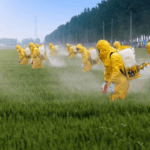
That got me thinking: What if reporters applied this same standard in their GMO coverage, particularly when faced with advocacy groups that deny a scientific consensus on the safety of genetically engineered foods? Remember, the same highly regarded scientific societies and bodies that declare global warming to be real also declare GMO foods to be safe.

With Congress now joining the fight over GMO labeling, reporters are going to have ample opportunity to clarify where the science stands on genetically modified foods. Pro-GMO labeling advocates argue this issue is all about transparency, but if they didn’t feel that GMOs were inherently unsafe, they wouldn’t be asking them to be labeled. That suggestion of health risk is implicit in every article about GMO labeling. Thus, it behooves reporters to cite the body of scientific evidence that speaks to this implied safety issue.

Read full, original article: GMO Labeling Articles Should Reference Scientific Consensus

Related Articles

Infographic: Global regulatory and health research agencies on whether glyphosate causes cancer

Infographic: Global regulatory and health research agencies on whether glyphosate causes cancer

Does glyphosate—the world's most heavily-used herbicide—pose serious harm to humans? Is it carcinogenic? Those issues are of both legal and ...

Most Popular

Wave Crest Over Red Cross
Viewpoint: Here are the election-inspired Trump administration healthcare policy reversals expected in the coming months
ChatGPT-Image-Mar-10-2026-01_39_01-PM
Viewpoint—“Miracle molecule” debunked: Why acemannan supplements don’t work
Democratic Donkey Plowing at Sunset
Viewpoint: Democratic tsunami: As the red tide recedes, here are the most likely shifts in food and agricultural policy
Screenshot-2026-11-05-at-1.20.54-PM
$7.35 billion PFAS settlement: 3M to pay people who blame health problems on ‘forever chemicals’ phased out of firefighting foam for more than 20 years
p22_spraying_2
How climate change is driving increased pesticide usage
Aerial Sprayer Over Gradient Fields
Farming, food, and chemicals: Post-midterms, the MAHA alliance between Democrats and MAGA Republicans is bruised but not cowed. What comes next?
Blue Checklist in Centered Hand
Viewpoint: From Medicaid cuts to MAHA-backed anti-vaccine and chemical hysteria, voters reject Republicans’ science-skeptical agenda
Crumbling MAHA Stage Portrait
Cataloging the RFK Jr.-MAHA crushing midterm collapse
Screenshot-2026-11-05-at-2.47.29-PM
Collagen supplements are not a wrinkle-reducing silver bullet, but they sure cost a lot
Screenshot-2026-10-21-at-11.30.51-AM
Viewpoint: Yes, our food system stinks, but the attack of ultra-processed foods is often misplaced
Picture1
Viewpoint: How badly is the U.S. food-safety net fraying? FDA’s bungled handling of the tainted lettuce crisis deepens concerns over cuts to disease tracking and response
Microscopic IVF Egg Injection
With technical barriers to human embryo editing falling, ethical concerns escalate
glp menu logo outlined

Get news on human & agricultural genetics and biotechnology delivered to your inbox.