Can neuroscience explain our sense of self?

The GLP aggregated and excerpted this blog/article to reflect the diversity of news, opinion and analysis. 

For ordinary folk, a unified sense of self is taken for granted. We sit comfortably inside a body we feel is ours, seeing, hearing, touching and smelling. Gloomy or happy, our feelings plainly belong to us. We own our bodily actions, whether picking up a cup of coffee or playing tennis, and we can travel back and forth in time, remembering things uniquely part of our life history and imagining our future. This self appears to us seamlessly and effortlessly as a whole.

The Man Who Wasn’t There could be described as a dedication to a different group – those whose unity of self has fragmented – and to the way they have helped us understand the self through their cooperation with scientists and philosophers, and their long hours in brain scanners.

To write it, Anil Ananthaswamy, formerly of New Scientist‘s staff, travelled the world to meet scores of people with “maladies of the self”. He encounters those who think they are dead, who feel their limbs don’t belong to them, who travel outside their own bodies or, more dramatically, have met a doppelgänger.

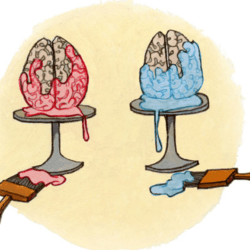
A fundamental point is how the sense of self is grounded in the body, its feelings and our brain’s maps of them. Mismatches between inputs or wrongly constructed maps can leave the brain struggling for the right answer. Sometimes the strange upshot is the sense that a limb does not belong to us, or even that our body is separate from us.

Read full, original post: The Man Who Wasn’t There: Exploring the science of the self

Related Articles

Infographic: Global regulatory and health research agencies on whether glyphosate causes cancer

Infographic: Global regulatory and health research agencies on whether glyphosate causes cancer

Does glyphosate—the world's most heavily-used herbicide—pose serious harm to humans? Is it carcinogenic? Those issues are of both legal and ...

Most Popular

ChatGPT-Image-Sep-17-2026-12_28_43-PM
Vitamin D, omega-3 fish oil and glucosamine supplements could cause brain damage 
ChatGPT-Image-Mar-10-2026-01_39_01-PM
Viewpoint—“Miracle molecule” debunked: Why acemannan supplements don’t work
ChatGPT-Image-Sep-17-2026-10_17_15-AM
Viewpoint: Why are the less intelligent more likely to be conservative—and smarter people more socially liberal?
Screenshot-2026-08-12-at-11.31.46-AM
AI is helping develop new vaccines
Screenshot-2026-09-10-at-12.20.19-PM
'Jet fuel didn't melt the steel': 9/11 conspiracy theories debunked
Screenshot-2026-09-17-at-10.24.54-AM
Viewpoint: Dubious environmental fears: Why the AI buildout is critical to America’s ecological future
Screenshot-2026-09-16-at-12.07.47-PM
The heated debate over trans athletes in the WNBA
ChatGPT-Image-Sep-9-2026-02_48_24-PM
Viewpoint: Trump-RFK Jr. report on “Gender Ideology & Left-wing Ideology’ targets LGBTQ community—and science
Screenshot-2026-09-10-at-11.50.46-AM
Did COVID vaccines kill 2,500 service members? RFK Jr. hires an investigator who compares vaccine promoters to Nazi doctors
Screenshot 2026-09-11 at 12.39
Child-monitoring apps: When the cure is worse than the harm—and how the technology could be tweaked
glp menu logo outlined

Get news on human & agricultural genetics and biotechnology delivered to your inbox.