The GLP aggregated and excerpted this blog/article to reflect the diversity of news, opinion and analysis.
Ever since Darwin, the researchers who study human evolution have been preoccupied with the characteristics that set humans apart from the other great apes: our large brains, bipedalism, hunting, abstract thought, and the use of technology.
It’s long been assumed that these features came bundled together, according to William Kimbel, Director of Arizona State University’s Institute of Human Origins. Kimbel conducts fieldwork studies in East Africa in search of the origins of our species, and he thinks that shedding the assumption of the “package deal” can open up new clues about the origin of our lineage.
Without the benefit of a fossil record, it’s reasonable to think that these features evolved in tandem, but “it’s a model that remains firmly entrenched in paleoanthropology today,” Kimbel told Ars Technica—even though a picture is starting to emerge that looks very different.
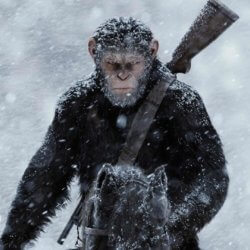




As one intriguing fossil discovery after another has made headlines over the past year, our understanding of our species’ history has started to shift, and a new story is emerging: one where our extinct relatives share many of the traits we had thought were uniquely human, and our own species is not that special after all.
One of the biggest question marks hanging over our understanding of human evolution has been the emergence of the genus Homo. This is the group of hominids (great apes) that includes our own species, Homo sapiens, as well as other, extinct species of human like Neanderthals, Homo erectus, and Homo habilis.
Read full, original post: Humans aren’t so special after all: The fuzzy evolutionary boundaries of Homo sapiens