The GLP aggregated and excerpted this blog/article to reflect the diversity of news, opinion and analysis.
For centuries, human hereditary improvement was a problem in social, not biological, engineering: how to persuade or coerce people into marrying to benefit the population as a whole. The obvious analogy was to agriculture and animal husbandry. In Plato’s Republic, Socrates says that only the best citizens would be allowed to mate, so that the population could be improved, just as dogs and chickens. Fourteen centuries later, Charles Darwin’s half-cousin, Francis Galton, called such a scheme ‘eugenics’, from the Greek for ‘well-born’ or ‘well-bred’.
In the United States, the seed of Galton’s eugenics took root in a soil over-fertilised with racial tension, debates over immigration, and a devotion to science, efficiency, rationality and government bureaucracy as tools of social reform. The resulting plant bore strange and bitter fruit. A new breed of eugenicist used the new science of genetics to bolster arguments against interracial marriage and the propagation of the ‘feebleminded’, an ill‑defined term for the mentally subpar – a condition many believed to be caused by a single gene.

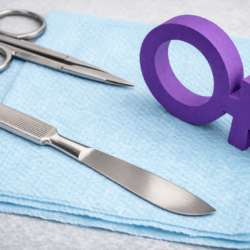



Not all Americans who supported eugenics were racist and nativist. To a first approximation, everyone was a eugenicist in the early 20th-century US. But for the core of the movement, the eugenic tenet that any disability was all in the genes also put scientific teeth into laws setting racial quotas for immigrants. Reformers pressed for mandated sexual sterilisation of those deemed unfit, including the feebleminded, the criminal, the deaf, the crippled, those with venereal disease and other conditions.
Read full, original post: Better babies