Most of the promise of “personalized medicine” comes from identifying the presence of genes that may raise your risk of developing a particular disease. But a number of genetic testing organizations, including 23andMe recently, have come under some fire recently for over-promising the ability to predict the risk of disease based on genetics. In addition, scientists have discovered that for many diseases, having a disease-associated gene doesn’t necessarily mean you’ll get that disease.
So, what’s a patient-centered program to do? The answer, unfortunately, is a little complicated.
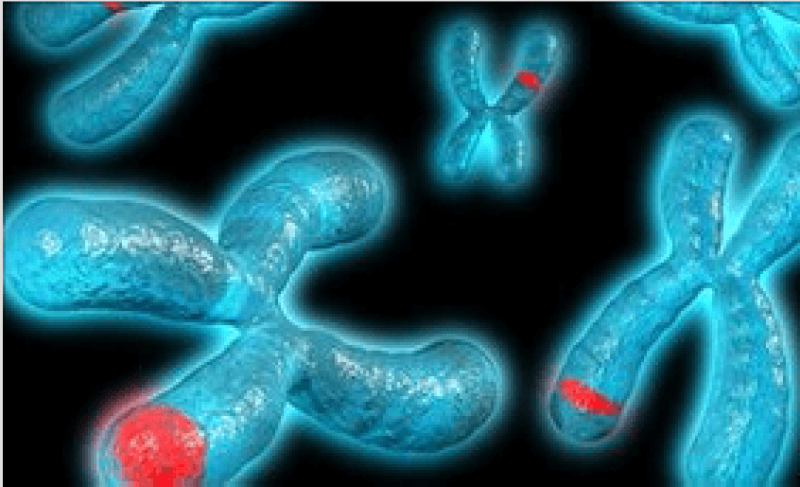
Back in 2012, an analysis by researchers at the University of Cardiff in the UK, looking at more than 179 genomes matched to a database of people with disease-carrying genes, found that a normal person typically has about 400 possibly damaging DNA mutations. That same person will have two gene variants that have a direct connection to a disease.
The study also found that 10 percent of people who have these variants will probably come down with the genetically associated disease. But researchers found that people carrying these disease-causing mutations usually have a very mild version of the genetic disease, or do not develop it until later in life. From this finding, Cardiff researcher David Cooper warned:
We now know that normal healthy people can possess many damaged even completely inactivated proteins without any noticeable impact on their health. It is extremely difficult to be able to predict the clinical consequences of a given genetic variant.
What’s happened since?
- As genetic sequencing becomes more precise, and helps uncover yet more genetic variants that are associated with disease, it may become easier to match an individual with a “profile” that could predictably result in disease. This is happening not only as molecular genetics research marches on, but also because databases become larger, potentially capturing more potential associations and relationships.
- On the other hand, more recent studies have shown that certain mutations associated with diseases may actually be protective against those diseases. A PLOS One study from June 2015 (which included Cooper as one of the authors) found that for diseases associated with multiple mutations, a single mutation could actually protect a person from the actions of other mutations.
- The June study also suggested that in large-scale, Genome Wide Association Studies (GWAS), more data isn’t necessarily better. The researchers found that disease-causing mutations were not necessarily identified by using case-control comparisons (typically considered a gold standard in epidemiological and population genetics studies). Case control studies — which compare people diagnosed with a disease with people who weren’t in order to identify risk factors unique to those with the disease — take less time to conduct but are prone to “confounding errors,” in which a third factor may be involved that’s not studied in the case control experiment. Case controls may be particularly problematic when looking at complex genetic diseases, in which a certain threshold number of mutations may be needed before disease occurs.
- Epigenetics, not surprisingly, also plays a role. A 2014 Indiana University study found that INDELs (short for INsertions or DELetions of short strips of DNA) linked to disease specifically targeted the affinity of binding sites for RNA-binding proteins, which indicated changes to proteins after they had been expressed. Since INDELs are present in just shy of a quarter of all inherited (i.e., Mendelian) diseases, this finding adds another layer of complexity to the relationship between genetics and disease.
The genetic counselor’s dilemma
These studies present a problem for genetic counseling. First, they highlight the fact that genetic risk is not a synonym for “diagnosis.” They also highlight the risks of diagnosing genetic risk on the basis of a single gene.
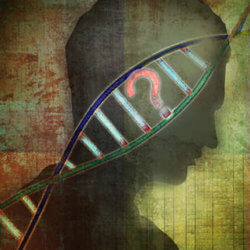



Many of the genes that were identified as “protective” (even though they shouldn’t have been) worked through possible gene-gene interactions, or so-called “synthetic associations” in which a non-causing variant can appear in a disease because of other rare, truly disease-causing variants that accumulate in a genome at the same time. In addition, some of these non-disease-causing variants can be inaccurately associated with a disease.
Since most human diseases (except for chromosomal disorders and rare diseases that appear to emanate from a single or small number of mutations) are complex, these issues are going to be at the forefront of genetic diagnoses for the foreseeable future. Studies that can accurately associate an individual genome with a profile of mutations may be more valuable than previously assumed, because those studies, when multiplied over a population, can, in a sense, see the forest as well as the trees.
However, the demand for screens that can identify genetic risks will not disappear anytime soon. In 2013, the American College of Medical Genetics (ACMG) requested that clinical genetics laboratories inform their clients about pathogenic variants in 56 genes, associated with 24 medical conditions. This was met with some controversy because of issues with patient autonomy (“how much should I know, and share with my doctor?”), testing for BRCA1 and thyroid cancer genes in children, and, as this article has discussed, the actual likelihood of a disease.
Meanwhile, a new study published in JAMA showed that a group of 223 people carried one of 122 variants of two genes (SCN5A and KCNH2) associated with irregular heartbeat, and 42 of those variants were considered disease-causing. But the variants had no bearing on whether or not the patients had irregular heartbeat.
While the latest studies appear to muddle the picture of a direct association between a mutation and disease, they slowly, inexorably, point to the moment when we’re able to turn genetic risk into a diagnosis. But that route will be bumpy and winding.
Andrew Porterfield is a writer, editor and communications consultant for academic institutions, companies and non-profits in the life sciences. He is based in Camarillo, California. Follow @AMPorterfield on Twitter.