If GMOs were eliminated, how would environment, economy be affected?

Screen Shot at PM

The GLP aggregated and excerpted this blog/article to reflect the diversity of news, opinion and analysis.

Higher food prices, a significant boost in greenhouse gas emissions due to land use change and major loss of forest and pasture land would be some results if genetically modified organisms in the United States were banned, according to a Purdue University study.

Wally Tyner. . .,  Farzad Taheripour, . . . and Harry Mahaffey . . ., wanted to know the significance of crop yield loss if  were banned from U.S. farm fields, as well as how that decision would trickle down to other parts of the economy. . . .The findings of the study, funded by the California Grain & Feed Association, will be published in the journal AgBioForum this spring.

“This is not an argument to keep or lose GMOs,” Tyner said. “It’s just a simple question: What happens if they go away?”

. . . .

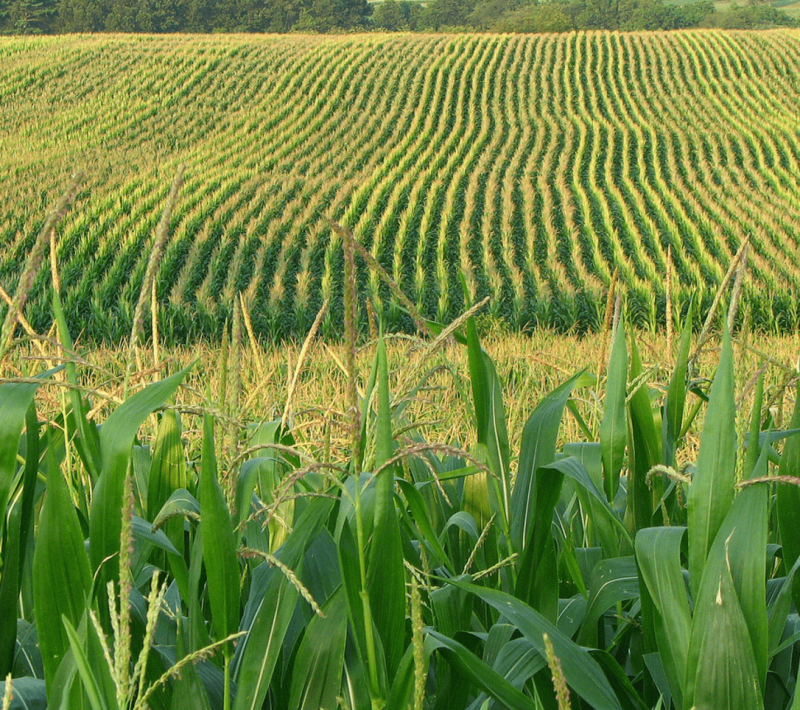
Eliminating all GMOs in the United States, the model shows corn yield declines of 11.2 percent on average. Soybeans lose 5.2 percent of their yields and cotton 18.6 percent. To make up for that loss, about 102,000 hectares of U.S. forest and pasture would have to be converted to cropland and 1.1 million hectares globally for the average case.

Greenhouse  increase significantly because with lower crop yields, more land is needed for agricultural production, and it must be converted from pasture and forest.


. . . .

With lower crop yields without GMO traits, commodity prices rise. . . .Consumers could expect food prices to rise 1-2 percent, or $14 billion to $24 billion per year.

. . . .Tyner and Taheripour said they will continue their research to understand how expansion of and reductions of GMO crops worldwide could affect economies and the environment.

Read full, original post: Eliminating GMOs would take toll on environment, economies

{{ reviewsTotal }}{{ options.labels.singularReviewCountLabel }}
{{ reviewsTotal }}{{ options.labels.pluralReviewCountLabel }}
{{ options.labels.newReviewButton }}
{{ userData.canReview.message }}

Related Articles

Infographic: Global regulatory and health research agencies on whether glyphosate causes cancer

Infographic: Global regulatory and health research agencies on whether glyphosate causes cancer

Does glyphosate—the world's most heavily-used herbicide—pose serious harm to humans? Is it carcinogenic? Those issues are of both legal and ...

Most Popular

Credit: ACSH
Viewpoint: Who and what’s to blame for the surge in vaccine-preventable diseases?
ChatGPT-Image-May-28-2026-12_56_54-PM
Viewpoint: Vaccines' non-specific effects? The ‘shoddy’ Danish couple whose 'research’ inspires RFK, Jr.’s health delusion
Organic-Produce
Viewpoint: Why you should ignore organic food advocates’ advice to avoid ‘pesticide soaked’ conventional fruits and vegetables
Screenshot-2026-06-05-at-2.12.30-PM
Some plants can poison you. So how did humans figure out what is safe to eat?
ChatGPT Image Jun 3, 2026, 03_14_43 PM
Viewpoint: How Earthjustice became the poster child for the abuse of special interest activist funding
Screenshot-2026-06-08-at-11.05.51-AM
Can vaping lead to cancer? New ‘association study’ raises questions of “links"
Screenshot-2026-06-05-at-3.30.20-PM
Republican lawmakers spread misinformation claiming solar farms permanently destroy potato farms
ChatGPT-Image-Jun-5-2026-01_17_48-PM
GLP-1 weight-loss drugs may reshape our desires and emotions
edb7f6d7-2370-418f-9578-74e29678e35c
Facts & Fallacies Podcast: Nicotine vaping—public health miracle, or risk to children? Professor Cliff Douglas
Screenshot-2026-06-08-at-10.19.30-AM
‘Natural’ wellness supplements linked to liver injury
ChatGPT-Image-Mar-10-2026-01_39_01-PM
Viewpoint—“Miracle molecule” debunked: Why acemannan supplements don’t work
ChatGPT-Image-Jun-5-2026-02_48_23-PM
Viewpoint: How Dr.TikTok (falsely) convinced me that cortisol was running my health
glp menu logo outlined

Get news on human & agricultural genetics and biotechnology delivered to your inbox.