NRDC plays scary Agent Orange card about 2,4-D herbicide found safe by regulators

Screen Shot at PM

The GLP aggregated and excerpted this blog/article to reflect the diversity of news, opinion and analysis.

There has been a long-running scare campaign against the commonly-used herbicide 2,4-D, which has been conducted by a number of environmental groups, the Natural Resources Defense Council being at or near the front of the pack.

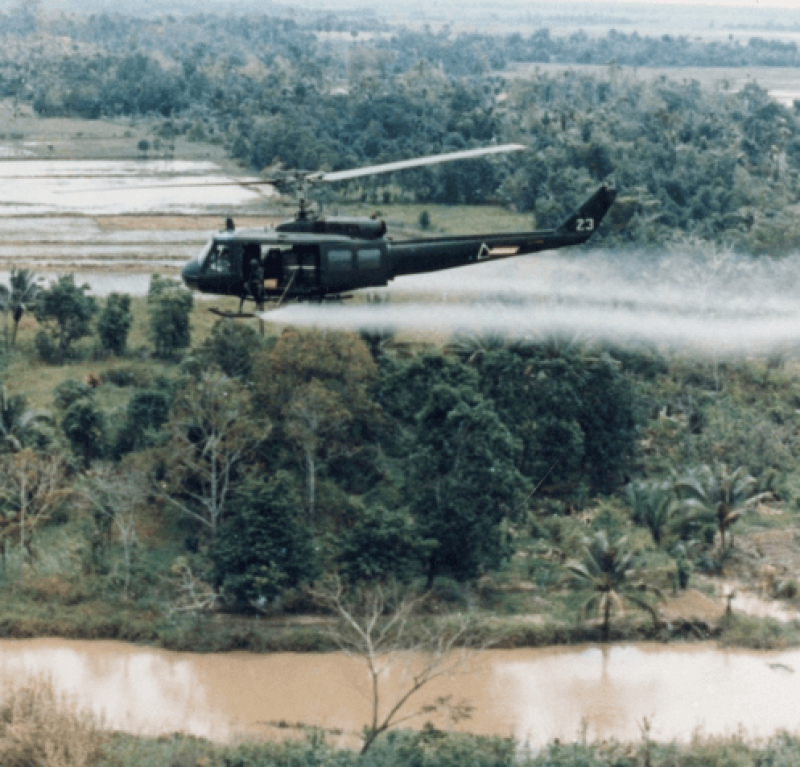
NRDC uses the time-tested strategy of equating 2,4-D with Agent Orange — the notorious herbicide that was used to defoliate swaths of Vietnam during the war. The name Agent Orange itself sounds scary, and the concerns about the health effects of one of its components — 2,3,7,8-TCDD, aka “dioxin” — are legitimate.

One of the components of Agent Orange was, in fact, 2,4-D. So was water. Neither had anything to do with dioxin. But, a second herbicide called 2,4,5-T certainly did. (During the production of Agent Orange, some dioxin was formed as an unwanted byproduct. This is what is responsible for the toxicity of the “brew.”) Yet, NRDC tosses around the names 2,4-D, dioxin, 2,4,5-T, and Agent Orange interchangeably as if to imply that they are all the same dangerous chemical. They are not.

. . . .

. . .the group has crafted its words in a way that strongly suggest that 2,4-D is highly toxic and carcinogenic, simply because it happened to part of the mixture that also contained 2,4,5-T and its impurity dioxin. It is not much of a stretch for the reader to also conclude that 2,4-D itself also contains dioxin. But it does not, and cannot. It is chemically impossible.


Read full, original post: NRDC Scientists Are Lying in the Weeds

{{ reviewsTotal }}{{ options.labels.singularReviewCountLabel }}
{{ reviewsTotal }}{{ options.labels.pluralReviewCountLabel }}
{{ options.labels.newReviewButton }}
{{ userData.canReview.message }}

Related Articles

Infographic: Global regulatory and health research agencies on whether glyphosate causes cancer

Infographic: Global regulatory and health research agencies on whether glyphosate causes cancer

Does glyphosate—the world's most heavily-used herbicide—pose serious harm to humans? Is it carcinogenic? Those issues are of both legal and ...

Most Popular

ChatGPT-Image-Jun-15-2026-11_00_13-AM-2
Glucosamine alert: Alzheimer’s progresses faster among those taking the popular supplement
Screen Shot at AM
Facts & Fallacies Podcast: Right-wing politics bad for your health? Separating speculation from science
ChatGPT-Image-Jun-9-2026-01_11_37-PM
Turmeric supplements: More risks than benefits
ChatGPT-Image-Jun-15-2026-12_13_41-PM
Viewpoint: Behind the effort to re-purpose the tobacco attack strategy to fight ultra-processed foods
ChatGPT-Image-Jun-3-2026-04_29_13-PM
Viewpoint: While unvaccinated children are dying overseas, Congress challenges Trump and Kennedy’s block on aid
Screenshot-2026-06-12-at-2.10.55-PM
Physician warns online statin myths delay care and raise heart risk
ChatGPT-Image-Mar-10-2026-01_39_01-PM
Viewpoint—“Miracle molecule” debunked: Why acemannan supplements don’t work
Screenshot-2026-06-14-at-9.14.26-AM
‘Humanitarian catastrophe’: Trump’s USAID shutdown could help drive nearly 23 million deaths — including 5.4 million children — by 2030, Lancet study warns
ChatGPT-Image-Jun-14-2026-09_41_44-AM-2
Viewpoint—‘The gleeful efficiency of an arsonist’: Administration’s health and science research cuts are ‘sabotaging’ America’s future
ChatGPT-Image-Jun-15-2026-10_42_06-AM
Viewpoint: ‘Steroid Olympics’ marketing stunt: ‘It seemed less like a sporting event and more like a loss leader to peddle testosterone injections, GLP-1s, and peptides’
ChatGPT-Image-Jun-11-2026-01_15_03-PM
Selective Pressure, Selective Silence
Screenshot-2026-06-05-at-2.12.30-PM
Some plants can poison you. So how did humans figure out what is safe to eat?
glp menu logo outlined

Get news on human & agricultural genetics and biotechnology delivered to your inbox.