What makes your gut microbiome special?

The GLP aggregated and excerpted this blog/article to reflect the diversity of news, opinion and analysis.

There are tens of trillions of bacteria in my gut and they are different from those in yours. Why?

This is a really basic question about the human microbiome and, rather vexingly, we still don’t have a good answer. Sure, we know some of the things that influence the roll call of species—diet and antibiotics, to name a few—but their relative importance is unclear and the list is far from complete. That bodes poorly for any attempt to work out whether these microbes are involved in diseases, and whether they can be tweaked to improve our health.

Two new studies have tried to address the problem. They’re the largest microbiome studies thus far published, looking at 1,135 Dutch adults and 1,106 Belgians respectively. Both looked at how hundreds of factors affect the microbiome, including age, height, weight, sleep, medical history, smoking, allergies, blood levels of various molecules, and a long list of foods. Both found dozens of factors that affect either the overall diversity of microbial species, or the abundance of particular ones. And encouragingly, their respective lists overlap considerably.
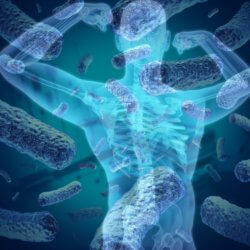

But here’s the important thing: Collectively, the factors they identified explain a tiny proportion of the variation between people’s microbiomes—19 percent in the Dutch study, and just 8 percent in the Belgian. Which means we’re still largely in the dark about what makes my microbiome different from yours, let alone whether one is healthier than the other.

Read full, original post: Why Are Your Gut Microbes Different From Mine?

{{ reviewsTotal }}{{ options.labels.singularReviewCountLabel }}
{{ reviewsTotal }}{{ options.labels.pluralReviewCountLabel }}
{{ options.labels.newReviewButton }}
{{ userData.canReview.message }}

Related Articles

Infographic: Global regulatory and health research agencies on whether glyphosate causes cancer

Infographic: Global regulatory and health research agencies on whether glyphosate causes cancer

Does glyphosate—the world's most heavily-used herbicide—pose serious harm to humans? Is it carcinogenic? Those issues are of both legal and ...

Most Popular

Screenshot-2026-04-14-at-11.11.06-AM
‘Turbo cancer’ or mRNA cancer cure? Strategies to counter misinformation
Screenshot 2025-07-30 at 10.48
Can gene editing eliminate Down syndrome? Scientists have done it in lab-grown cells
ChatGPT-Image-Mar-10-2026-01_39_01-PM
Viewpoint—“Miracle molecule” debunked: Why acemannan supplements don’t work
Screenshot-2026-04-22-at-12.21.32-PM
Viewpoint: Why the retracted Monsanto glyphosate study doesn’t change the science—the world’s most popular herbicide is safe 
ChatGPT-Image-May-22-2026-10_56_42-AM-2
‘It’s not super useful’: As wariness about AI grows, Trump proposes rollback of healthcare safeguards
ChatGPT Image May 10, 2026, 08_16_59 PM 2
Overmedicalization? RFK Jr.’s antidepressant crackdown raises conflict questions over his fee stake in Wisner Baum, the tort firm built on suing drug makers
edb7f6d7-2370-418f-9578-74e29678e35c
Facts & Fallacies Podcast: Nicotine vaping—public health miracle, or risk to children? Professor Cliff Douglas
Picture1-5
Science Disinformation Gap: The transatlantic battle over social media and censorship

Sorry. No data so far.

glp menu logo outlined

Get news on human & agricultural genetics and biotechnology delivered to your inbox.