


Ancestry & Evolution
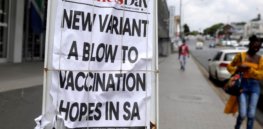
Africa and COVID: The world’s least prepared continent experiencing an increase in cases linked to new Delta variant
The speed of the takeover of the [Delta COVID] variant, which was first identified in India and is forcing governments ...

Why the famous ‘march of human evolution’ illustration is so misleading
It's the diagram of evolution we're all familiar with – starting with an ape figure which slowly turns into an ...

How dangerous is the Delta COVID variant? Very — if you’re not vaccinated
Here… are three simple principles to understand how [key COVID factors] interact. Each has caveats and nuances, but together, they ...

Here are the coronavirus variant ‘breeding ground’ hotspots in the US
Out of the COVID-19 pandemic, two Americas are emerging: One protected by vaccines and the other still vulnerable to infection ...
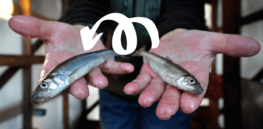
Infographic: Gene transfer mystery — How ‘antifreeze’ genes jumped from one species to another without sex
It isn’t surprising... that herrings and smelts, two groups of fish that commonly roam the northernmost reaches of the Atlantic ...

How a blobby, brainless, bright yellow slime mold is redefining our understanding of human cognition
This slime mold species has thrived, more or less unchanged, for a billion years in its damp, decaying habitats. And, ...

An instinct for numbers? Ancient humans and even some animals evolved the ability to count
Although researchers once thought that humans were the only species with a sense of quantity, studies since the mid-twentieth century ...
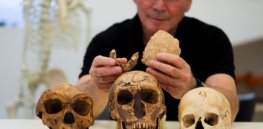
Is this skull unearthed in Israel the ‘missing link’ in human evolution that scientists have been hoping for?
[A newly discovered] hominin, or early human, has been named Nesher Ramla, after the site outside the city of Ramla ...

When it comes to evolution, could humans be more impactful than nature?
The composition of our air and water is different from what it was even a few decades ago. There is ...
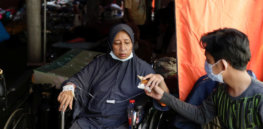
COVID epicenter moves to Indonesia and other developing countries as Delta variant surges
Indonesia, where Covid-19 cases have reached new highs, has reported about 500 deaths a day in the past week—almost triple ...
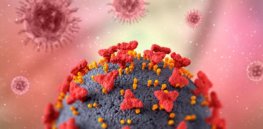
What our embattled world looks like through the ‘eyes’ of SARS-CoV-2
I’m tired of writing about COVID from a geneticist’s point of view, so I thought I’d let a virus speak ...

50,000 years ago, the Negev desert was home to consorting humans and Neanderthals
A recent reexamining of artifacts from the Boker Tachtit archaeological excavation site in Israel’s central Negev desert has found that ...

The delta COVID variant is now in almost 100 countries. Who is most vulnerable?
The highly contagious delta variant is the fastest and fittest coronavirus strain yet, and it will “pick off” the most ...
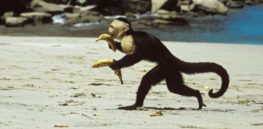
Rafting events: How did animals disperse around the world to seed evolution? Here is one possible scenario
Humans evolved in Africa, along with chimpanzees, gorillas and monkeys. But primates themselves appear to have evolved elsewhere – likely ...
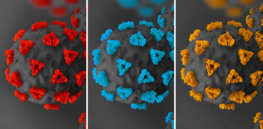
Video: Why are there so many COVID variants showing up now and what does it portend for the future?
On November 5, 2020, the United Kingdom went into lockdown in an attempt to control a spike in COVID-19 cases ...
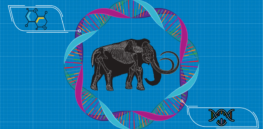
Here’s an update on the (quixotic?) CRISPR gene editing project to revive the defunct woolly mammoth
As CRISPR allows scientists to splice individual genes that program for specific characteristics into the genome of living species, it ...
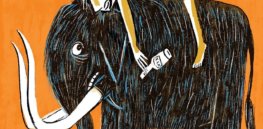
Drinking and evolution: Why do we seem programmed to consume alcohol if it’s bad for our health?
At sites in eastern Turkey, dating to perhaps 12,000 years ago, the remains of what appear to be brewing vats, ...

Infographic: How contagious are the various COVID variants compared with other diseases?
The cleanest way of comparing the pure biological spreading power of viruses is to look at their R0 (pronounced R-naught) ...

The horrific scale of the 1921 Tulsa race massacre has not been fully catalogued — until now, using forensic analysis of remains found in a mass grave
Forensic scientists and archaeologists investigating a mass grave near the site of the 1921 Tulsa Race Massacre have unearthed skeletal ...

Massive ‘dragon man’ skull found in Chinese well reveals possible new hominid family tree branch more closely related to modern humans than Neanderthals
The discovery of a huge fossilized skull that was wrapped up and hidden in a Chinese well nearly 90 years ...

‘If humans are so smart, why do women menstruate? Who thought that was a good idea?’ Interview with ‘Evolution Gone Wrong’ author Alexander Bezzerides
Okay, humans, if we're so smart, why do our backs hurt so much? Why do we cry? And menstruation, who ...

Puppy love: Dogs are born to understand people. Here’s how culture and evolution worked together
The fate of dog and man has been entwined for millennia (exactly how long is still a question, with estimates ...

Deadly COVID mutation wild card: Frightening lessons from the 1918 Spanish flu recovery
The influenza virus that caused the 1918 pandemic mutated into variants, much like the novel coronavirus has done in the ...

Viewpoint: Culture is more powerful than genes to human evolution, researchers claim
In a new study, University of Maine researchers found that culture helps humans adapt to their environment and overcome challenges ...
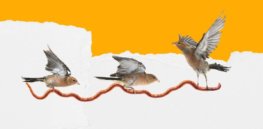
Viewpoint: Evolution is more than a Darwinian ‘selfish gene’ battle to the death
The idea that selfishness and greed are drivers of evolution, and therefore possess underlying virtue, has been around for over ...
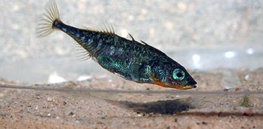
‘Natural selection in real time’: Which species are most likely to adapt to climate change?
Climate change is exacerbating problems like habitat loss and temperatures swings that have already pushed many animal species to the ...
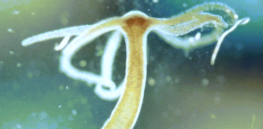
Brainless hydras can tell us a lot about the significance of sleep
It does not have a brain, or even much of a nervous system. And yet, new research shows, it sleeps ...
