


Ancestry & Evolution
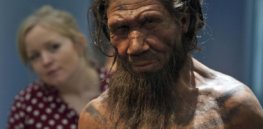
Ancient humans mated with Neanderthals as recently as 45,000 years ago
Analyses of DNA found in human fossils from around [45,000 years ago] — the oldest known human remains in Europe ...
Jurassic Park in real life? We have the technology to create ‘super exotic novel species,’ Neuralink co-founder claims
Neuralink co-founder Max Hodak, who started the brain-computer interface company with Elon Musk, has claimed that humans have the technology ...
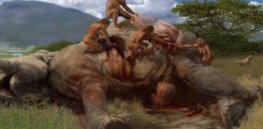
Like meat? Early humans almost exclusively ate protein and hunted large animals for 2 million years
In a study recently published in the American Journal of Physical Anthropology, academics from Tel Aviv University in Israel and ...
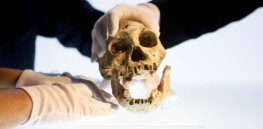
‘Great ape-like brains’: Early humans who first ventured out of Africa 1.5 million years ago had ‘monkey brains’
Early humans still had great ape-like brains, according to a new study that found modern humans evolved to have our ...

The ancient origins of close friendships
Quite possibly, our strong desire for close friends evolved among our early ancestors because having a close friend improved one’s ...

DNA of lettuce: How humans bred a weed into a favorite leafy vegetable over 6,000 years
Try to imagine a collection of 2500 different types of lettuce: approximately 1500 varieties that were ever grown by farmers ...
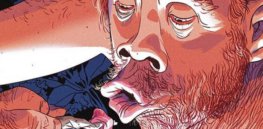
How mastering fire and cooking accelerated human evolution
Humanity's exceptional relationship with energy began hundreds of thousands of years ago, with our discovery of fire. Fire did much ...

What happens if toxic chemical pollution increases? Evolution unlikely to save us
Chemicals leached from old batteries can cause renal disease. Mercury from coal-fired power plants and carbon monoxide from vehicle exhausts ...
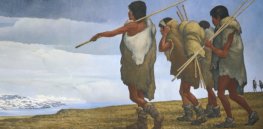
Remapping the early course of human evolution
According to scientists the human race first appeared in the East part of Sub-Saharan Africa. From there humans who were ...

Playing victim: People who claim grievances more likely to lie and cheat, but victim status comes with evolutionary benefits
Victimhood is defined in negative terms: “the condition of having been hurt, damaged, or made to suffer.” Yet humans have ...
Infographic: COVID variants spreading rapidly throughout the US, stalling post-coronavirus recovery
The country’s vaccine rollout has sped up since the first doses were administered in December, recently reaching a rolling average ...
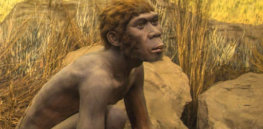
Hobbit-sized humans appear to have lived as recently as 50,000 years ago
Fossil evidence of [Homo floresiensis and Homo luzonensis found in Southeast Asia], described in 2004 and 2019 respectively, suggests these ...
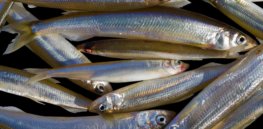
Skeptical of AquaBounty’s salmon? Nature makes GM fish, too
A new study by Queen's University researchers Laurie Graham and Peter Davies finds "conclusive" evidence for the controversial idea that ...

How the evolution of an ancient fish gave humans the ability to speak
[E]very voice (barks, whinnies, whines, chirps, squeals, meows, ribbits, roars, the State of the Union address) derives from a common ...

Why do we find puppies more adorable than babies? The neuroscience of cuteness
[W]hat exactly happens in the brain when we gaze at a baby? And why do we respond the same way ...
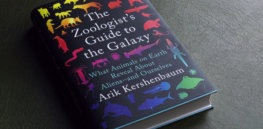
If we ever encounter extraterrestrial life, here’s why they might not seem so alien
[University of Cambridge Professor Arik Kershenbaum] argues that evolution is a universal law of nature, like gravity — and that ...
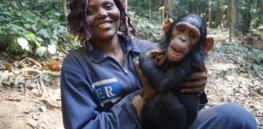
Why do humans suffer from more diseases than other animals?
[C]ompared to chimpanzees, what makes us special is apparently our outsized capacity for serious mental illnesses and weird facial shapes, ...
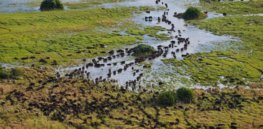
Podcast: Giving nature a helping hand – how humans are shaping species
Dr Kat Arney explores the impact that humans have had on the evolutionary trajectories of the species we share the ...
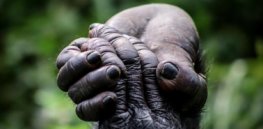
Generous apes: What explains the evolution of human kindness?
With chimpanzees, the prospect of food can lead to aggression. But bonobos take a different approach, says Suzy Kwetuenda, a ...

Here is the consensus theory of why Neanderthals went extinct
Noting over “a dozen serious hypotheses'' about the enigmatic disappearance of our nearest cousins [the neanderthals, researchers] conducted a poll ...
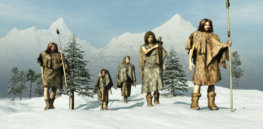
Early humans endured bitter cold without fire during the Plesitocene era
The Middle Pleistocene (125,000-780,000 years ago) was marked by periodic oscillations between a climate similar to today's and much cooler ...
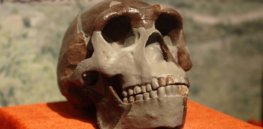
Survival of the brainiacs: Controversial new thesis says humans evolved smarter to capture smaller prey
As the largest animals on the landscape disappeared, the scientists propose, human brains had to grow to enable the hunting ...

Some animals engage in heinous behaviors — cannibalism, eating offspring, torture and rape. Why did evolution make that happen?
While it is true that rape, torture and murder are more commonplace in the animal kingdom than they are in ...
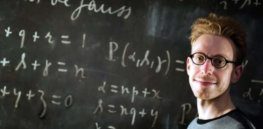
Author Simon Baron-Cohen on how autism has driven human innovation
In [cognitive neuroscientist Simon] Baron-Cohen's new book [The Pattern Seekers: How Autism Drives Human Invention], he argues that humans became ...
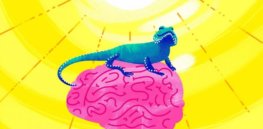
Pop psychology and the myth of the ‘lizard brain’
“As a neuroscientist, I see scientific myths about the brain repeated regularly in the media and corners of academic research,” ...

Prehistoric men hunted and women gathered? New evidence suggests that’s too simple
Archeological evidence from Peru has revealed that some ancient big-game hunters were, in fact, women, challenging what science writer James ...

Are humans wired by evolution to be couch potatoes? This evolutionary biologist believes so
A professor at Harvard and a keen marathoner – sometimes barefoot – [Daniel Liberman’s] life’s work in evolutionary biology makes ...
