


Ancestry & Evolution
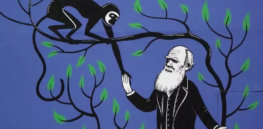
Viewpoint: Challenging those who claim evolution is ‘just a theory’
Such widespread rejection of the theory of evolution is fueled in part by the notion that evolution is “just a ...

New ‘DNA clock’ finds that if our genes had their way, humans would have a ‘natural’ lifespan of 38 years
A genetic “clock” lets scientists estimate how long extinct creatures lived ...

Humans are ‘biologically built’ to seek out friends
We humans are biologically built to seek friends, and we can see suggestions of our evolutionary past in the social ...

Why do humans have tailbones?
Though it’s currently useless, the human coccyx—commonly referred to as the tailbone—remains nestled at the bottom of the spine, a ...

3 modern adaptations that prove humans are still evolving
Genetic mutations lead to new traits — and with the world population now above 7 billion and rising, the chances ...
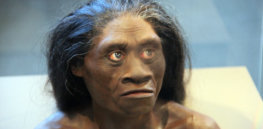
Were the mythical ‘ebu gogo’ creatures of Indonesia distant human relatives?
An ancient legend from the Indonesian island of Flores speaks of a mysterious, wild grandmother of the forest who eats ...
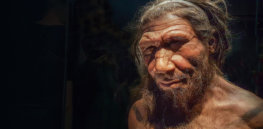
Modern Africans have more Neanderthal ancestry than previously thought, study says
Modern Africans have an average of 17 megabases of Neanderthal DNA in their genomes, according to an analysis published [January ...
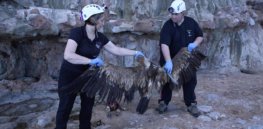
‘They weren’t just surviving’: Gibraltar caves give unprecedented peek into daily lives of last Neanderthals
Neanderthals were a resilient group. They existed for about 200,000 years longer than we modern humans (Homo sapiens) have been ...
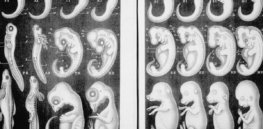
Podcast: One of the most infamous fakes in biology? How Ernst Haeckel’s disputed embryo images sows confusion about evolution
Kat Arney takes a closer look at some of the most controversial images in science - Ernst Haeckel's illustrations of ...
Can DNA predict who might be a mass murderer?
There have been repeated attempts over the past 50 years to find genetic links to criminal behavior or mass murderers ...
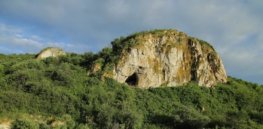
‘Intrepid explorers’: Neanderthals hunted their way across thousands of miles in Europe
Neandertals were epic wanderers. These ancient hominids took a 3,000- to 4,000-kilometer hike from Eastern Europe to the Altai Mountains ...

Ancient mummy ‘speaks’ with reconstructed vocal tract
David Howard at Royal Holloway, University of London, and his colleagues have reconstructed the vocal tract of Nesyamun, a priest ...

‘Spoken language doesn’t leave fossils’: Did human’s ability to speak arise in an instantaneous hominin mutation?
Linguist Noam Chomsky suggested that a mutation in a single ancient ancestor gave rise to human language today ...
Was Darwin wrong about ‘survival of the fittest’? Collaboration may be just as natural as competition
To put it simply, we have let Darwinism set the horizon of possibility for human behavior. Competition has become a ...
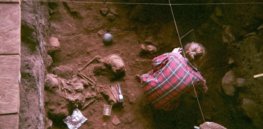
DNA from 4 ancient children shed light on diversity of humankind’s African origins
Four ancient youngsters, one pair from around 8,000 years ago and another from about 3,000 years ago, have opened a ...
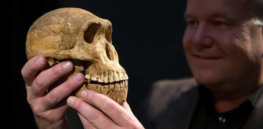
No ancient ‘Garden of Eden’? Humans likely evolved all over Africa
The evolution and spread of Homo sapiens is perhaps one of the greatest mysteries in all of science. Until recently, it was ...

Global temperature modeling suggests dinosaurs were wiped out by asteroid strike
A massive asteroid impact is likely to blame for the extinction event that marks the end of the Cretaceous period, ...
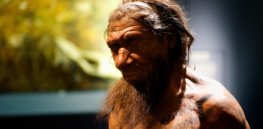
Interbreeding with Neanderthals, Denisovans gave us an evolutionary boost, study says
When Homo sapiens left Africa and encountered the Homo neanderthalensis in Europe, the two ancient hominins did the obvious thing and had sex with ...
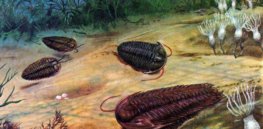
If we started again from scratch, would life on Earth evolve the same way?
Evolution is often seen as a mysterious process, but it’s actually predictable, and if life on Earth evolved again it ...
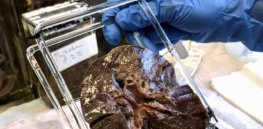
We’ve been dealing with measles for at least 2,000 years, genetic analysis suggests
In the 10th century, Persian physician Abu Bakr Muhammad ibn Zakariya al-Razi wrote about patients with fever, anxiety and full-body rashes — ...

Bizarre deep sea microbe could help explain origins of ‘animals, plants, fungi and humans’
Two billion years ago, simple cells gave rise to far more complex cells. Biologists have struggled for decades to learn ...
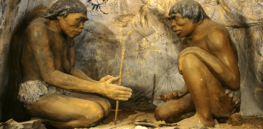
Extinct human ancestor Homo erectus evolved in Africa—not Asia—new fossil study suggests
Homo erectus reached the Indonesian island of Java at some point between 1.3 million to 1.5 million years ago, according ...
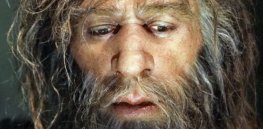
How did early humans avoid being wiped out by tuberculosis?
Tuberculosis is responsible for as many as one billion deaths in the last 200 years alone, but its murderous history ...
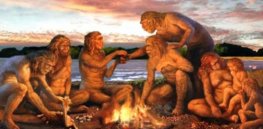
Can we add ‘cooking’ to the list of things that drove human evolution?
Theories about the driving forces of evolutionary differentiation that separated us from our ape relatives are not lacking. Toolmaking, predisposition to ...
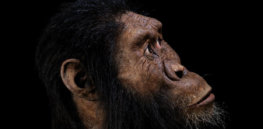
Past decade taught us how wrong we were about human evolution, including when our ancestors left Africa
In recent years, anthropologists around the world have discovered new human ancestors, figured out what happened to the Neanderthals, and pushed ...
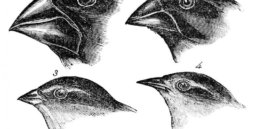
Podcast: Why some of the most iconic images and stories depicting evolution are wrong
Kat Arney tackles the myths and misconceptions around two of the most iconic images in evolutionary biology: the 'March of ...

Teaching evolution to college students with creationist views requires innovative approaches
University instructors employ a variety of methods when teaching evolution in classes in which large numbers of students reject the ...
