



Ancestry & Evolution

If we aren’t careful, we could miss the chance to learn cancer-fighting secrets from threatened whales and elephants
The loss of vulnerable mammals means scientists could miss out on useful quirks in their genetics ...
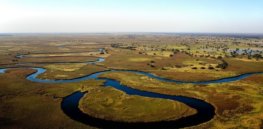
‘Puzzle of a million pieces’: New study traces humanity’s birthplace to northern Botswana
[A] study, appearing [October 28] in the journal Nature, uses genetic, archaeological, linguistic and climatic evidence to argue that the ancestral homeland ...
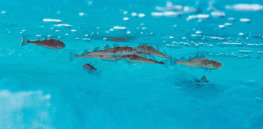
‘De novo genes’: How natural selection creates new genes from nothing
In the depths of winter, water temperatures in the ice-covered Arctic Ocean can sink below zero. That’s cold enough to ...
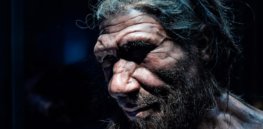
Inherited Neanderthal, Denisovan DNA may help with our metabolism, immunity and diet
Neanderthals and Denisovans went extinct some 35,000 to 40,000 years ago, but not before these closely related hominins interbred with ...

Podcast: The untold story of Edith Rebecca Saunders—’mother of British plant genetics’
We unearth the story of Edith Rebecca Saunders, co-founder of The Genetics Society and the ‘mother of British plant genetics’ ...
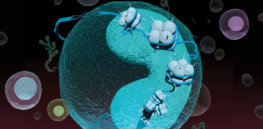
Inherited learning appears to be real, through epigenetics. But we still aren’t sure how it happens
[S]ome researchers have found evidence that even some learned behaviors and physiological responses can be epigenetically inherited. None of the new ...

Medieval Europe’s devastating Black Death was caused by just two strains of the disease
The Black Death ravaged medieval Western Europe, wiping out roughly one-third of the population. Now researchers have traced the genetic ...
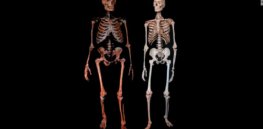
A peek into the sex lives of Neanderthals—they may have mated with ‘close kin’
A group of 13 Neanderthal remains detail a story of inbreeding, cannibalism ...

‘Unexpected’ marriage practices, slavery, social inequality revealed in analysis of Bronze Age remains
A fascinating new study chronicles the family histories of European Bronze Age households, revealing the presence of surprising marital practices, ...
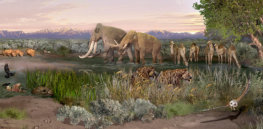
Studying human evolution faces major challenge: Our ancestors lived in ‘ecosystems unlike any found today’
To understand the environmental pressures that shaped human evolution, scientists must first piece together the details of the ancient plant and animal ...
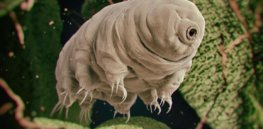
How can ‘water bears’ survive in outer space? ‘Fluffy cloud’ of protein may shield tardigrade DNA
Tardigrades may partly owe their ability to survive outer space to having the molecular equivalent of cotton candy. Water bears, ...

‘Marsupial-enabled time machine’: How a Koala virus is giving researchers insights into the human genome
A koala retrovirus, or KoRV, has been rolling through koala populations in Australia from the north to south. It’s passed among the ...

Would the discovery of life on Mars be ‘world-shaking’?
In a recent interview with the Telegraph, NASA chief scientist Jim Green said it’s possible we’ll soon find evidence of life on ...

Russia birthplace of 500-year Black Death plague, genetic analysis suggests
The Black Death was only the beginning. Countless millions perished in this terrible early wave – an estimated 60 percent of Europe ...

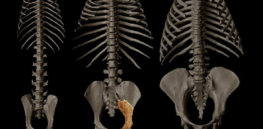
Fossilized ape pelvis suggests human ancestors walked upright much earlier than previously thought
Scientists have long thought that humans evolved from an ape that moved about on all fours like a chimpanzee, and ...
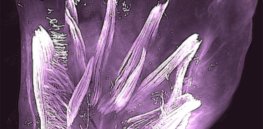
Evolution in motion: Before birth, human fetuses develop—and then lose—lizard-like body parts
The evolutionary journey of any species is littered with detours and dead-ends. Humans, for instance, have vestigial body parts that ...
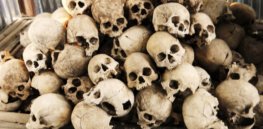
Infographic: Our skulls have been shrinking for 250 years—’our faces have begun to deform’
Science suggests that crooked teeth, overbites, narrow jaws, and crimped nasal airways are a modern phenomenon. Skeletal remains show that just 300 years ago, humans ...
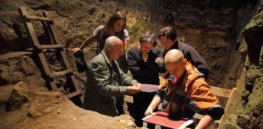
From hominids to animals: Who lived in Siberia’s famous Denisova Cave?
For thousands of years, Siberia’s Denisova Cave was home to various bands of Neanderthals, Denisovans, and modern humans. But as ...
Evolution doesn’t want you to be happy or satisfied. We’re supposed to ‘survive and reproduce.’
While the pursuit of happiness seems like a worthwhile goal, evolution thinks otherwise ...

‘Fight or flight’: How your bones may help you make that decision
In the face of fear, whether it be caused by a grizzly bear or an audience waiting to hear you ...
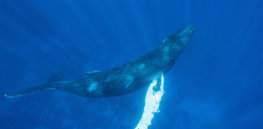
Did whales gain the ability to live in the water by shedding genes?
Like stripping down to swim, the ancestors of whales and dolphins may have shed some genes during their transition from ...

Viewpoint: ‘Ancient grains’ can transform your health? Probably not—and they’re more recent than you think
KHORASAN, teff, emmer and amaranth. No, these aren’t planets in the next Star Wars movie, but some of the growing ...
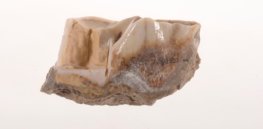
New DNA analysis technique may tell us how ‘hundreds of species’ evolved
Researchers say they identified an almost complete set of proteins – a proteome – in the dental enamel of the ...
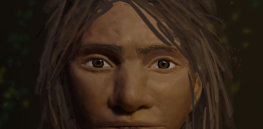
We haven’t found a Denisovan skull yet. But thanks to genetic analysis, we can predict what their faces looked like
A pinky finger bone, some teeth, and a lower jaw. That’s all the physical evidence we have of the mysterious ...

Infographic: How an asteroid killed the dinosaurs
The Cenozoic is the name geologists give to the era spanning the last 66 million years, and it started with the mass ...

Podcast: Where did GMOs come from? The fascinating history of genetic engineering
Forget the headlines about ‘Frankenfoods’ - there's a much richer and more nuanced story to be told about the history ...
