



Ancestry & Evolution
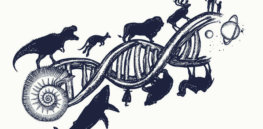
‘Evolution is aimless’: How else do we explain external testicles?
Evolution is a work in progress, so it’s hardly surprising that some of the features it has built into the ...
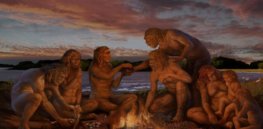
Challenging the story of our origin: Human traits had ‘patchwork emergence’ across Africa
The origins of our species have long been traced to east Africa, where the world’s oldest undisputed Homo sapiens fossils were discovered ...

This 11-year-old girl inherited her genes almost entirely from one parent, her father
An 11-year-old girl from the Czech Republic was born with genes that came almost entirely from her father, instead of ...

Don’t expect ‘instantaneous eureka moment’ in search for alien life
From War of the Worlds and Arrival to SETI and Stephen Hawking, both pop culture and scientists feed the expectation that the discovery of extraterrestrial life will ...
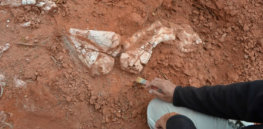
‘Evolution of hugeness’: Massive dinosaurs appeared more than once in earth’s history
[T]he remains of an unusually-large-for-its-time dinosaur found in Argentina provides new insight into the evolution of hugeness—and suggest that the ...

Not so optimized? Human evolution was ‘totally accidental’
Archaeologist Ticia Verveer recently posted a thread on Twitter showing that customer complaints go way back. And I mean way ...

Are we alone in the universe? ‘There is a pretty decent chance’
In the past, experts trying to make sense of the Fermi Paradox have looked to the Drake Equation to put a numeric ...

Smarter than we thought: Neanderthals hunted in groups, ancient deer skeletons show
A group of Neanderthals used their hand-crafted wooden spears to kill two male fallow deer, both in the prime of ...
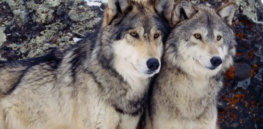
What genetics tell us about the evolution of wolves to dogs
Who’s a good dog? The very first dogs, apparently, as a new genetic study reveals the sequence of events, begun ...

Linked at last? 4-million-year-old skull connects humans to ‘Lucy’ ancestor
Long before Neanderthals or Homo erectus wandered the Earth, there lived an early human species called Australopithecus afarensis. Most famously represented by the specimen known ...

Carl Zimmer’s new book walks us deep into the ‘thickets of genetics and genomics’
Our word for a diagram of the lines of descent—pedigree—is probably derived from the French pé de grue, or “crane’s foot,” ...
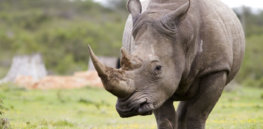
Resurrecting the northern white rhino and other lost species. But at what cost?
Time has been called on the northern white rhinoceros, but this call is already being challenged. When the last male ...

3 explanations for why we haven’t found aliens yet
[Enrico] Fermi wasn’t the first person to ask a variant of this question about alien intelligence. But he owns it ...
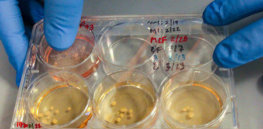
‘Trying to recreate Neanderthal minds’ using minibrains
[R]esearch teams are engineering stem cells to include Neanderthal genes and growing them into "minibrains" that reflect the influence of ...
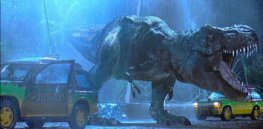
Jurassic Park showed how ‘science and science fiction can collide in the real world’
The prestigious science journal Nature published [a] breathtaking new discovery [about the oldest DNA ever recovered] in June 1993, a single day before ...

Giant panda discovery: DNA from 22,000-year-old skull suggests unknown lineage in China
DNA from a 22,000-year-old fossilized panda skull suggests an entirely separate lineage of giant pandas once roamed the area that ...

Better ape genome assemblies could help us understand what ‘make us uniquely human’
New, higher-quality assemblies of great ape genomes have now been generated without the guidance of the human reference genome. The ...
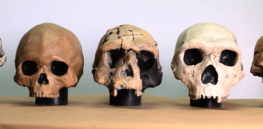
Using evolution to break barriers in an ‘increasingly polarized, politicized world’
Rick Potts is no atheist-evolutionist-Darwinist. That often comes as a surprise to the faith communities he works with as head ...

What can we learn about ourselves from studying the way animals communicate?
If you listen closely to the sound of birds chirping, you’ll hear that they’re taking turns. The same goes for ...

We’ve been dealing with bubonic plague for 4,000 years, DNA analysis of ancient skeletons shows
Recently, the examination of two 3,800-year old skeletons revealed the presence of a Yersinia pestis strain, famously the bacterium that causes plague. This ...
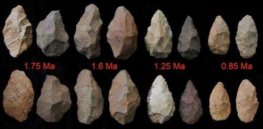
Did our ancestors’ development of complex tools spur the growth of language?
[A] new body of research [is] arguing that if not for our hominin ancestors’ hard-earned ability to produce complex tools, ...

We may owe our existence to plate tectonics
[T]here’s more to plate tectonics than earthquakes and eruptions. A wave of new research is increasingly hinting that Earth’s external ...

Are we closer to finding life on Mars?
Organic matter has been found on Mars in soil samples taken from 3 billion-year-old mudstone in the Gale crater by ...

Are age-related diseases the result of evolutionary tradeoffs favoring the young?
While granting human species some advantages over our primate cousins, recent genomic adaptations appear to have come at a cost ...
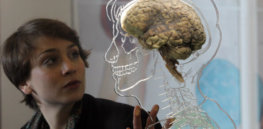
How did our brains get so big?
By studying [brain organoids, researcher Frank] Jacobs could look for genes that are switched on more strongly in the growing ...
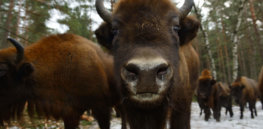
For all types of life, genetic diversity is ‘about the same’
Who would have suspected that a handheld genetic test used to unmask sushi bars pawning off tilapia for tuna could ...
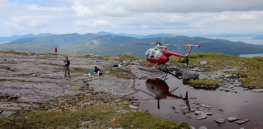
17,000-year-old route to North America could redefine human migration history
The first people to cross into North America from Eurasia did so by traveling through the Bering Strait, or so ...
