



Ancestry & Evolution

Tasting sweets is an evolutionary skill — and kids are better at it
The ability to taste the intense sweetness of summer fruit is actually a skill, and according to a new study, ...

How can the human race survive? By overcoming biological urge to procreate
Physicist Stephen Hawking adds to a growing chorus of catastrophists in claiming that humans could face extinction in the next ...
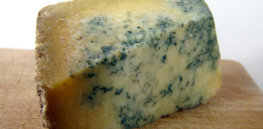
Gene-swapping cheese microbes could provide clues to antibiotic resistance in humans
You and your favorite cheese—whether it's cheddar, Wensleydale, or a good aged goat brie—have something in common: You’re both home to a ...

Biblical mystery solved: Ancient Canaanites DNA lives on in Lebanese
The Canaanites lived at the crossroads of the ancient world. They experienced wars, conquests and occupations for millennia, and as ...
Are our views on religion, astrology and new-age beliefs hardwired?
Our beliefs, including irrational ones such as an embrace of pseudoscience and 'fake news', have been shown to be somewhat ...

Universal structures? Galaxies and neural networks ‘strikingly similar’
We — an astrophysicist and a neuroscientist — joined forces to quantitatively compare the complexity of galaxy networks and neuronal ...

Sub-Saharan Africans likely trysted with pre-modern human ‘ghost’ species
In saliva, scientists have found hints that a “ghost” species of archaic humans may have contributed genetic material to ancestors ...
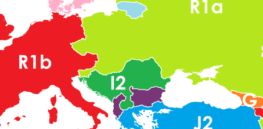
Y DNA: Redrawing map of Europe, North Africa and Middle East based on male lineages
The map [below] shows what the borders of Europe, the Middle East and North Africa might look like if they were ...

Dog-human bonding: Genetic mutations for Williams syndrome may explain canine friendliness
Using clues from humans with a genetic disorder that makes them unusually friendly, [researchers Monique Udell and Bridgett vonHoldt] found ...
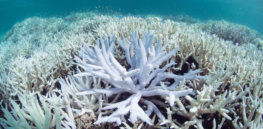
Genetically modified ‘super-algae’ combats global-warming-caused coral bleaching
Rachel Levin from The University of New South Wales, Australia and her international team of researchers may have found a solution ...

Ignore at your own peril: Race plays role in cancer and other health risks
It may be uncomfortable to discuss, but there are genetic and biological differences among races and genders. Ignoring these factors ...

Groundbreaking research on Jewish ancestry: Near Eastern on Ashkenazi male line while females primarily European
The origins of Ashkenazi Jews remain highly controversial. Like Judaism, mitochondrial DNA is passed along the maternal line. Its variation ...

Did life originate on Earth? It’s becoming more difficult to say ‘yes’
Discovery of Earth-sized planets and of microbial fossils as old as 4.5 billion years may shed light on the question ...

Origins of man’s best friend: Dogs likely domesticated only once, likely in Asia
New data from ancient dogs indicates that dogs became distinct from wolves between 20,000 and 40,000 years ago, researchers report ...

Viewpoint: Racial IQ gap debate stirs mischief
Suppose it's true. Suppose that, at the end of the day, people of African descent have lower IQs on average ...
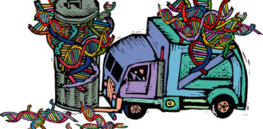
Junk collecting: As little as 8 percent of our DNA may have functional impact
The code that makes us is at least 75 percent rubbish, according to a study that suggests most of our ...
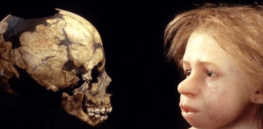
Middle East tryst: Hominins and Neanderthals may have mated 410,000+ years ago
[In a recent study, scientists examined the] Neanderthal mitochondrial genome from a femur that was excavated in 1937 from the Hohlenstein-Stadel ...
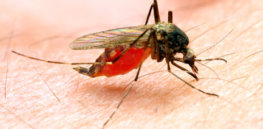
Gene research opens doors to drug treatments to confront the ‘fine-tuned’ malaria parasite
The single-cell parasite [malaria] has been estimated to have caused the death of almost half of the world’s population since ...
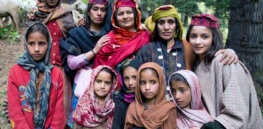
Why South Asia is a ‘living laboratory’ to study population genetics and disease
South Asians should be viewed not as a single population but as thousands of distinct groups reinforced by cultural practices ...
Rare genetic diseases can arise from unsuspecting carriers
Discovery of the rare disease -- marked by blindness, deafness, fragile bones and albinism -- could lead to genetic screening ...
Genetics of pandemics: How can we prevent future flus?
The scientific textbook depiction of the flu virus is about to get a facelift, due to a University of Pittsburgh ...

Ray of life: Did sunlight kickstart Earth’s biological transformation?
A new study suggests that the iron-and-sulfur clusters at the heart of many life-critical enzymes could have been floating around ...
Fermi’s haunting question about alien life: Does lack of contact signal doom for humanity?
We live in a galaxy with between 100 billion and 400 billion stars, each potentially surrounded by planets...[N]ew NASA research indicates there ...
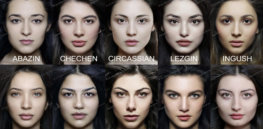
Melting pot of Eurasia genetically constant despite 8,000 years of cultural change
Alexander the Great’s army, Genghis Khan’s Mongolian hordes, and the Ottomans all moved through this hub: The Southern Caucasus. This ...
Fossilized child’s tooth offers rare clue about our Denisovan ancestors
Three becomes four. The extraordinarily sparse fossil record of the Denisovans – an ancient form of human – has gained ...

To combat evolution denial, teach kids genetics first
A new study suggests teaching children genetics first may help them better understand how and why humans have evolved ...
Genetics of tongue twisting: Why some people do it while others can’t
The term tongue twisting comprises rolling, folding, rotating, adjusting, and turning of the tongue...All aspects of a person are in ...
