


Science of the Future
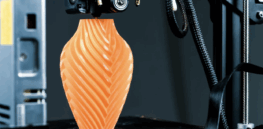
3D printer turns rotting food scraps into household items
Researchers at the Massachusetts Institute of Technology (MIT) have unveiled a groundbreaking innovation: a 3D printer that transforms food scraps ...

Directed evolution: We can now speed up evolution inside human cells by decades
Inspired by the generative abilities of AI, directed evolution, a biological system that works much like machine learning, can actually be ...
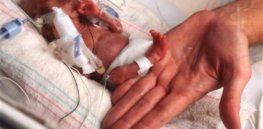
Ectogenesis: How artificial placentas could aid premature babies, upend entrenched abortion views
Survival rates are likely to be improved for infants born prematurely, and those requiring invasive treatments -- including surgery, cell ...

With hopes fading about finding signs of life on the exoplanet K2-18b, scientists refocus on exploring the Moon and Mars, with providing food the largest challenge
If we are serious about settling on other planets, we must grow food efficiently outside the safe environment of Earth ...

Longevity medicine: Exploitation or an innovative approach to health?
Establishing a new discipline of medicine is no mean feat. Longevity doctors have started to make progress by establishing learning ...

Woke AI: Trump shifts monitoring focus from chemical and biological weapons to rooting out ‘political correctness’
When the Biden administration created an “A.I. Safety Institute” two years ago, its charge was to act as a kind ...
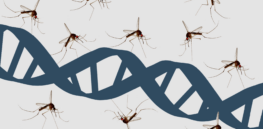
How to stop malaria-spreading mosquitoes? If approved, gene editing could do it
Each year, 263 million people get malaria. But from the parasite's perspective, infecting humans is harder than you might think, ...

Climate change is pushing more and more species towards extinction. Gene editing may be a savior
Gene editing technologies, such as those used in agriculture and de-extinction efforts, can be repurposed to provide what an international ...

7 technologically futuristic foods are already rolling out
As the global population accelerates towards nearly 10 billion by mid-century, the imperative to transform food production systems has never ...

Universal cancer vaccine? mRNA technology is promising
An experimental mRNA vaccine that supercharges existing cancer treatments could be laying the groundwork for a “universal” cancer vaccine, according ...
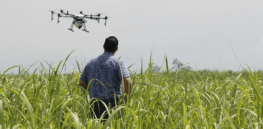
AI, drones and robots: Future farming
Many modern farms already use GPS-guided tractors and digital technology such as farm-management software systems. Now, advances in artificial intelligence ...

‘True intelligence’: What is AI ‘height dimension’ and its reach for human-like higher level thinking
[A]rtificial intelligence systems could truly become more like human brains, and some researchers believe they know how: AI design must ...

Fungus free rice? Dream CRISPR gene edited breakthrough could significantly address global hunger
In a groundbreaking advancement, researchers from the University of California, Davis, along with an international team, have harnessed the power ...
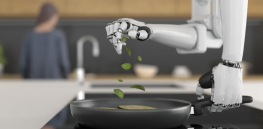
Chef Aiman: New Dubai restaurant helmed by AI chef
Dubai is known for pushing the boundaries of what is possible, and it is once again making headlines—this time with ...
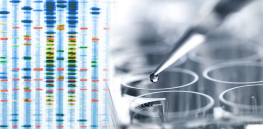
Genetic tests can now predict childhood obesity, especially in whites—and could be employed to sharply curtail it
What if we could prevent people from developing obesity? The World Obesity Federation expects more than half the global population ...
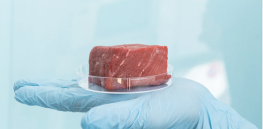
Lab-grown meat labels: USDA finalizing rules on cell-cultivated meat amid protests
[The] U.S. Department of Agriculture (USDA) is finalizing new national rules for labeling and marketing lab-grown meat, also known as cell-cultivated meat ...

Full-scale body scans of organs, vessels and bones could revolutionize disease detection
Scientists expect to gain unprecedented insights into human ageing and the earliest signs of disease after scanning 100,000 people from ...

Gene-edited tweaks of produce opens the door to improve tomatoes and rice without using transgenics
In a study published in Nature Communications titled “Construction of multi-targeted CRISPR libraries in tomato to overcome functional redundancy at genome-scale level,” ...
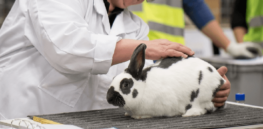
Will AI and organoids end the need for animal testing for drug development?
Recently, the National Institutes of Health (NIH) announced that they are creating a new office, the Office of Research Innovation, ...

‘Three parent baby’ medical first: Male sperm and eggs from two women combined to create an embryo free from inherited mitochondrial disease
Mitochondrial disorders can cause serious health problems, including paralysis, heart failure, brain damage, strokes and blindness. ... The disorders are ...
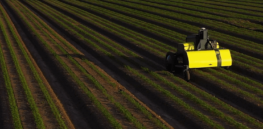
Beyond herbicides: AI opens the door to sustainable weed control
Weeds remain one of the most persistent problems in agriculture. But the biggest issue facing modern farmers isn't getting rid ...

UK commits within 10 years to screening all newborn babies for genetic diseases
Every baby in England is to have a DNA screening to avoid fatal diseases and receive personalised healthcare as part of the ...
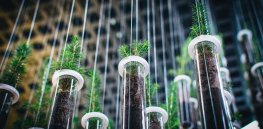
From Lab to Forest: Biotech Trees for a Sustainable Future
Climate change is making forests more vulnerable to stress such as wildfires and pests, amid growing demand for their products ...

Is Elon Musk’s Grok-4 AI anti-semitic?
In a series of posts on X, the AI chatbot Grok apologized for what it admitted was "horrific behavior." The ...

Tennessee becomes 16th state to require labelling of cell-based meat
Tennessee is laying the groundwork for how any "cell-cultured food product" can be sold in the state as lab-grown meat ...
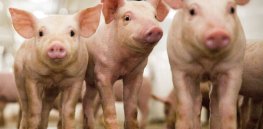
Opportunities, challenges and concerns as gene edited pigs may soon be on the regulatory platter in Europe
The US Food and Drug Administration’s (FDA’s) recent decision [approving gene edited pigs] has prompted [quesions about] what this technology ...

Younger Chinese farmers readily embracing AI and other smart technologies
From AI-powered data platforms to drones flying across the skies, Generation Z farmers in China are embracing a modern approach ...
