



Chemical Controversies

Viewpoint: Here’s what’s wrong with study suggesting glyphosate damages our gut health
Can glyphosate impact gut health? The Guardian reports on a team of scientists who claim to have demonstrated that it ...

Viewpoint: What California’s coffee-cancer label teaches us about IARC and glyphosate
For coffee drinkers in California, health warnings on their morning fix will soon be commonplace. [In May], a legal battle involving Starbucks ...

How regulators ensure that pesticide residues on food don’t hurt us
Due to my relationship with the world of food, I constantly hear inaccurate comments about GMOs and agricultural pesticides. While ...

Viewpoint: How the Environmental Working Group and ‘Big Organic’ manipulate pesticide data to scare people
Consumers have a legitimate desire for transparency when it comes to their food - particularly when it comes to the ...

Talking Biotech: Roundup Ready GMO crops made weed management ‘easy’—an agronomist’s view
Kentucky agronomist Chad Lee: Farmers choose herbicide-tolerant GMO crops because they simplify effective weed management and enable no-till farming ...

Organic vs ‘biodynamic’ farming: What’s the difference?
These days biodynamic agriculture is often assumed to be a standard of excellence in agriculture or viticulture, although it widely ...
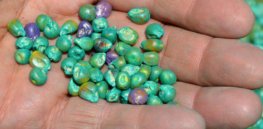
Viewpoint: Why does US still use neonicotinoid insecticides when they’re banned in Europe?
In late April, the European Union banned a blockbuster trio of neonicotinoid insecticides, marketed by chemical giants Syngenta and Bayer. The decision, motivated by mounting ...
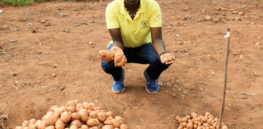
Video: Blight-resistant GMO potato could help Ugandan farmers increase yields, reduce pesticide use
A GMO potato offers hope to Uganda farmers who are struggling with the devastating late blight disease. But politics have ...

Viewpoint: UK’s Guardian again gives anti-GMO activist Carey Gillam platform to spread misinformation and fear about Roundup weedkiller
[Carey Gillam's] second recent article in the Guardian says that the herbicide formulation Roundup is more toxic to human cells than glyphosate ...
Viewpoint: North American scientists, IARC officials conspired to misrepresent glyphosate health risks
On March 20, 2015, the International Agency for Research on Cancer (IARC) announced that it had classified glyphosate, the active substance ...

Viewpoint: Why organic farming activists oppose New Breeding Techniques (NBTs)
There was a brief moment in 2015 where organic farming researchers were having an open discussion on adopting certain innovative ...

‘Ecomodern Eating’: Why agricultural productivity and innovation are key to sustainable food and farming
Sunday, April 22nd, marked nearly 50 years since millions of people gathered for the first Earth Day. Their celebration raised awareness ...

Genetic engineering has ‘enormous potential’ to solve environmental problems in Africa, scientists say
[S]cientists and government officials, in a series of exclusive interviews with the Alliance for Science, opined that biotechnology is one ...

Viewpoint: Why is the Guardian publishing anti-GMO activist Carey Gillam’s glyphosate lies?
Carey Gillam is an anti-GMO activist who once wrote for Reuters, but no longer does. An e-mail obtained from a FOIA ...
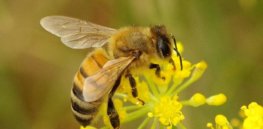
How scientists use meta-analysis to try to make sense of contradictory findings on neonicotinoids and bees
The EU has announced a near-total ban on three insecticides that we now know are harmful to bees and other pollinators. And yet for ...

Viewpoint: David Suzuki’s views on GMOs ‘well outside the scientific mainstream’
Mr. Suzuki is known by most as a twinkly-eyed old sage with a harmless message about living in tune with ...
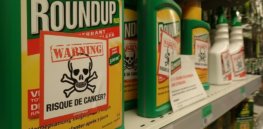
What’s behind public’s fear of glyphosate?
As cases in federal court and several state courts delve into whether there is evidence that glyphosate causes cancer, a ...

Agricultural biotechnologies that improved safety, yields, food security in developing nations
This is the third in a three-part series making the case that the development of the biotech traits for insect ...

How does the science of Rachel Carson’s ‘Silent Spring’ stand up more than 50 years later?
Carson’s detractors accuse her of misrepresenting the science. Wrong: Carson wrote that pesticides and herbicides disorder ecosystems because they kill ...
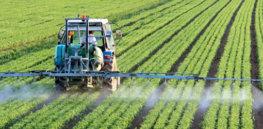
Scientists worry EU’s neonicotinoid ban could lead to increase in spraying of other insecticides
Dr Bill Parker, Director of Research, Agriculture and Horticulture Development Board (AHDB), said: “While this decision is not unexpected given ...
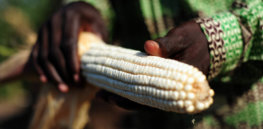
Insect-resistant GMO corn could help fend off fall armyworm invasion in Ghana, scientists say
Mr Eric Amaning Okoree, Chief Executive Officer, National Biosafety Authority (NBA) says genetically modified (GM) crops have a high potential ...

Delving into the GMO traits that cut back pesticide impacts globally
This is the second in a three-part series making the case that the development of the biotech traits for insect ...

EU health commissioner: Neonicotinoid, glyphosate decisions show European regulations consistent, science-based
No one can blame the European Commission of being in the hands of industry lobbies, as in both the glyphosate ...

Organic foods have less pesticide residue—but that doesn’t necessarily mean they’re healthier
The available evidence supports consumers’ belief that organic food production and consumption result in lower pesticide exposure, are more environmentally ...
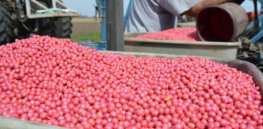
UK National Farmers Union: Neonicotinoid ban could compromise crop protection
The NFU has called the decision to ban the use of neonicotinoids to all outdoor crops as a "regrettable decision ...
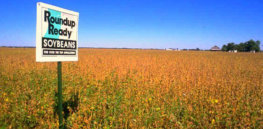
Let’s recognize Roundup Ready and Bt crops as major contributions to sustainable farming
This is the first in a three-part series making the case that the development of biotech traits for insect resistance ...
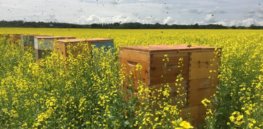
EU approves total ban on neonicotinoid insecticides due to bee health concerns
The European Union will ban the world’s most widely used insecticides from all fields due to the serious danger they ...
