


Agriculture & Food

GMO crop pioneer Marc Van Montagu: Overpopulation—not GMOs—drives monocultures
At roughly the same time as Mary-Dell Chilton and Monsanto, who were working in the United States, [Belgian molecular biologists ...

8 ways CRISPR is changing the world
From saving lives to potentially rescuing coral reefs, here are eight examples of exciting CRISPR projects that showcase just why ...

Viewpoint: French media’s ‘fake news’ on glyphosate herbicide endangers science in Europe
In Europe, technical matters which should be science-based, such as the authorization of marketing for chemicals or genetically engineered plants, ...

Talking Biotech: From non-GMO to organic, has food labeling gone too far?
Elanco's Colleen Parr Dekker: Product differentiation and marketing—not transparency and education—are why food companies adopt trendy labels ...
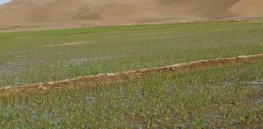
Salt-resistant rice shows promise for turning Middle East deserts into productive paddies
Chinese scientists have successfully grown and harvested rice in the deserts of Dubai after developing a strain that allows the ...

Mark Lynas: Scotland’s GMO ban hurts food security in Africa
Mark Lynas, a former eco-warrior who, five years ago, made a dramatic U-turn from trying to shut down scientific research ...

Can Joyn Bio’s genetically engineered microbes replace chemical fertilizers?
Big Ag is addicted to nitrogen fertilizers. It’s a massive problem for the global climate, yet it may yield to a ...

Factor GMO: The curious disappearance of the ‘world’s largest international study on GMO safety’
In late 2014, an obscure Russian group called a press conference in London to announce the launch of the “world’s largest ...

Indian rice farmers increasingly opt for buying high-yielding hybrids instead of saving seeds
The poorer a state, the less are the chances of its farmers adopting high-yielding seed technology, right? Well, not when ...
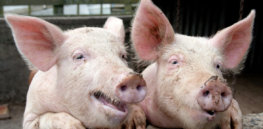
GMO pigs could reduce nitrogen and phosphorus pollution up to 45%
In pig production, inefficient feed digestion causes excessive nutrients such as phosphorus and nitrogen to be released to the environment ...

Why do most farmers buy seeds instead of saving and replanting them?
Saving seed from this year’s crop in order to sow it the following spring is a romantic idea, but most ...

Viewpoint: Non-GMO salt exploits Americans’ scientific illiteracy
There it was on the salt container label, the proud proclamation that the product inside was "non-GMO." I looked at ...

Kenyan cotton farmers call on government to lift GMO ban to revive struggling industry
[Kenyan farmers] were brought to their knees by low cotton yields when farmers lost interest in the crop.... However, if ...

Federal GMO labeling could cost $3 billion—more than government spends annually on food safety
Secretary of Agriculture Sonny Perdue ... is rolling out the new rules for labeling genetically engineered foods. The National Bioengineered ...

China’s delays in GMO crop approvals cost US economy $7 billion, biotech industry group says
Delays in Chinese approvals of imported genetically modified crops have cut U.S. gross domestic product by about $7 billion over ...

Reviving the American chestnut: Genetic modification can save the iconic tree from extinction
We’re using the tools of biotechnology to produce fully American chestnut trees that successfully tolerate blight infections, protecting the tree ...

How CRISPR is speeding up animal research
Fifteen years ago or so, when Helen Sang, a geneticist at the Roslin Institute in Edinburgh, and her colleagues wanted to ...

Are plants conscious? Here’s what the experts think
Michael Marder Ikerbasque Research Professor, Philosophy, University of the Basque Country, Vitoria-Gasteiz and author of Plant-Thinking: A Philosophy of Vegetal Life, ...

Uganda’s scientists strive to use biotechnology to solve agricultural, health and environmental challenges
It is morning time, we are in a hotel based at the center of Kampala, the capital city of Uganda, ...

Humans have killed more than 80% of wild mammals
[S]ince the dawn of civilisation, humanity has caused the loss of 83% of all wild mammals and half of plants, ...

Viewpoint: EU should embrace gene-edited crops to improve food nutrition
[T]he U.S. Secretary of Agriculture, Sonny Perdue, issued a statement on March 28th providing clarification on the U.S. Department of Agriculture’s (USDA) ...

Debunking the claim that GMOs cause cancer
Scientists have debunked claims that Genetically Modified Organism (GMOs) cause cancer after assertions by a doctor that the products are deadly ...

USDA funds research on public engagement with gene editing in agriculture
The U.S. Department of Agriculture (USDA) awarded approximately $2 million to pursue research on stakeholder and public engagement on new ...

‘Biofortification’: Super-nutritious crops could help millions of undernourished children
An incredible 155 million children around the world are chronically undernourished, despite dramatic improvements in recent decades. In view of this, the ...

Talking Biotech: Can genetically engineered cassava help African farmers?
Plant scientist Devang Mehta: African farmers lose 24% of their cassava crop each year on average due to the mosaic ...

US FDA approves GMO Golden Rice as safe to eat
The United States Food and Drug Administration (FDA) has approved Golden Rice, marking the third positive international assessment for the genetically engineered ...

Viewpoint: Let’s make sure smallholder farmers benefit from new breeding techniques
Critics argue that agro-biotechnology, and in particular genetic engineering, only provides large multinational corporations with the means to continue their ...
