


Agriculture & Food

President Macron’s attempt to appease French anti-glyphosate environmental lobby goes awry, alienating both his activist base and farmers
Good news for French agriculture. Finally, the European Commission decided to follow what a majority of Member States wanted, in this ...
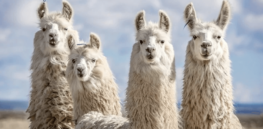
A llama-inspired way to protect crops
Most of us will never see a live llama except at a zoo unless we have an opportunity to travel ...

Viewpoint: Nigeria may be running out of farmable land. Is there a biotech-based solution?
It is probable that Nigeria would experience a scarcity of cultivable land and a notable reduction in the nitrogen levels ...

How algae, mushrooms and grass can supplement ‘de-carbonization’ initiatives
The prominence of the forestry industry in Sweden’s bioeconomy has whipped up controversy. Many scientists, activists, and NGOs are critical of ...
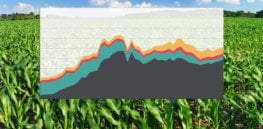
Pesticides and Food: It’s not a black or white issue — Has pesticide use decreased since the introduction of GMO crops?
What is the truth about crop pesticides and their residues in food in 2018? ...

The ‘holy grail’ of beer yeasts: How genetically-modified IPAs could stay fresh forever
Yeast is central to brewing, as it turns the sugars provided by barley malt and other grains into alcohol, while ...

300% yield boost: Analyzing Nigeria’s first GM potato project, one year later
The Genetically Modified (GM) Potato Project ongoing in Nigeria has concluded its first-year multi-locational confined trial in three locations, with ...

Viewpoint: Perversity activism — How European anti-biotechnology NGOs end up promoting commodity-crop farming, consolidating the seed market and undermining sustainability
One of the most attractive advantages of NGTs is the low cost of entry for innovators. Labs in developing countries ...

Relief to resilience: Bangladesh’s remarkable journey in biotechnology
In agricultural biotechnology, Bangladesh stands as a symbol of progress and innovation. Over the years, this South Asian nation has ...

CRISPR-created strawberries that stay firmer and fresher longer could revolutionize fruit industry
The cultivated strawberry (Fragaria × ananassa, Duch.) is one of the Rosaceae family renowned for its flavor and health benefits, ...

Cleaning up the atmosphere: Can seaweed farming help capture carbon dioxide?
Researchers are looking into a wide range of approaches to removing carbon from the atmosphere. Some are straightforwardly technical, like direct ...
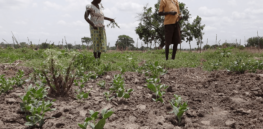
Facing food security threats, Ghana makes 4-year commitment to promoting research and development on genetically modified crops
The designation of Ghana as the International Atomic Energy Agency’s (IAEA) collaborating center for Africa, focusing on plant breeding and ...
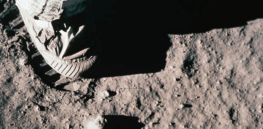
Growing food on the moon: With an injection of bacteria, scientists turn inhospitable lunar soil into fertile home for crops
If humankind is ever to establish long-term bases on the moon, there will be a need for a regular source of ...

Viewpoint: Inflation and climate change prompt American farmers to assess agricultural practices
Agricultural policy has gotten caught up in culture wars that have snarled other aspects of American life ...

Why gene-edited non-browning ‘Arctic apples’ are potential game changer for reducing food waste and extending supply chains
Three varieties of non-browning Arctic apples developed by a Summerland-based company are now rolling off the production line at a ...
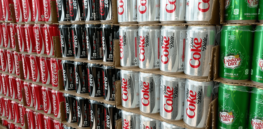
Revising 10 fact-based perspectives on entrenched food myths: Gene editing is good, diet soda is fine, organics is not the answer
I’ve been trying to suss out true and false to the best of my inevitably human, imperfect ability, and for ...
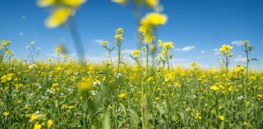
Viewpoint: ‘Anti-technology activists unfairly malign genetically modified mustard crop that could drop pesticide use by 40%’
The polarised debate over genetically modified (GM) crops in India is back in the limelight. The advocates and dissenters of ...

If seedless watermelons don’t have seeds, how do we grow more of them?
Although seedless watermelons have existed since 1940, and have been widely available at grocery chains since the 1980s, they continue ...

Here’s how we can overhaul our food and farming systems to grow enough food to meet population and climate change challenges
As consumers, our relationship with food – how we grow, produce and eat it, must change in response to increased ...

Joint Kenya-Uganda-Nigeria GMO research project develops blight-resistant, higher yield potato
Timothy Kipsang, a farmer from Kipkabus in Uasin Gishu County, has been growing potatoes on his farm for more than ...

37% yield increase: Almost all monetary gains from Indian GMO mustard will go to farmers, not to seed companies
Huge gains from biotech cotton commercialized [in India] two decades back notwithstanding, policymaking came to a standstill in terms of ...

China is the world’s top importer of soy and corn. Could dozens of recently-approved GMO varieties help boost production and curb imports?
China has approved dozens of genetically modified corn and soybean seed varieties for planting, in a breakthrough move that could ...

Reishi, chaga, lion’s mane: Is it possible to verify trendy ‘superfood’ mushroom supplement claims?
Recent studies have shown that mushrooms are packed with essential vitamins, minerals, fiber, and special compounds that are great for your ...

How China’s GMO rice is making salinated land arable for cotton and other seasonal crops
On the rim of Xinjiang’s desert, in a region where the soil is so salty that most vegetation refuses to ...

Biotechnology timeline: Humans have manipulated genes since the ‘dawn of civilization’
The history of biotechnology shows how humans have been manipulating nature for our benefit for a long time—and how modern ...

Pumpkins against poverty: How this drought-tolerant fruit might prove to be sustainable boon in developing world
Pumpkins are an ideal plant for water insecure regions due to their tolerance of drought. Given their ability to withstand less water and ...

Can Nigeria reach food security without genetically modified crops?
For Nigeria to attain food sufficiency to feed its current population of over 212 million people and reduce its overreliance ...
