


Featured in Weekly Newsletter

Playing music ‘in the zone’: Brain scans can tell us how jazz musicians get into the flow
Flow, or being “in the zone,” is a state of amped-up creativity, enhanced productivity and blissful consciousness that, some psychologists ...

Viewpoint: The disinformation-promoting Non-GMO Project takes on synthetic biology on behalf of the consumer. Are they really on your side?
The Non-GMO Project is a pay-for-certification scheme masquerading as a 501(c)3 organization. It allows food manufacturers to decorate their packages ...

Green politics and sustainability: Rising costs and other trade-offs
“Green” policies designed to reduce our dependence on fossil fuels may not as much of a good thing as you ...

GLP podcast: About that lousy glyphosate-damages-sperm study; Social media can be good for teens? ‘Carnivore’ diet facts and myths
A recent study and subsequent news coverage alleged that the weedkiller glyphosate causes reproductive damage in men. As usual, there ...

Viewpoint: ‘Organic products are safer for consumers than conventional products?’— In Canada, 46% of organic produce tests positive for pesticide residue
Over and over, the term ‘organic’ is used as an umbrella for a variety of qualitative features in food. There ...

The escalating arms race between viruses and humans: Why a universal coronavirus vaccine is so critical
The arrival of the next pandemic is a matter of when, not if. "COVID-19 was the third major and serious coronavirus epidemic ...

90% of genomic studies use DNA only from white people. Here’s one project addressing this gap
When he recently walked into the dental clinic at the Medical University of South Carolina donning a bright-blue pullover with ...

Viewpoint: ‘The fight to save America’s iconic chestnut tree has become a civil war’
For the past two decades, Sara Fern Fitzsimmons has raised seedlings of the American chestnut in research orchards along the ...
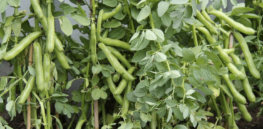
Bean farming revolution? Unique innovations could leverage lentils and chickpeas to lock in growth-promoting nitrogen in soil
From lentils to chickpeas, and even the humble baked bean, pulses are perhaps best known as an alternative, plant-based source ...

Many of us would give an arm and a leg (and maybe a finger or two) to know what humans can learn from cockroaches
I've admired the cockroach’s ability to regrow lost legs since learning about them while working on my PhD in developmental ...
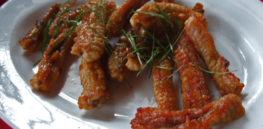
With the cell-based meat revolution lagging, snake meat offers an alternative to help lower our carbon footprint
Biotechnology has solved many problems, from recombinant DNA and monoclonal antibody-derived drugs, to gene therapy and stem cell transplants, to ...

Viewpoint: Chemophobia at the Wall Street Journal: Why did the WSJ assign a finance journalist to author a hit piece on a former EPA official-turned-consultant that misreports the science consensus on glyphosate and PFAS chemicals?
Every now and then an article is published that is so regrettably polarizing, so tilted to a “Good vs Evil” ...
GLP podcast: Mother Jones blasts AAP anti-GMO report; Animals mistreated on organic farms? Why did humans evolve to love music?
Once fiercely skeptical of "Big Ag," even adamantly progressive media outlets like Mother Jones are beginning to embrace the use ...

How the media portrayed a study: “High Levels of Glyphosate Found in Sperm” – What data actually show: Almost no chemical traces and no effect on sperm
The headlines explode in horror and the anti-glyphosate mobs spring to action. The headlines scream: Males may not be able ...
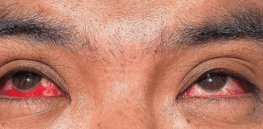
‘Heightened alert’: Avian flu detected in water supplies, virus found in the meat of one cow, and flu-tainted milk has infected mice and cats
Since the beginning of the year, the highly pathogenic H5N1 bird flu strain that previously had killed tens of millions ...

Let’s review the (faux) claims of a pesticide-caused insect collapse
If you keep up with the news in the mainstream media, you might think it’s time to ditch the flyswatter ...

Viewpoint: Optimism fades that Europe will significantly reform its current near-ban on gene-edited crops
The genetic modification, or genetic engineering (GE), of plants and animals by selection and breeding has been practiced by humans for ...

Headlong rush in health care to embrace AI opens trap door to legal disputes
When AI contributes to patient injury, who will be held responsible? ...
GLP podcast: Is ChatGPT writing fake studies? Vegan restaurateur serves meat, sparks outrage; We need better IVF regulation
Researchers are increasingly relying on Chat GPT and other AI platforms to write their peer-reviewed studies, raising yet another serious ...

Fat + sugar’s irresistible combination has a biological basis in the gut-brain connection
You know those moments when you’re faced with a gooey chocolate chip cookie or a crispy slice of bacon, and ...

Speed of how you talk — rather than trouble remembering words — is more accurate indicator of brain health as you age
A recent study suggests that the speed of speech, rather than difficulty in finding words, is a more accurate indicator ...
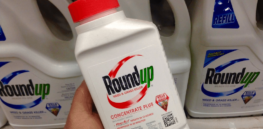
Viewpoint: After nearly two dozen Roundup trials, what have juries learned about the link between glyphosate and cancer?
A lawyer who claims his client, a government union employee, got cancer from using the common weedkiller Roundup, is whining that his ...

Viewpoint: ‘Environmentalists are wrong on opposing technological tweaks to agriculture’: How activists undermine society’s need for more climate-adaptive sustainable farming
Public concern about the environment has not always been part of the social conscience in North America. After all, European ...

A timeline of artificial intelligence (AI), 1940s to today
A roomsize computer equipped with a new type of circuitry, the Perceptron, was introduced to the world in 1958 in ...

Fatigue in long COVID: The sinister gift that keeps on giving
By now, almost everyone knows people who have had COVID. Although most recover within a few days or weeks, it ...

Viewpoint: Uncomfortable truth — ‘Organic farming takes too much land to have any chance to feed the world in a climate-changed environment’
Science for Sustainable Agriculture (SSA) was recently asked by the farming media to comment on a policy paper issued by the ...

‘There is ‘a real possibility’ that reptiles, insects, octopuses and mammals have consciousness, scientists declare
Crows, chimps and elephants: these and many other birds and mammals behave in ways that suggest they might be conscious. And the list does ...
