


Featured in Weekly Newsletter

Risk, hazard and the precautionary principle: Why Europe gets crop biotechnology and chemical regulation so wrong
David Zaruk, Founder of GreenFacts, Environmental-Health Risk Governance Analyst, Professor at Odisee University College | July 24, 2018 Highlights: European ...
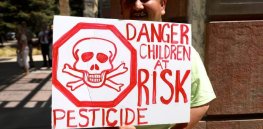
Environmental activist irony: Anti-chemical campaigners end up promoting higher food prices with few farming or health benefits
ENGOs target chemicals judged safe by independent global regulatory bodies, such as glyphosate, but have no interest in restricting some ...

Podcast: Non-GMO Project loves ‘GMO’ watermelon; Glyphosate in breastmilk; Junk nutrition studies
The Non-GMO Project recently endorsed seedless watermelon on Twitter, thereby giving an accidental thumbs up to many other genetically engineered ...

Hundreds of companies now making plant-based proteins, from beef to chicken to seafood. Here is what’s on the platter
Imagination is a wonderful thing. It is even more incredible when you can realize your dreams. Did you ever think ...

Getting drunk without the hangover? There may be a pill for that?
A new anti-hangover supplement has just gone on sale in the UK. It is marketed by Swedish firm Myrkl as “the pre-drinking ...
How and why gene editing faces fewer global regulations than GMOs
After they were introduced in the mid-1990s, GMO crops were met with a buzzsaw of regulations and skepticism because they ...

Did you follow COVID lockdown rules? Whether or not you did is partially driven by your DNA
All over the world, people suffered the influence of the COVID-19 pandemic on their wellbeing. However, the impact was not ...

Viewpoint: Why anti-chemical activists just can’t accept the good news that the FDA finds US produce safe and healthy
What do you do when the evidence doesn't support your conclusion? There are just two choices: admit you were mistaken ...
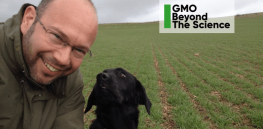
A UK Farmer’s Perspective: What are the Consequences for Sustainability and the Public When Biotechnology Innovations are Withheld?
Jake Freestone, Farm Manager at Overbury Farms, West Midlands, United Kingdom | July 10, 2018Highlights:European politicians bows to activist pressure, ...

Podcast: Industry funding doesn’t corrupt science; COVID lab leak refuted? Dicamba controversy revisited
Should agricultural scientists take research funding from corporations? A pair of studies suggests that a 'lab-leak' origin for SARS-CoV-2 looks ...

Far-fetched idea of ‘head transplants’ sparks an ethical debate
Far from being far-fetched, human head transplantation is theoretically possible and merits an entry in Wikipedia. One neurosurgeon claims this will be a doable ...
Viewpoint: Great Green Leap… backwards — Europe’s ideological obsession with old solutions
I have too often warned that Western affluence and prosperity can disappear in a heartbeat through irrational policies. Europe has ...

Glyphosate traces in breast milk? Weedkiller causes neurological disorders? How activists leverage social media to distort science and spread bogus health concerns
Shocking accounts of health dangers selectively presented from peer-reviewed science articles regularly invade Twitter. It’s the stock-in-trade of technology rejectionists ...

Revising my genetics textbook: A PC exercise or an appropriate evolution of science and sensitivity? Or both.
Beyoncé is facing a lot of criticism for using an ableist slur in her new co-written song Renaissance. She used ...
Europe’s climate change-induced droughts endanger food security, spur calls to embrace biotechnology and other sustainable measures
The scientific community has preferably dealt with studying drought in regions or countries ( Sahel , Horn of Africa, South Africa, Australia...) ...

Categorizing people based on physical traits like hair texture feeds racial stereotypes. Genetics challenges that prejudice
In an undergraduate biological anthropology class in 2011, Tina Lasisi heard a lesson about human skin tones that would change the course ...

Viewpoint: Non-GMO Project promotes genetically-modified seedless watermelon
As summer grinds on, the Non-GMO Project is here to reassure consumers that seedless watermelon is not genetically modified. “Are ...
Lax peer review + social media + confusing and misinterpreted data: Why so many COVID-era studies presented incomplete science
The pandemic has upended many practices, among them peer review of technical medical and scientific articles. Lax peer review + ...
Analysis: Assessing sustainable food production — Certifications like ‘organic’ tell us very little. It’s time to shift focus to outcomes
In 80 years—during which our knowledge of farming’s environmental impacts has grown profoundly—the federal government’s basic approach to agricultural sustainability ...
Podcast: Sri Lanka’s disastrous fertilizer ban; Bees are fish in California; More pesticide lawsuits incoming
Organic activist groups led Sri Lanka's economy over a cliff by pushing a ban on pesticides and fertilizers. Will they ...

Could celibacy have an evolutionary advantage?
Many religious institutions around the world require celibacy. The practice has led anthropologists to wonder how celibacy could have evolved ...

How scientists are genetically tweaking cotton to make it more sustainable
Scientists can use good genes from other organisms to replace the defective ones in cotton, yielding cotton plants with all ...
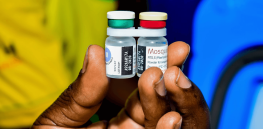
Why the new malaria vaccine is just a first step in fighting this deadly scourge
With the Covid pandemic now in its third year, it is perhaps hard for the media and the public to ...
Dubious findings about food from the ‘Nutrition Researchers Guild’: How can we learn from this unscientific manipulation of statistics?
Are you confused about conflicting “research” findings on certain foods’ effects on our health? It would hardly be surprising. First, ...

Viewpoint: No, chemicals are not making you fat—Environmental Working Group gets the science wrong yet again
The activists at Environmental Working Group (EWG) consistently butcher the science on a variety of consumer health issues. They're wrong about ...

Humans arrived in Europe significantly earlier than previously estimated
Perched about 325 feet (100 meters) up the slopes of the Prealps in southern France, a humble rock shelter looks ...

Viewpoint: Switching to organic food because it’s healthier, safer and better for the environment? Think again
Many consumers are committed to organic products for reasons that are more emotional than logical. They frequently define their purchasing ...
