


Food & Ag Features

Part 1: Does Europe-based Precautionary Principle protect consumers from reckless corporations or retard innovation and undermine public trust in science?
Proponents of the precautionary principle often claim that it is necessary to secure public trust in research and technology. Without ...

Nutrigenomics: Can what you eat reprogram your genes?
People typically think of food as calories, energy and sustenance. However, the latest evidence suggests that food also “talks” to ...

Viewpoint: What regulatory and diplomatic steps are necessary to forge a transatlantic alliance promoting agricultural biotechnology innovation?
Mutual self-interest provides a strong basis for transatlantic cooperation in biotechnology based on shared recognition of its vast potential to ...
Part II: The Clean 18 — USDA finds almost no pesticide-related health concerns from fruits and vegetables grown on American farms, while data on organic food is lacking
The purpose of the following section is to explore commodity to commodity differences by a variety of measures and not ...
Part I: The Clean 18 — Challenging Environmental Working Group’s Dirty Dozen scare survey of pesticide residues on conventional fruits and vegetables
The recent release of the “Dirty Dozen List” by the organic-industry-funded Environmental Working Group has stirred up its annual hornets’ ...

Viewpoint: Is science white or black? Politically-correct censorship targeting whites and supporters of biotechnology invade academia
North Carolina State University recently cancelled a science-outreach event because the invited speakers have the wrong skin color. It's another ...
Viewpoint: There is a solution to the devastating poultry pandemic – but anti-technology activist groups and outdated regulations are blocking it
The bulldozer belches black smoke into the air, an engine revving with extra effort to push a hill of feathered ...
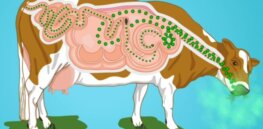
Will plant based meat alternatives curb the greenhouse gas impact of animal agriculture? This independent study concludes consumers are key
New plant-based meat (PBM) alternatives that aim to mimic the taste and texture of beef could have significant economic, environmental, ...

Mexico’s plan to ban glyphosate by 2024 is already backfiring against farmers, consumers and the environment
The Mexican government is still on track to ban completely by 2024 the use of glyphosate which is paired with ...

How Russia’s invasion of Ukraine endangers our global food system
Life is full of unintended consequences. And unfortunately, the Russian invasion of Ukraine has provided classic proof of the old ...

Why Africa needs access to both traditional agricultural tools and cutting-edge biotechnology innovations
As an agricultural and environmental scientist, I’ve worked for decades exploring the practical challenges that smallholder farmers encounter in East Africa ...

Biotechnology key driver of sustainable agriculture innovation in Canada
Anyone who has driven through or flown over, the Canadian prairies during the summer in the past decades, will likely ...

How once-distinguished The Lancet has become hothouse for anti-science advocacy
Misinformation is rampant on social media. The science community has spent most of the last two years trying to slow ...
Global crop gene editing advances as numerous countries break from European Union’s restrictive policies
Great Britain has already decided to take the first steps, as has Switzerland: dealing with simple genome-edited plants will be ...

Viewpoint: How South Africa is bungling regulation of CRISPR and other gene edited crops — and why consumers will pay the price
Food security is a global priority – and it is becoming more urgent in the face of climate change, which is ...

Russian invasion of Ukraine portends a global food crisis—and the European Union’s Green Deal Farm to Fork Policy will only exacerbate it
Well before the Russian invasion began, I shared a shocking FAO statistic. Overall global food prices increased by almost 20% ...

Viewpoint: Organic farming best addresses climate change? Why the popular consensus is wrong—and why GE crops should be agriculture’s future
Popular wisdom is often wrong. Consider, for example, how it views organic agriculture, which has grown to a $48 billion a ...
Dangerous levels of glyphosate in urine? Junk science paper based upon a large-scale anti-GMO testing campaign
The public and journalists – the consumers of information about health – need to be aware of something that researchers ...

Viewpoint: Why is Germany hiring a former Greenpeace activist who reflexively opposed nuclear energy and genetic engineering as a climate advisor?
February 9, a headline caused a stir: Annalena Baerbock now employs Jennifer Morgan, the former head of Greenpeace, as special ...
Bumblebees are under threat. Here’s why we need to protect them
In a time of unprecedented species extinction, when seemingly every day brings news of yet another animal or plant on ...

Phenomenal progress in gene drive-based pest eradication
Gene drives are selfish genetic elements that are transmitted to progeny at super-Mendelian (>50%) frequencies. Recently developed CRISPR–Cas9-based gene-drive systems ...

Are GM foods safe? New study of studies challenges long-established claim that GMOs pose no unique health hazards. Let’s review what they found
Do GMOs adversely impact humans? Thousands of studies have been performed over the past 20 years attempting to answer in ...

Organic farming is both yield intense and more sustainable? BBC bungles revision of pro-organic ‘propaganda’ aimed at school children
Despite an investigation by BBC’s rural affairs broadcaster Tom Heap, the network continues to peddle fact-challenged study guides promoting organic ...

How ‘agricultural intensification’ could cut global farm land use by almost 50%, increase biodiversity and help address climate change
In the context of trade-offs between land use and biodiversity, LMU geographers have simulated land saving potentials for agriculture. With ...
Viewpoint: What are the barriers limiting Africa from adopting genetically engineered and hybrid-improved seeds?
Over the last 15 years, development organizations including USAID, the UK’s DFID, and most prominently the Gates Foundation, have invested millions ...

Viewpoint: How Consumer Reports offers up a dish of bad and biased advice about what we should eat, and why
Consumer Reports (CR) promotes itself as an unbiased source of a wide variety of product ratings. It also publishes Should ...
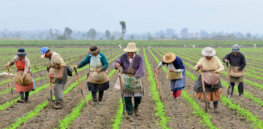
Latin America’s embrace of gene editing positions Americas to become global leader in agricultural innovation
Over the 25 years since the introduction of GM crops in Latin America, the continent has been a battleground between ...
