


Food & Ag Features

Viewpoint: Part 1 — Opposition stirred by anti-GMO advocacy group propaganda fading in the developing world, as more countries embrace crop biotechnology
Although acreage under GMO crop cultivation has expanded rapidly worldwide since GMOs first began to be grown in the mid ...
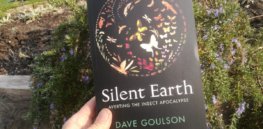
Viewpoint: ‘Silent Earth’ cynically peddles scientifically unsupported insect apocalypse hysteria to nakedly promote organic agenda
To most people, food production, home ownership, and energy don't have much in common, but in the hands of 'science ...

Viewpoint: African agricultural biotechnology advancing swifty in labs to address food security threats — but implementation slowed by European opposition
From the beginning, genetically engineered (GE) crops (also known as GMOs) have been controversial. Europe has always been at the ...
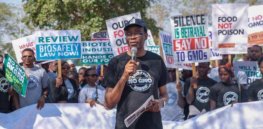
Part 2: How scientists beat back anti-biotechnology activists’ ‘insidious campaign’ to block Nigeria’s approval of pest-resistant GMO cowpea
The standard for how to conduct a safely assessment is laid down by the Codex Alimentarius, a food code established ...
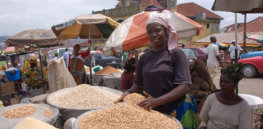
Part 1: Addressing food security in Nigeria — Seeds of hope for subsistence farmers as insect resistant GM cowpeas finally come to market
Not a lot has improved for Nigeria’s subsistence farmers over the years. Most can’t afford fertilizer and chemicals; there’s no ...

Japan ushers in CRISPR gene edited food revolution as hypertension-reducing tomato now on sale
In the coming years, a genetically engineered tomato may be your first line of defense against high blood pressure. Biotech ...

Viewpoint: ‘Green neo-colonialism’ — Utopian visions of organic farming promote starvation in Africa
Across Africa, farmers and governments are struggling to feed growing populations. Ongoing and deadly locusts and Fall Armyworm infestations, cancer-causing ...

Viewpoint: Should genetically edited food be on your dinner plate? A synthetic biologist and a sociologist say ‘yes’
Nicola Patron: Oil from soybeans gene-edited to produce a “high oleic” oil with no trans fats and less saturated fat is already ...

Dismissing sizable sustainability benefits, organic industry petitions USDA to block hydroponics from being classified as organic
Organic food producers, which eschew synthetic pesticides for "natural" ones, regularly market their products as more sustainable than conventional offerings, but they're not ...

Managed honeybee and bumble bee colonies in the US are up as much as 85%, a 60 year high, as independent researchers challenge bee apocalypse narrative
The Western honey bee (Apis mellifera) is amongst the best-monitored insects but the state of other managed pollinators is less well ...

Kiel University study: Double disaster — Europe’s Green Deal Farm to Fork plan would undermine environmental sustainability goals with no significant economic payoff
A significant reduction in agricultural production in the European Union with full implementation of the Farm to Fork Strategy of ...

Genetically engineered trees offer dual sustainability benefits: Carbon sequestration boosts and the ability to grow more trees on less land
The startup Living Carbon claims their fast-growing genetically engineered (GE) trees could increase forest carbon capture by 1.4-2 gigatons per year, ...

Uganda’s costly dithering on GMOs
Uganda has a very extensive research and confined field-testing program for GMO crops that include disease-resistant potatoes, cassava and bananas, ...
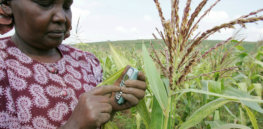
Kenya opens the door to GMO cultivation
On December 19, 2019, the Kenyan government approved the cultivation of GMO cotton after five years of field trials and ...
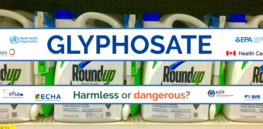
Infographic: Does consuming micro-traces of glyphosate (aka Roundup) in our food cause cancer? All 20 global regulatory and chemical oversight agencies say ‘no’, while anti-biotech activists spin the data
Glyphosate weedkiller, once marketed exclusively under the name RoundUp by its originator Monsanto, is the world's most popular herbicide, used ...

Instituted to protect our food, the ‘precautionary principle’ often perpetuates fears and does more harm than good
The origin of the term “better safe than sorry” goes back to a book written in 1837, Rory O’More. The rest ...
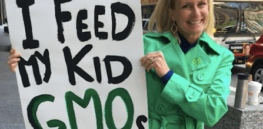
Viewpoint: Anti-science GMO rejectionists won’t disappear anytime soon but the past year has demonstrated their increasing irrelevance
Just six years ago, America was engaged in a ferocious debate over GMO food labels; March Against Monsanto could assemble thousands ...
Viewpoint: Let’s stop the fear mongering in food labeling
Between his former and current terms as U.S. Secretary of Agriculture, Tom Vilsack in a 2019 opinion piece called for a ...
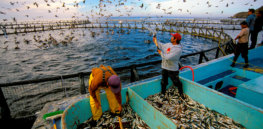
How can we protect wild salmon from interbreeding with farmed salmon? CRISPR gene editing is a solution
Upon an otherwise unruly landscape of choppy sea and craggy peaks, the salmon farms that dot many of Norway’s remote ...
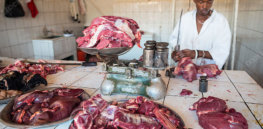
Reducing meat consumption to tackle climate change: What role will Africa play?
A burning issue in the world today is climate change. Across Africa, the effects are complex. They range from the ...
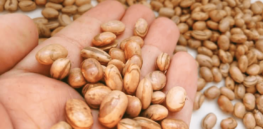
The story behind the 100% public GM bean reaching Brazilian plates
In some Brazilian supermarkets, it is already possible to buy a new genetically modified (GM) common bean, which bears the ...

Freezer burn wastes food. Now scientists are developing bio-based solutions to prevent recrystallization
Open the freezer door and there, way in the back, may be an old carton of ice cream growing spikes ...

Part 3: ‘Fallacious and wrongheaded’ — The Cartagena Protocol’s categorization of ‘living products’ of agricultural biotechnology as GMOs was a ‘nonsensical’ blunder that disrupted technological innovation and trade
Ten years after the coming into force of the Cartagena Protocol, its own supporters noted that effective implementation was fragmentary ...

Part 2: Viewpoint — Digging into the ‘prejudices’ that have plagued the Cartagena Protocol’s misguidance on international regulation of agricultural biotechnology
The Cartagena Protocol on Biosafety (Convention on Biological Diversity 2000), which was adopted in 2000 and entered into force in ...
Part 1: Viewpoint — ‘Misguided and counterproductive’: Why the world needs to scrap the Cartagena Safety Protocol that influences regulation and impedes global trade of GM seeds and plants
According to a long-time and widespread scientific consensus, agri-food biotechnology regulation should focus on the risks and benefits of each ...

Podcast: Are we on the edge of an ‘insect apocalypse?’ GLP Founder Jon Entine debunks this pervasive myth
Could we be on the edge of an insect apocalypse — one that results in 'ecological collapse that would break ...

Viewpoint: ‘Predatorts’ — How activist nonprofits create fear and seed science doubt, generate lawsuits, and distort public policy
Imagine you are a US tort lawyer wanting to extract as much honey from the pot as possible. What do ...
