


Sustainability & Climate Change

‘Politics, money and fear’ have kept GMO salmon out of American grocery stores
AquaBounty Farms of Indiana is a land-based fish farm designed to raise the revolutionary AquAdvantage salmon. Scientists created the fish ...

Edible GMO cotton could supply protein to 600 million people daily
It turns out cotton seed is a great source of protein, except it’s currently toxic for humans. Cotton naturally produces gossypol, ...

Why monocultures might be the most sustainable option when choosing cover crops
It's long been believed, without much empirical evidence, that biodiversity in crop cover mixtures increases crop productivity, improves soil ecosystems ...

‘Precision farming’ could slow climate change and unlock $250 billion in profits for farmers
There is a long list of global problems to combat, including hunger, drought, poverty, bad health, polluted water and poor ...

Health and environmental dangers of copper-based natural pesticides spark division among French organic winemakers
The vice-president of the CIVB (Conseil interprofessionnel du vin de Bordeaux) Bernard Farges launched a bomb on October 15, announcing that ...

Earth-friendly GMOs: How Bt crops eliminated 6 million tons of pesticides
[W]hen I first heard about genetic engineering when visiting my eventual graduate school home, I was really excited about the ...

How Omega 3-fortified GMO canola can help save our oceans
In 2017, over 100,000 acres of canola was grown in Montana, according to the United States Department of Agriculture ...

Viewpoint: Environmental gene editing shows promise, but requires ‘careful oversight’
In Burkina Faso, the government is considering the use of genetically modified mosquitoes to eradicate malaria. In Nantucket, Mass., officials ...

Video: Led by gene editing, these scientific breakthroughs are the future of agriculture
A new report from the National Academies of Sciences, Engineering, and Medicine identifies the most promising scientific breakthroughs that are ...

Why the USDA is finding it hard to combat surge in fraudulent organic products
USDA has an organic problem. The department wants to clamp down on fraudulent products, but needs to tackle inaccurate government ...

Can we ‘build’ a better banana with genetic engineering?
Reproductively, domesticated banana plants are self-copying machines .... With the emergence of the 20th century, the confluence of the Industrial ...

Teen farmer challenges myths about GMOs, ‘factory farming’
Growing up on a production agriculture farm .... I help to produce the food that we enjoy on a daily ...

Gene silencing could help boost rice yields in developing world
Scientists can examine the genetic basis for some of the changes that took place during rice domestication by comparing genes in cultivated rice plants with ...

Can biotechnology help protect the world’s chocolate supply?
[K]eeping pace with global cravings can be a tall order for chocolate producers — a challenge made even tougher as ...

CRISPR gene editing could fuel fight against evolving cotton pests
[B]ugs are biting back by adapting to crops genetically engineered to kill them. A new study published in the Proceedings of ...

‘Goodish’ news for climate change models: They don’t account for plants’ nocturnal behavior
Climate scientists have not been properly accounting for what plants do at night, and that, it turns out, is a ...

FDA launches initiative to support plant, animal biotechnology innovation
Today, [October 30] the U.S. Food and Drug Administration announced the Plant and Animal Biotechnology Innovation Action Plan to outline the key ...
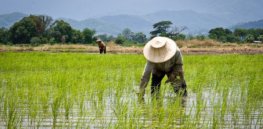
Climate change and rice: How some of the world’s poorest nations may suffer
Much of the world relies on rice. What happens when climate change threatens rice nutrition? ...
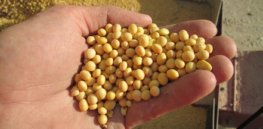
Healthier oil? US farmers poised for first harvest of gene-edited soybeans
Farmers in the United States are poised to harvest, for the first time, 6,500 hectares of genetically modified soybeans that ...

GM corn boosts yields as much as 58 percent in Tanzanian field trials
Tanzania's second year of confined field trials of genetic modified maize is bearing fruit, as the crop has significantly shown ...

6 things agroecology can do for farming and the environment
Agroecology has returned to the global spotlight, as one approach to bring farmers closer to meeting challenges [like rising food ...

Viewpoint: Why we have to fight for what biotechnology can offer us
“Tea. Earl Grey. Hot.” That’s how fictional star ship captain Jean-Luc Picard from Star Trek orders his tea, 300 years ...

Grass genes could help scientists breed crops better adapted to drought, high temperatures
Researchers from Cornell and the United States Department of Agriculture will tap into genetic information found in more than 700 ...

Video: How ‘turning down’ gene expression in pests can help protect crops and bees
In this video, CropLife International scientist Greg Heck discusses how researchers are using RNA interference (RNAi) to turn off or ...
How synthetic biology can solve the problems we’ve created
Human activity has wreaked havoc on the environment. Many of the products we rely on for our daily lives are ...

Countering the impact of climate change through new breeding techniques
It is imperative that we breed new varieties of plants to make agriculture more sustainable, given increasing food demand and ...

Talking Biotech: How insects could make our food supply more sustainable
Producing feed for animals we eat has led to overfishing and other environmental challenges. Feeding our livestock insects might solve ...
