


Sustainability & Climate Change
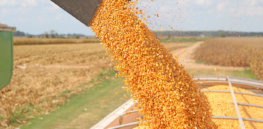
‘Low to non-existent’ safety risks and higher yields support widespread adoption of GMO crops, researchers say
The anticipated world population growth emphasizes a need to produce more food on less land. Cutting-edge technologies, including genetic engineering, can ...

Onto the grill: But are consumers ready to embrace—and eat—lab-grown meat?
It’s been a busy summer for food-based biotech. The U.S. Food and Drug Administration made headlines when it approved the ...

Genetic basis for fruit and vegetable shapes helps tell the story of plant evolution
From elongated oblongs to near-perfect spheres, vegetables come in almost every size and shape. But what differentiates a fingerling potato ...

Some wild bee populations are declining. What can we do about it?
In recent years, a significant amount of attention has been paid to the numerous threats that are facing the honeybee ...

New biocontainment strategy could prevent spread of GMO microbes in the wild
Hiroshima University (HU) researchers successfully developed a biocontainment strategy for …. GMOs. Their new method prevents genetically modified cyanobacteria from ...

How crop biotechnology preserves and promotes biodiversity
Experts attending the [recent] United Nations Biodiversity Conference in Egypt say that adopting smart agronomic practices can play a significant ...
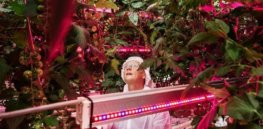
Video: Space-inspired ‘speed breeding’ fast tracks improvements in food crops
Technology first used by NASA to grow plants extra-terrestrially is fast tracking improvements in a range of crops. Scientists at ...

Vitamin-fortified Golden Rice moves one step closer to commercialization in the Philippines
A variety of Oryza sativa (rice) genetically engineered using recombinant DNA technology, Golden Rice contains beta carotene, an antioxidant which ...

Talking Biotech: As demand for food rises, the world needs more plant scientists
The world needs plant scientists. Two experts explain how you can join the field ...
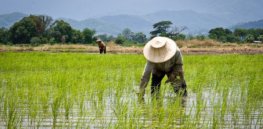
New GMO rice variety could cut arsenic exposure in food
Arsenic accumulation in rice grains is one of the serious agricultural issues in India. To address this, researchers at Lucknow-based ...

Argentina could be first country to plant GMO wheat, engineered for drought resistance—if regulators approve
“We mustn't do what other countries have already done; we must do what no other country did," the CEO of ...

Plants engineered to ‘recycle’ toxins could boost crop yields nearly 50 percent
Can you imagine the entire population of the United States, Canada, Mexico, Brazil, the United Kingdom and France going hungry? ...

8 pressing questions about GMOs, human health and the environment
[W]hen the International Service for the Acquisition of Agri-biotech Applications (ISAAA) sent ... its latest report, stating that, “Biotech crops ...
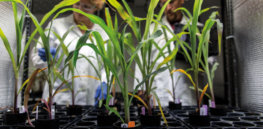
Can genetic engineering deliver a natural microbial fertilizer for crops?
At the turn of the previous century, German scientists Fritz Haber and Carl Bosch got all the credit for finding ...

Lab-grown fish? How biotechnology might save the endangered bluefin tuna
For several years, biotech companies have been promising “clean” meat, “cell-based” meat, “cultured” meat — whatever you want to call ...

Soil salinity cuts crop yields worldwide, but salt-tolerant crops are on the horizon
Soil salinity [affects] large areas in the world and millions of farmers are faced with decreasing yields and many are ...

New plant breeding strategy could counter blight pathogen that wreaked havoc during Irish potato famine
Scientists .... have shed further light into the mechanisms through which the potato blight pathogen interacts with plant cells to promote disease ...

How GMO crops can be engineered to ‘rehydrate’ after intense drought
Scientists at the RIKEN Center for Sustainable Resource Science in Japan have found that the protein NGA1 is critical for ...

How plants have shaped the course of human history
Quinine (Scientific name: Cinchona) is a plant that has influenced the course of human history. Used for centuries by the indigenous ...

Genetic engineering is changing our food. An expert explains everything you should know
SCIENTISTS CONTINUE TO find new ways to insert genes for specific traits into plant and animal DNA. A field of promise—and ...
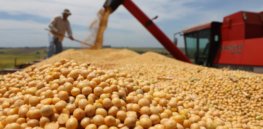
Gene silencing could ‘fool’ plants into surviving harsh environments
By temporarily silencing the expression of a critical gene, researchers fooled soybean plants into sensing they were under siege, encountering ...
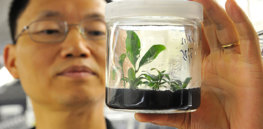
How scientists are using CRISPR to create non-GMO crops
To feed the burgeoning human population, it is vital that the world figures out ways to boost food production. Increasing ...

Epigenetic changes in plants could help produce food crops better suited to harsh environments
The sequence of genes passed on to daughter cells or offspring isn't the only factor that determines the traits of ...

Gene sequencing could help researchers breed cold-resistant crops
When temperatures fall below 32 degrees, crops exposed to the elements undergo biochemical changes designed to protect cells from cold ...

We should stop saying biotechnology can ‘change the world,’ expert argues
It is common to hear claims that biotechnology will solve many of the world’s most perplexing problems. For example, a ...

‘Transcontinental pollination’: How migrating insects enable plants to mix
Metabarcoding, a technique of mass DNA sequencing, allows for tracing migratory routes of insects, an understudied subject due to technical ...

Identifying genetic basis for plant biodiversity could help boost crop yields
Diverse communities of plants and animals typically perform better than monocultures. However, the mechanisms that are responsible for this have ...
