Lab-grown fish? How biotechnology might save the endangered bluefin tuna

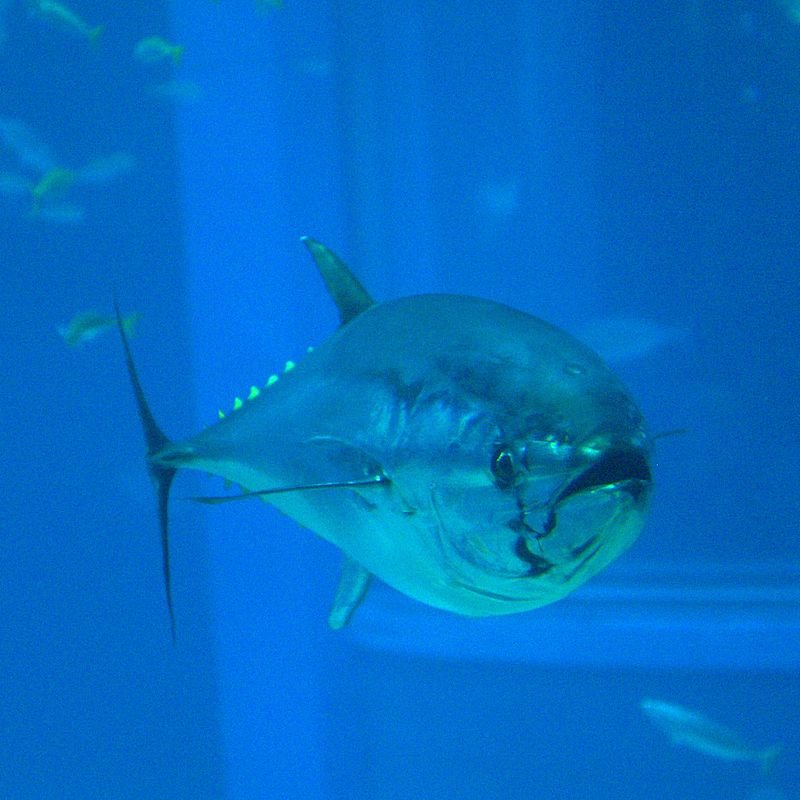
px Thunnus orientalis Osaka Kaiyukan Aquarium
Image Credit: Wikipedia

For several years, biotech companies have been promising “clean” meat, “cell-based” meat, “cultured” meat — whatever you want to call it — as a way to enjoy the taste of chicken, pork and beef without the brutality of animal slaughter or the environmental damage of big agriculture. But what about fish? What about something as prized as buttery bluefin tuna, a delicacy that has become the forbidden fruit of the sea because of the many threats that have landed the fish on threatened and endangered species lists?

Well, there is at least one scientific pilgrim: Brian Wyrwas is the co-founder and chief science officer for Finless Foods, a Bay Area biotech dedicated to growing bluefin tuna in a lab. He can tell you all about the difficulties of his task, starting with the bone-weary process of securing bluefin tuna samples, the pristine source material for much of the science that follows in this field known as cellular agriculture.

Unlike scientists who grow chicken or cow cells in a lab, Wyrwas can’t exactly biopsy a living animal for tissue, given that bluefin tuna travel the world’s oceans at speeds approaching 40 miles per hour. Nor can he grab a sample from one of the precious few bluefin tuna farms, which would view him as competition. Nor can he walk into a fish processing plant and request a sample. Bluefin tuna die on ship, many miles from shore, their cells slowly decomposing even when frozen or on ice.

Read full, original article: Can we save the prized bluefin tuna, and its habitat, by growing it in a lab?


{{ reviewsTotal }}{{ options.labels.singularReviewCountLabel }}
{{ reviewsTotal }}{{ options.labels.pluralReviewCountLabel }}
{{ options.labels.newReviewButton }}
{{ userData.canReview.message }}

Related Articles

Infographic: Global regulatory and health research agencies on whether glyphosate causes cancer

Infographic: Global regulatory and health research agencies on whether glyphosate causes cancer

Does glyphosate—the world's most heavily-used herbicide—pose serious harm to humans? Is it carcinogenic? Those issues are of both legal and ...

Most Popular

d-b
Blocked arteries, kidney stones, nausea, constipation, fatigue: Long list of health problems caused by too much vitamin D 
Screenshot-PM-24
Viewpoint: The herbicide glyphosate isn’t perfect. Banning it would be far worse.
79d03212-2508-45d0-b427-8e9743ff6432
Viewpoint: The Casey Means hustle—Wellness woo opportunism dressed up as medical wisdom
ChatGPT-Image-Mar-10-2026-01_39_01-PM
Viewpoint—“Miracle molecule” debunked: Why acemannan supplements don’t work
ChatGPT-Image-Apr-30-2026-12_21_05-PM-2
The tech billionaires behind the immortality movement
ChatGPT-Image-Mar-27-2026-11_27_05-AM
The myths of “process”: What science says about the “dangers’ of synthetic products and ultra-processed foods
ChatGPT-Image-Apr-30-2026-05_00_48-PM
Wellness grifter physician turned wellness influencer out as surgeon general nominee

Sorry. No data so far.

glp menu logo outlined

Get news on human & agricultural genetics and biotechnology delivered to your inbox.