


Daily Human Digest

A glow-in-the-dark animal? Meet the springhare
Fluorescence occurs across only a handful of mammals but they span three different continents and inhabit entirely different ecosystems. The ...

Viewpoint: ‘Breakthrough’ malaria vaccine garners mixed reviews
The announcement by the WHO that a vaccine against malaria, more than thirty years in the making, could finally be ...

Footprints in the sand: Six-million-year old pre-human prints discovered in Crete are oldest ever found
The oldest known footprints of pre-humans were found on the Mediterranean island of Crete and are at least six million ...

ASMR: Why do some sounds trigger a pleasurable ‘tingly’ feeling in the brain?
What is [Autonomous Sensory Meridian Response, or] ASMR? As any article you read on the subject will tell you, the ...

‘The future is in the past’: How genetic studies are illuminating early journeys of indigenous Hawaiians
Through analyzing genomes from present-day peoples, we can do incredible things like determine the approximate number of wa‘a (voyaging canoes) ...

Genius dogs? Some exceptional pups can learn the names of more than 100 toys
[A] study of six “genius dogs” has advanced our understanding of dogs’ memories, suggesting some of them possess a remarkable ...

Infographic: Scientists under attack for publicly discussing the science on COVID and vaccines
Infectious-diseases physician Krutika Kuppalli had been in her new job for barely a week in September 2020, when someone phoned ...

Theory of mind debate: At what age do children fully comprehend how others see the world?
For decades now, psychologists have largely agreed that a human child acquires a ‘theory of mind’ during preschool. Experiments indicate ...

More than domestication: Simply sharing environments with humans has radically altered the behavior of many animal species
Humans have a long history of domesticating animals, a process that has spanned thousands of years. Charles Darwin was the ...

Music and the mind: How can Mozart treat epilepsy?
While the claims of intelligence boosting are dubious, one assertion that sounds just as implausible but is absolutely real is ...
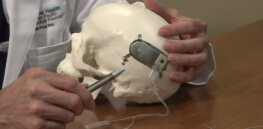
Brain pacemaker? Deep stimulation therapy shown shows promise in relieving severe depression
By mapping out a depressed patient’s brain circuitry, researchers were able to identify biological markers that told them [depression] symptoms ...

Why does time slow down when we’re afraid?
There is evidence that experiences of slowed-down time—such as when someone is in grave danger—may not simply be “in our ...
Video: What are the benefits — and potential threats — of the CRISPR gene editing revolution?
The idea of gene editing was once a thing of the future — but today, it soon could be saving ...

14 genes that cause obesity identified, opening the door to targeted, personalized treatments
Promising news in the effort to develop drugs to treat obesity: University of Virginia scientists have identified 14 genes that ...
‘Neuromorphic computing is going to be a rock star’: How brain-inspired chips could may soon guide robots and drive cars
The algorithms that underlie everything from Alexa’s voice recognition to credit card fraud detection typically owe their skills to deep ...

If humans colonize Mars, we’d be subjected to high radiation, low gravity, and a whole new environment — speeding up natural selection and evolution
As it turns out, human colonization of the harsh and exotic atmosphere on Mars (if we can achieve it) might ...
Are our brains wired for numbers?
[Cognitive neuroscientist Brian] Butterworth is one of several researchers who believe that the human brain can be thought of as ...

Are women biologically programmed to be more sensitive to cold than men?
Israeli scientists think they know why men and women are constantly squabbling over the heating control or the air conditioning ...

One-and-done intravenous gene editing infusion might eventually be able to cure HIV
In 2014, Temple University researchers proved they could use state-of-the-art molecular scissors to cut out dormant HIV hiding in human ...

‘Eye contact does not elicit synchrony; it disrupts it’: Prolonged eye contact during conversations can block connection
Making eye contact has long been conceived as acting like a cohesive glue, connecting an individual to the person with ...
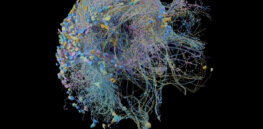
What can explain humans’ complex cognitive capacity? Brain maps might give us answers
Imagine looking at Earth from space and being able to listen in on what individuals are saying to each other ...
The first child selected as an embryo on the basis of its ‘polygenic risk score’ is now 16 months old
The first child acknowledged to have been selected as an embryo on the basis of its “polygenic risk score” is ...

‘There will be no robo-apocalypse’: Why AI is no match for human creativity and ingenuity
Improvements in machine intelligence will not lead to runaway machine-led revolutions. They may change the kind of jobs that people ...
Ancient DNA confirms our African roots — and reveals how Neanderthals, Denisovans and humans ‘continually mixed’
This year is the 20th anniversary of sequencing the human genome. In honor of this event, a research team led by ...

Treating manic depression and mental illness is the ‘final frontier’ of CRISPR gene therapy
Since the 1980s, scientists have been searching for the genetic root of manic-depression, to better understand it and treat it, ...

Unlocking the mystery of why we sleep
We spend approximately a third of our life sleeping, yet we don’t know why we need to. And if we ...
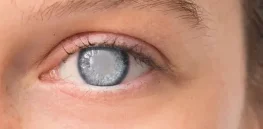
Breakthrough Indian gene editing experiment restores vision to legally blind people
In a groundbreaking scientific victory, scientists were recently able to restore vision in legally blind patients through a gene-editing experiment ...
