


Daily Human Digest

Long-standing belief that meat-eating helped drive human evolution called into question
There’s a widespread belief that eating meat became much more common with the advent of big-brained Homo erectus, two million ...

Neobiological frontier: What innovations are in store in 2022?
We turned to some of the visionaries and innovators who normally help us see deeply into the future and asked ...

How breastfeeding helps protect a woman’s heart years later
Women who breastfed were less likely to develop heart disease or a stroke, or die from cardiovascular disease than women who ...

Viewpoint: Theistic evolution — Can we reconcile religion with science?
Evolution by natural selection does not require any divine or supernatural intervention. For some people, the idea of evolution as ...
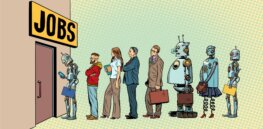
Viewpoint: Does artificial intelligence really threaten jobs? Lessons from history suggests ‘no’
Anxiety about a dystopian “future of work” caused by advances in artificial intelligence (AI) is the latest outbreak of a ...

US ‘War on Cancer’ is 50 years along: How Mary Lasker revolutionized public perceptions of this terrible disease
In the first half of the 20th century, cancer was misunderstood. It was widely considered a death sentence, and some ...
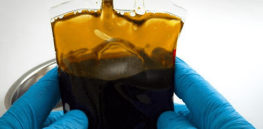
‘Golden blood’ is incredibly important to medicine — but for the 43 people worldwide known to have it, it poses a unique danger
Golden blood is actually the nickname for Rh-null, the world’s rarest blood type. As Mosaic reported, the type is so rare that ...

A highly effective sports performance enhancing drug is…. caffeine
Late last year, a team of scientists from Brazil published the results of a study exploring the effects of a ...
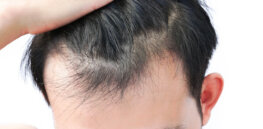
Going bald? Scientists have reprogrammed cells to grow hair on mice. Are humans next?
Biologists at several startups are applying the latest advances in genetic engineering to the age-old problem of baldness, creating new ...

‘Contemporary evolution’: How pollution and human interventions are speeding up evolution
Wild populations must continuously adapt to environmental changes or risk extinction. For more than fifty years, scientists have described instances ...

Removing cataracts appears to reduce the risk of dementia
Undergoing cataract removal was associated with a lower risk of developing dementia among older adults, according to a new study, ...

Viewpoint: Did the New York Times blunder in its analysis of non-invasive prenatal blood test (NIPT) limitations?
On January 1st, The New York Times website prominently featured a substantial piece of investigative journalism about a relatively new ...
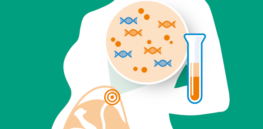
Viewpoint: Do NIPTs — non-invasive prenatal blood tests to find rare disorders — work? New York Times investigation raises doubts
Silicon Valley technology has made [a wondrous promise] to expectant mothers: that a few vials of their blood, drawn in ...
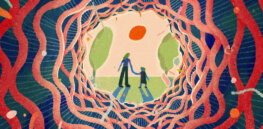
Infographic: Is Huntington’s an ‘incurable’ brain disease? New gene therapies offer hope
Huntington’s disease (HD) is an inherited condition that causes widespread deterioration in the brain and disrupts thinking, behaviour, emotion and ...

Finding genetic disorders in patients during studies presents prickly ethical questions
Back in 2020, Cristen Willer, a professor of cardiovascular medicine at the University of Michigan in Ann Arbor, was leading ...

‘Foundations of lifelong health’ are built in early childhood — and racial inequality plays a huge part
The scientific evidence is crystal clear: Early experiences literally shape the architecture of the developing brain.... But here’s something that’s ...
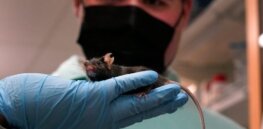
How a teenager’s blood and genetically modified mice are key tools in pioneering potential autism treatments
Jake Litvag leaned in for a closer look as a lab mouse scurried around an enclosure, stopping to sniff a ...

Quest for agelessness: A host of drugs and therapies are under review, but expectations are low
Will people eventually routinely live—and live healthily—longer? That’s the vision of the burgeoning field of aging research, where scientists are ...
Women are twice as likely as men to suffer depression. Here is a key genetic factor
Gender differences in the prevalence of major depression and the manifestation of symptoms are well-documented, but scientists are still investigating ...

Transgender people who start transitioning as teenagers have better mental health, study finds
For transgender people, starting gender-affirming hormone treatment in adolescence is linked to better mental health than waiting until adulthood, according ...
‘The seductive allure of neuroscience’: Why psychology is not the sum of your brain parts
Few of us care for the technical details of how molecules and electrical charges in the brain give rise to ...
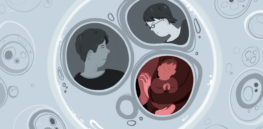
Pass on only the positive traits? How IVF can stop genetic diseases from reaching offspring
In vitro fertilization (IVF), widely known as a way to help infertile couples have babies, has taken on another remarkable ...

CRISPR’s biggest challenge is addressing complex hereditary ailments like cystic fibrosis — but progress is being made
Treatments based on the Nobel-prize winning Crispr gene-editing approach can make permanent changes to a genetic flaw— but those edits ...

Fourth industrial revolution: How biotechnology is driving lightning fast change
What makes the fourth industrial revolution so different from previous industrial revolutions is the convergence and interaction between multiple technology ...

Video: How Israeli scientists trained a goldfish to ‘drive’
Picture this: A goldfish swimming in a square tank on wheels as it rolls deliberately from one side of a ...
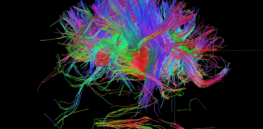
Maps of the neural ‘wiring’ in our brains could unravel secrets of behavior
Last summer a group of Harvard University neuroscientists and Google engineers released the first wiring diagram of a piece of ...

‘Double sleeping’: Did the industrial revolution end humans’ proclivity to sleep in two shifts?
In the 17th Century, a night of sleep went something like this. From as early as 21:00 to 23:00, those ...
