


Daily Human Digest

Fourth industrial revolution: How biotechnology is driving lightning fast change
What makes the fourth industrial revolution so different from previous industrial revolutions is the convergence and interaction between multiple technology ...

Video: How Israeli scientists trained a goldfish to ‘drive’
Picture this: A goldfish swimming in a square tank on wheels as it rolls deliberately from one side of a ...
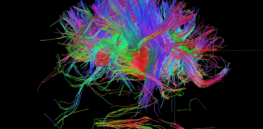
Maps of the neural ‘wiring’ in our brains could unravel secrets of behavior
Last summer a group of Harvard University neuroscientists and Google engineers released the first wiring diagram of a piece of ...

‘Double sleeping’: Did the industrial revolution end humans’ proclivity to sleep in two shifts?
In the 17th Century, a night of sleep went something like this. From as early as 21:00 to 23:00, those ...

Sugar high? How and why we genetically crave sweetness
A fundamental challenge for our ancient ancestors was getting enough to eat. The basic activities of day-to-day life, such as ...
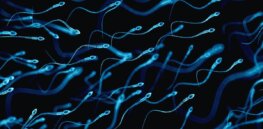
Nanocontraception: How heated nanoparticles injected in testicles might be a viable method of male birth control
Nanocontraception is based on the idea that nanoparticles — here, about 100 nanometres in diameter, or roughly one-thousandth the width ...
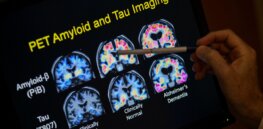
Are plaque deposits in the brain the true cause of Alzheimer’s disease?
Alzheimer’s disease was to be defined by the presence of plaques. Yet plaques are a feature that is not present ...

The social history of the concept of the mixed-race mestizo
In Mexico [most people] think of themselves as mestizos, a term that emerged during the colonial period to explain the ...

How our perception of ‘disgust’ shapes our behavior
Disgust shapes our behavior, our technology, our relationships. It is the reason we wear deodorant, use the bathroom in private ...
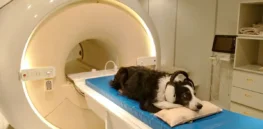
Sí or Oui? Brain imagery shows dogs can differentiate among languages
[Brain researcher Laura Cuaya] and her colleagues designed an experiment with 18 volunteer dogs — including her two border collies ...
Olive oil and disease: Another study reaffirms daily consumption helps stave off heart disease, cancer, and neurodegenerative diseases
Swapping out the butter or other artery-clogging fats in your diet for heart-healthy olive oil may add years to your ...
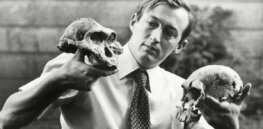
‘All animal species have a beginning and an end’: Richard Leakey’s legacy in shaping ‘conservation politics’
Richard Leakey, paleoanthropologist, conservationist and Kenyan political leader, died January 2 at his home near Nairobi. His expeditions discovered hundreds ...
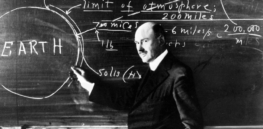
It’s not rocket science: Neurosurgeons and aerospace engineers have specialized skills — but overall their intelligence is not unique
It may not be rocket science, but researchers have found aerospace engineers and brain surgeons are not necessarily brighter than ...
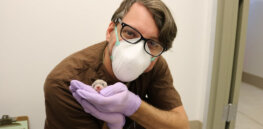
Genetic cloning may be the only viable solution to biodiversity-threatening animal extinctions
“Extinction is an abstract concept to many people. It was to me as a kid,” says Oliver Ryder, director of ...

‘AI doesn’t have to be sentient to kill us all’: 6 ways artificial intelligence can go very wrong
As Malcolm Murdock, machine-learning engineer and author of the 2019 novel The Quantum Price, puts it, “AI doesn’t have to ...
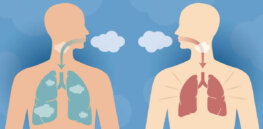
Aerobically stronger? Human lung capacity appears to be measurably expanding
For many years now, doctors and other health personnel in Norway and several other European countries have surveyed people’s lung ...

Honoring E.O. Wilson, who bested Stephen Jay Gould and Richard Lewontin in his defense of sociobiology
A superb naturalist who enjoyed challenging dogma, [Edward Wilson] fought for conservation, brought ideas of biodiversity into the mainstream and ...
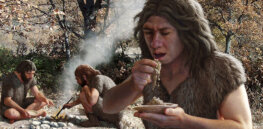
Did cannibalism play a role in the extinction of the Neanderthals?
Spanish anthropologists Jordi Augustí and Xavier Rubio-Campillo (2016) conducted a virtual experiment to study factors underlying the extinction of Neandertals ...
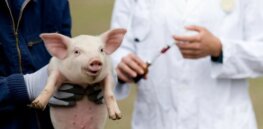
Xenotransplanation: Why the first pig-to-human kidney transplant was a momentous event
Surgeons in New York City successfully attached a pig kidney to a human patient and watched the pinkish organ function ...
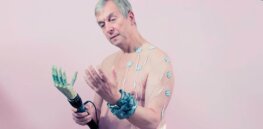
H+: Does transhumanism ‘sacrifice the rights of the individual on the altar of the collective good’?
Transhumanism (Humanity+ or hereafter H+) is a 20th– century endeavor grounded in rational humanism that trusts technological advances to answer ...
Is an exercise pill possible?
Most of us know that getting our move on can mean a boost to mental and neurological health. But what ...
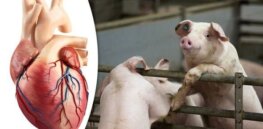
GMO heart transplant: In breakthrough, man with terminal disease receives heart from altered pig and is in recovery
A 57-year-old man with life-threatening heart disease has received a heart from a genetically modified pig, a groundbreaking procedure that ...
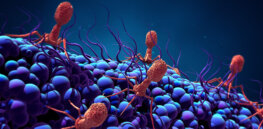
They replicate and evolve, but are not alive: Fighting viruses challenges our definitions of life
Scientists have argued for hundreds of years over how to classify viruses, says Luis Villarreal, professor emeritus at the University ...
Higher education doesn’t slow the aging of the brain
If you find it difficult to remember things as you get older, it’s partly because your brain is shrinking gradually, ...
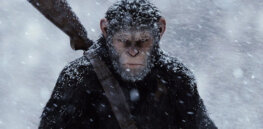
If humans go extinct, what ‘smart’ animals might evolve to ‘rule the world’?
What if humans suddenly went extinct? What other animals might evolve to have the smarts and skills to create large, ...

Is ‘sex addiction’ a real disorder — or an excuse?
Another week, another sex addict. Or so it seems. In the most recent case of a celebrity claiming 'sex addiction' ...

Does ‘cringe-worthy baby talk’ between couples serve an evolutionary purpose?
Baby talk is cute when grown-ups dote on babies. But when adults converse with each other? Not so much. Yet ...
