


Daily Human Digest

World War II Jewish Warsaw ghetto in provides blueprint for how US might contain coronavirus
A paper published on [July 24] in Science Advances reports on a sophisticated mathematical analysis that shows how personal hygiene, quarantines, social distancing and ...

How do antidepressants work? We still don’t know
[A]bout a third of Americans are showing signs of depression or anxiety, according to the U.S. Census Bureau. That’s about ...

How the Hobbit films illustrate the way human brains evolved
For Northwestern University neuroscientist and engineer Malcolm MacIver, [a scene from the Hobbit: An Unexpected Journey where Gandalf and Bilbo ...

Podcast: How male sex drive evolved
For decades, scientists suggested that fatherhood fulfilled a primarily evolutionary function: protecting and providing for offspring in return for sex ...

DNA of the slave trade: American Blacks’ genetic links to Africa
[A] paper by 23andMe researchers leveraged genetic data from close to 50,000 people to detail one of the most comprehensive ...
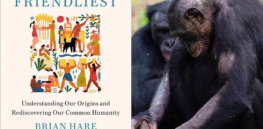
Maybe Darwin got it wrong: ‘Survival of the Friendliest’
Most people assume that Darwin was talking about physical strength when referring to “survival of the fittest,” meaning that a ...

Having your period can be painful, messy, expensive – and optional?
Menstruation has now become an elective bodily process. “Once your periods are established, we can turn them off,” Sophia Yen, ...

Omega 3s in high doses shown effective in slowing Alzheimer’s in small study
[T]o date the majority of studies evaluating omega-3s for averting or curtailing cognitive decline in human participants have failed to ...

Pangalactic intelligence: Here’s a guess about how many aliens in the universe
[I]n excess of four billion years ago, practically as soon as our planet had sufficiently cooled from its fiery formation, ...
Number instinct: Numerical ability is deeply rooted in our shared animal evolution
Considering the multitude of situations in which we humans use numerical information, life without numbers is inconceivable. But what was ...

Universal treatment for rare diseases? Cure for sickle cell, immune deficiencies created from umbilical cord blood
[I]nfusing umbilical cord blood — a readily available source of stem cells — safely and effectively treated 44 children born ...

What’s happening to viruses, bacteria and mites that exist in our socially-isolated home islands?
We may feel isolated now, in our homes, or apart in parks, or behind plexiglass shields in stores. But we are ...

Millennials vulnerable to spikes in numerous diseases led by colorectal cancer
The rates of Crohn's disease and ulcerative colitis are up 14% among commercially-insured adults ages 22-37, according to a Blue Cross ...

Stream music directly to your brain? Elon Musk’s new Neuralink gadget
[Elon] Musk confirmed that Neuralink’s technology would allow people to “listen to music directly from our chips.” He also said ...
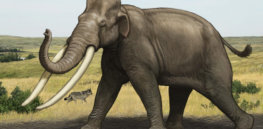
Greta could be the first wooly mammoth-elephant hybrid—and the loneliest animal in the world
The room is bright and her bath is warm. A clamp slides over her sides. She squeals as it hoists ...

Infographic: Power of evolution? How oak trees came to dominate North American forests
Over the course of some 56 million years, oaks, which all belong to the genus Quercus, evolved from a single undifferentiated ...

Why IQ tests still matter
[A]re IQ tests valid, unbiased measures of general intelligence? They certainly didn’t start out that way, says Stefan C. Dombrowski, ...

Can cutting out carbs treat epilepsy? The ketogenic diet as a drug
The ketogenic diet has actually been used in the treatment of epilepsy since the 1920s. It had been known that ...

Podcast: Females have a biological advantage over males
[F]emales have two X chromosomes whereas males have one, and females compensate by ‘switching off’ one of them while still ...

Genetics might explain why obese and depressed people have less grey matter in the brain
Obesity is one of the major public health problems in western countries, with an estimated prevalence of up to 38%. Although ...

Birth rates expected to crash by half in coming decades in some countries, driven by educated, working women
Falling fertility rates mean nearly every country could have shrinking populations by the end of the century. And 23 nations - ...

It’s disease-carrying mosquito season, but coronavirus cripples response
Monitoring and killing mosquitoes is a key public health task used to curb the spread of deadly disease. In recent ...

Civilization inflection point? China posed to pass US as world leader in biotechnology
China is edging forward as a world leader in the biotech sector, one expert said. “Biotechnologies, including synthetic biology, are ...

4,000 US babies are born with mitochondrial diseases. That could be fixed by a new form of gene editing
With the first experiments to use CRISPR in people underway, the gene-editing technique is showing promising signs in a few ...

Viewpoint: How hazard-designation agency WHO’s IARC—International Agency for Research on Cancer—misleads regulators and the public
[W]ood dust, solar radiation (the sun), soot, very hot beverages, night shift work and Ginko biloba… can give you cancer ...

Do males and females have different brain structures? Monkey study suggests ‘yes’
Using a noninvasive imaging technique, researchers found that male capuchin monkeys showed expansion in the gray matter of a brain ...

When CRISPR gene editing falls short: ‘Base editing’ might treat disorders on the maternal line in mitochondrial DNA
[A] technique — which builds on a super-precise version of gene editing called base editing — could allow researchers to ...
