


Daily Human Digest

Children with autism are twice as likely to suffer from chronic pain
Children with autism are about twice as likely as their typical peers to experience chronic or repeated pain, according to ...

Viewpoint: Doctors will never be replaced by intelligent machines, which lack ’empathy, common sense’
Is there a place for artificial intelligence (AI) in the field of medicine? Will doctors one day be replaced by ...

Why lumping transgender teens into a single group in mental health studies is missing an opportunity to help them
The disparities are staggering: A growing body of research suggests that transgender teens experience suicidal thoughts and attempt to take ...

Ancient Rome was genetic crossroads for many European lineages, DNA analysis suggests
Ancient Rome was the capital city of an empire that encompassed some 70 million inhabitants. An international research team now ...
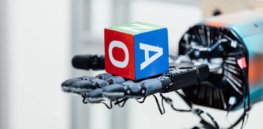
Artificial Intelligence lab OpenAI wants to develop technology ‘to save the world’. Will it also assist the US military?
Microsoft’s recent victory in landing a $10 billion Pentagon cloud-computing contract called JEDI could make life more complicated for one of the ...

Children from extramarital affairs not as common as we think, study shows
That old joke about the milkman fathering many of a town’s children—it’s far from true, a new study reaffirms. Researchers ...
How synthetic biology will allow us to redesign humans ‘from the ground up’
Just as physics and chemistry have given humans power over the world of the inanimate, biology is giving us the ...
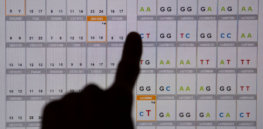
‘Game changer’ for genetic privacy: Court forces GEDmatch to open its million-person genealogy database to police scrutiny
A Florida state judge has reportedly allowed police to search the entirety of the public genealogy website GEDmatch — home ...

Why it may not be ‘screen time’ that’s stunting development of kids’ brains
A new study links young children’s screen time with changes in the brain and slower language development. But parents, before ...
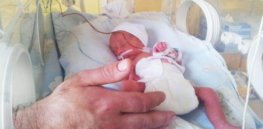
Clues for predicting premature birth risk may be found in mother’s immune system, microbiome
For decades, researchers and clinicians have sought ways to predict and prevent preterm birth with little progress to show for ...
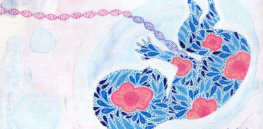
Genetic sequencing for everyone? UK trial program challenged as ‘ethically questionable’
Plans for the National Health Service to sequence the DNA of every baby born in the UK, starting with a ...

Privacy concerns: Mental health apps may be selling your data to third parties, including Google, Facebook
Apps spell big business in the healthcare industry: Dozens of apps are marketed to people with conditions including depression, anxiety ...

Does ‘brain plasticity’ explain why these people can still smell, despite not having olfactory bulbs?
Doctors there say they’ve found people who can smell just as well as anyone else, despite missing the key area ...

‘It raises all kind of questions about eugenics’: Startup offering to screen embryos to help parents pick best babies
Anxious couples are approaching fertility doctors in the US with requests for a hotly debated new genetic test being called ...

Fear can keep you alive: Why we need ‘negative’ emotions
Are negative emotions all bad? Should we really try to get rid of them? After all, we figure that thumbs ...
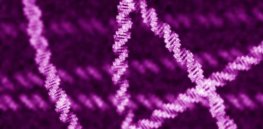
4 keys to the future of synthetic genomics, including the ability to ‘construct entire chromosomes’
We are already living in a synthetic biology world. Within that huge world is an enormous variety of ideas and ...
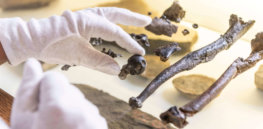
This ancient ape may tell us when our ancestors started walking on two legs
Fossils of a newly-discovered ancient ape could give clues to how and when walking on two legs evolved. The ability ...
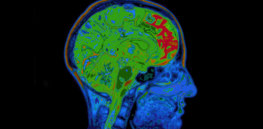
New brain memory model could offer new pathways for Alzheimer’s research
[PhD candidate and physician Thanh Pierre] Doan is investigating the intricacies of the parts of the brain that keep track ...

CRISPR prime editing: Broad Institute biochemist David Liu discusses pros, cons and off-target effects
STAT invited readers to submit questions to [biochemist David] Liu on the new [CRISPR prime] technology. He also received some ...
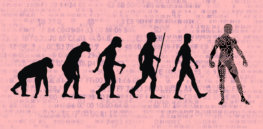
Can computers develop human-like intelligence by imitating our own evolutionary path?
Evolutionary algorithms have been around for a long time. Traditionally, they’ve been used to solve specific problems. In each generation, ...

What makes a murderer? MRI scans reveal reduced gray matter patterns in convicts
Kent Kiehl and his research team regularly park their long, white trailer just outside the doors of maximum-security prisons across the ...
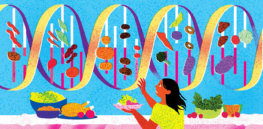
Viewpoint: DNA-tailored diets? Sorry, but the science isn’t there yet
Genetic testing services that tell you what to eat based on your DNA are everywhere. Will tailoring my diet to ...

Paper popular with creationists retracted 30 years after publication
A paper by a Russian researcher who has been dogged by allegations of fraud has been retracted, 30 years to ...

If we find alien life, how will we protect it from our own ‘microbial stowaways’?
When we venture beyond the moon, we’ll be bringing trillions of microbial stowaways with us. Which complicates things. If we ...

People with better memories may have better romantic relationships, study suggests
Common topics of marital disagreement are money, sex and time spent together. None of this will surprise anyone who has ...

‘Science doesn’t align with folk beliefs’: Study refutes idea that girls don’t have minds for math
There is a widespread, not always tacit assumption that a biological gender divide in aptitude for mathematics may underpin why ...
Extraterrestrial babies? Scientists want to know how microgravity would affect human reproduction
The plane’s rapid descent created a microgravity environment in the cockpit and for a few seconds, [pilot Daniel] González felt ...
