


Daily Human Digest

Video: Why having a dog can put you in a ‘state of calm’
Your pets have a larger effect on your body and brain than you might think. They have the ability to ...

Is our genome altered by things that happen to us as children?
[A] new study makes a remarkable connection between experience and the genetic diversity of the brain. It suggests that experience can change ...

Using brain ‘fingerprints’ to study and refine autism treatment
[T]he National Institutes of Health has been supporting research into the ‘human connectome’— the collection of information pathways in the ...

Secret to longer life? Specific genes in worms can increase lifespan by almost 400%
In a project called MacModel, researchers are using the flatworm Macrostomum lignano, which is normally found living in the tidal sands of ...

This 11-year-old girl inherited her genes almost entirely from one parent, her father
An 11-year-old girl from the Czech Republic was born with genes that came almost entirely from her father, instead of ...

‘Wake-up call’? CRISPR gene editing may cause ‘genetic havoc’, study suggests
From the earliest days of the CRISPR-Cas9 era, scientists have known that the first step in how it edits genomes — snipping ...

In lower risk groups, lifestyle, rather than genetics, plays the largest role in diabetes and heart disease, study shows
The data-miners have found a new vein of data, the UK Biobank, which contains genetic information on about 500,000 of ...

Don’t expect ‘instantaneous eureka moment’ in search for alien life
From War of the Worlds and Arrival to SETI and Stephen Hawking, both pop culture and scientists feed the expectation that the discovery of extraterrestrial life will ...

Why you may need a second, or even third, opinion on your genetic test results
[Radiology resident Joshua Clayton] sent a sample of his saliva to 23andMe, the genetic testing company. His report was pretty ...
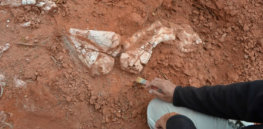
‘Evolution of hugeness’: Massive dinosaurs appeared more than once in earth’s history
[T]he remains of an unusually-large-for-its-time dinosaur found in Argentina provides new insight into the evolution of hugeness—and suggest that the ...

Why almost all psychologists are ideologically liberal, and why it matters
When New York University psychologist Jonathan Haidt asked about a thousand attendees at the annual meeting of the Society for ...

Not so optimized? Human evolution was ‘totally accidental’
Archaeologist Ticia Verveer recently posted a thread on Twitter showing that customer complaints go way back. And I mean way ...

Beyond the Golden State Killer: More cold cases cracked through genetic databases
[After news of the Golden State Killer arrest], The New York Times reported arrests in long-dormant cases in Washington State and ...

Will we soon be able to regenerate limbs?
[Axolotl] salamanders stand out as the only vertebrates that can replace complex body parts that are lost at any age, ...

Blood test could tell doctors when to use immunotherapy against cancer
Some cancers generate the seeds of their own destruction. Certain random mutations that accumulate in rapidly dividing tumor cells can ...

Could printable lungs solve transplant shortage?
[Recently] I had the chance to hold a replica of the upper part of a human airway—the windpipe plus the ...

Are you an IPA beer fan? Your genes greatly influence whether you like hoppy, bitter brews
Maybe you love IPAs, maybe you hate them. Either way, your strong feelings about this beer style have origins beyond ...

Are we alone in the universe? ‘There is a pretty decent chance’
In the past, experts trying to make sense of the Fermi Paradox have looked to the Drake Equation to put a numeric ...

Smarter than we thought: Neanderthals hunted in groups, ancient deer skeletons show
A group of Neanderthals used their hand-crafted wooden spears to kill two male fallow deer, both in the prime of ...

Biosecurity dilemma: Should mega synthetic biology company Ginkgo Bioworks be trusted to police its own industry?
Try as a nefarious actor might, it would be near impossible to order the ingredients for making a deadly virus ...

Proteogenomics: Forging a new path in precision medicine
Integrating its parent fields of proteomics and genomics with transcriptomics, proteogenomics is the latest in a series of ‘omics technologies ...

DNA tests could reunite migrant families. But is there a reason for concern?
The U.S. government's plan to reunify immigrant children with their parents via DNA testing is an unusual but not unprecedented ...
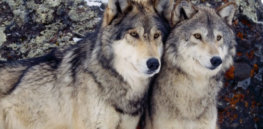
What genetics tell us about the evolution of wolves to dogs
Who’s a good dog? The very first dogs, apparently, as a new genetic study reveals the sequence of events, begun ...

Making CAR-T cancer treatments less risky with ‘safety switches’ and precision targeting
A majority of patients who receive CAR-T cell therapy react [with] varying degrees of severity. Those same T cells that ...

Viewpoint: Here’s why the controversial field of epigenetics is ‘so alluring’
I think of stories I’ve been told about my grandmother in 1945 Japan. … It feels plausible, and poetic, to ...

Adaptive Oncogenesis: Alternative to ‘brute force’ cancer cures, which often leave patients severely damaged
In Darwinian evolution, organisms that are well-adapted to their environments flourish and crowd out those that aren’t. My colleagues and ...

Linked at last? 4-million-year-old skull connects humans to ‘Lucy’ ancestor
Long before Neanderthals or Homo erectus wandered the Earth, there lived an early human species called Australopithecus afarensis. Most famously represented by the specimen known ...
