


Daily Human Digest

Human womb transplants are possible. But do we need them?
As gynecologist and surgeon Liza Johannesson prepped to deliver the child via cesarean section, she was nervous. Not for the ...

Can we learn the ‘nature of reality’ from multiple personality disorder?
[Dissociative identity disorder is], a condition in which the psyche gives rise to multiple, operationally separate centers of consciousness, each ...

Is gene therapy the answer to spinal cord injuries?
Here’s the thing about the spinal cord: you’ve only got one. And right now, if you injure it, doctors can’t ...
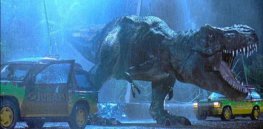
Jurassic Park showed how ‘science and science fiction can collide in the real world’
The prestigious science journal Nature published [a] breathtaking new discovery [about the oldest DNA ever recovered] in June 1993, a single day before ...
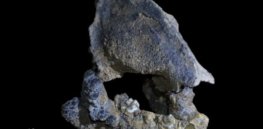
Giant panda discovery: DNA from 22,000-year-old skull suggests unknown lineage in China
DNA from a 22,000-year-old fossilized panda skull suggests an entirely separate lineage of giant pandas once roamed the area that ...

‘Stupidity-inducing environment’: Are we getting dumber?
People are getting dumber. So concludes a new study in the Proceedings of the National Academy of Sciences (PNAS): Using military conscription data ...

Meet Francisco Mojica, the scientist who first discovered CRISPR in a Spanish salt marsh
Professor [Francisco] Mojica grew up near the Mediterranean port of Santa Pola in Spain, a region famous for its salt ...

Better ape genome assemblies could help us understand what ‘make us uniquely human’
New, higher-quality assemblies of great ape genomes have now been generated without the guidance of the human reference genome. The ...

Viewpoint: Why you should give your DNA to NIH’s ‘All of Us’ initiative
The National Institutes of Health recently launched the All of Us Research Program to create one of the largest, richest public resources for biomedical ...

Viewpoint: Why turning down 23andMe’s genetic testing was right for separated immigrant families
23andMe offered to genetically test undocumented migrants. Fortunately, some smart people said “no, thanks.” ... RAICES Texas, one of the ...

How many genes in the human genome? The debate rages on
[In 2000] geneticists were running a sweepstake on how many genes humans have, and wagers ranged from tens of thousands ...

Delving into theories about the brain’s balancing act
Gerardo Ortiz remembers well the time in 2010 when he first heard his Indiana University colleague John Beggs talk about the hotly debated ...

This legal squabble is challenging the way we handle DNA ownership
Toronto businessman Harold Peerenboom and Marvel Entertainment chairman Isaac “Ike” Perlmutter were locked in an absurd suburban skirmish, bickering over ...

Artificial intelligence that can predict the future—or at least a small piece of it
There’s an artificial intelligence system that can peer into the future and anticipate what you’re about to do. … [F]ortune-telling ...

Controversial theory linking herpes to Alzheimer’s bolstered by study
An outside-the-box theory received new attention in an extensive study published [June 21] to the journal Neuron. Researchers based out of the Icahn ...

23andMe asked to help reunite families separated during immigration enforcement push
California Rep. Jackie Speier is asking 23andMe, a popular DNA-testing company, to help reunite children separated from their parents under ...

Gene therapy cures rat’s paralysis—could human beings be next?
Scientists say they have taken a significant step towards the goal of giving paralysed people control of their hands again ...

‘Turbocharged’ artificial synapses could make artificial intelligence 100 times more efficient
Neural networks are the crown jewel of the AI boom. They gorge on data and do things like transcribe speech ...

Treating brain damage and disorders with ‘wonder material’ graphene
While graphene has been tapped to deliver on everything from electronics to optoelectronics, it’s a bit harder to picture how ...

Fueling CRISPR: The nonprofit dedicated to sharing ‘bits of useful DNA’
When Feng Zhang was a graduate student in the early 2000s, he helped make a groundbreaking discovery: Light-sensitive proteins from ...

Privacy concerns? Genetic testing companies pressed by US lawmakers
Pressure is growing on direct-to-consumer genealogy and genetic testing companies to be more transparent about their privacy policies, after the ...

How artificial intelligence could transform the ‘art of medicine’
Every patient is unique, and the art of medicine is the component of the practice that addresses such uniqueness with ...

3 questions to ask before buying a home DNA test
[One] DNA test found that my family’s dog, Teddy, is part pit bull, which comes as no surprise. Many rescue ...

Viewpoint: ‘Indigenous Ways of Knowing’ fad threatens to undermine rigorous medical science
[There is one form of] special pleading that is gaining some currency, and that’s basically carving out an exception to ...

‘Soulless, metallic robot dogs’ are headed our way
Earlier this year, [Boston Dynamics founder Marc] Raibert said the company planned to start selling its SpotMini robot dogs in 2019, and ...

Is there a link between food allergies and autism?
A new study from researchers at the University of Iowa reveals a link between food allergies and autism, though many ...

What can we learn about ourselves from studying the way animals communicate?
If you listen closely to the sound of birds chirping, you’ll hear that they’re taking turns. The same goes for ...
