Viewpoint: Why you should give your DNA to NIH’s ‘All of Us’ initiative

all of us

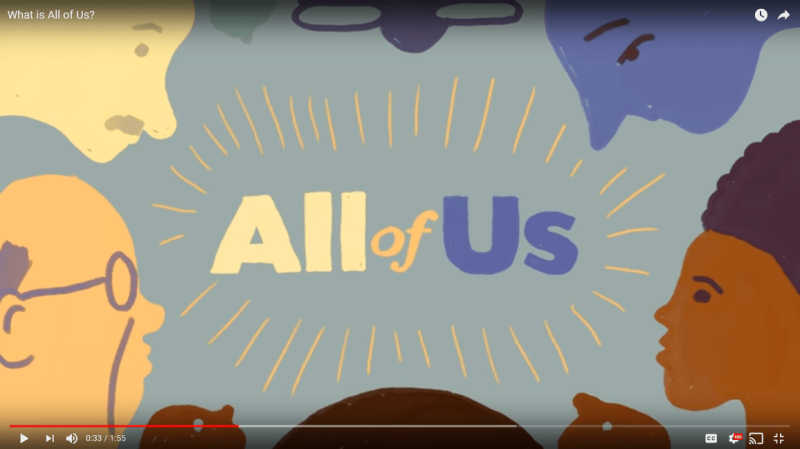
The National Institutes of Health recently launched the All of Us Research Program to create one of the largest, richest public resources for biomedical research in human history. Its mission is to accelerate medical breakthroughs that personalize prevention, treatment, and care for all Americans. As the director of this unprecedented program — and as a cancer survivor, patient advocate, and participant in more than a dozen research studies — I want to share how we are safeguarding participant confidentiality and personal data.

[O]ur key privacy protections include removing obvious identifiers from data, encrypting all data, and storing it within secure commercial cloud platforms. No vendor, consortium partner, or researcher can copy or sell this data.

We use best-in-class security technologies and continuously test and monitor our systems, even with innovative approaches like using friendly “white hat” hackers to attack our systems and help improve any weaknesses they find.

I trust our systems with my health data, knowing full well that no system is invulnerable. But to me, that small risk is vastly outweighed by the huge potential benefits from All of Us. Perhaps we will learn to prevent chronic pain, find better ways to treat or even prevent diabetes, slow or stop dementia, or find “first time” cures for new cancer patients.

Read full, original post: I handed over my genetic data to the NIH. Here’s why you should, too

{{ reviewsTotal }}{{ options.labels.singularReviewCountLabel }}
{{ reviewsTotal }}{{ options.labels.pluralReviewCountLabel }}
{{ options.labels.newReviewButton }}
{{ userData.canReview.message }}

Related Articles

Infographic: Global regulatory and health research agencies on whether glyphosate causes cancer

Infographic: Global regulatory and health research agencies on whether glyphosate causes cancer

Does glyphosate—the world's most heavily-used herbicide—pose serious harm to humans? Is it carcinogenic? Those issues are of both legal and ...

Most Popular

Screenshot-PM-24
Viewpoint: The herbicide glyphosate isn’t perfect. Banning it would be far worse.
d-b
Blocked arteries, kidney stones, nausea, constipation, fatigue: Long list of health problems caused by too much vitamin D 
79d03212-2508-45d0-b427-8e9743ff6432
Viewpoint: The Casey Means hustle—Wellness woo opportunism dressed up as medical wisdom
ChatGPT-Image-Mar-10-2026-01_39_01-PM
Viewpoint—“Miracle molecule” debunked: Why acemannan supplements don’t work
ChatGPT-Image-Mar-27-2026-11_27_05-AM
The myths of “process”: What science says about the “dangers’ of synthetic products and ultra-processed foods
ChatGPT-Image-Apr-30-2026-12_21_05-PM-2
The tech billionaires behind the immortality movement
ChatGPT-Image-Apr-30-2026-05_00_48-PM
Wellness grifter physician turned wellness influencer out as surgeon general nominee

Sorry. No data so far.

glp menu logo outlined

Get news on human & agricultural genetics and biotechnology delivered to your inbox.