


Science Literacy Project Daily Digest
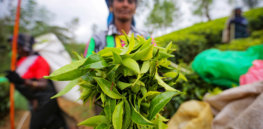
Sri Lanka’s plan to go ‘all organic’ and end use of synthetic chemicals leaves staple tea industry in ‘complete disarray’
Sri Lanka’s drive to become the world’s first 100 percent organic food producer threatens its prized tea industry and has ...

‘Waste can be reimagined as a resource’: How insects are making trash sustainable
[Chua Kai-Ning] and her partner, Phua Jun Wei, founded startup Insectta in 2017. They are battling Singapore's food waste crisis ...

How can we transform industrial manufacturing from a major carbon dioxide source to a CO2 sink?
About one-quarter of greenhouse gas emissions are associated with the manufacture of the products we use. While a small number ...

‘Would you wear clothing, shoelaces or a belt made of muscle fibers?’ Microbe-made synthetic proteins might be stronger than Kevlar
Would you wear clothing or, say, shoelaces or a belt made of muscle fibers? What if those fibers could endure ...

‘Our species began as a sort of arboreal rat when dinosaurs ruled the planet’: Early hominids spread around the world via a once-green Arabia
Our species began as a sort of arboreal rat when dinosaurs ruled the planet, and arguments abound over where the ...

Automaticity: Why the health benefits of mindfulness are limited and why mindlessness is sometimes better
Although mindfulness has its merits, psychological research has also revealed that in some circumstances it’s important to be mindless. That ...

Virgin birth? It’s actually been observed in about 80 vertebrate species, and most recently, in sharks
Scientists say a rare shark "virgin birth" may be the first of its kind after a baby shark was born ...
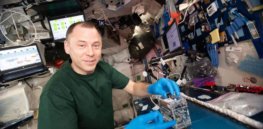
DNA in space: First CRISPR gene-editing study by astronauts opens door to future experimentation
The first CRISPR experiment to take place in space shows that DNA can repair itself in microgravity. As part of ...

Why did humans develop sophisticated language skills while our ancestral cousins, chimpanzees, did not? Studying childbirth could provide clues
Did a “grammar module” just pop into our ancestors’ brains one day thanks to a random change in our DNA? ...

‘Scientists have searched fruitlessly for brain boundaries between thinking, feeling, deciding, remembering, moving and other experiences’ — but that’s not how it works
Not only do researchers often depict the brain and its functions much as mapmakers might draw nations on continents, but ...

‘Science-based farming optimized for reduced environmental impact’: What’s behind the hydroponic farming boom — and attempts to deny its sustainability advantages?
Hydroponic farming allows for vertical farming, because it is not dependent on the soil. This allows for greater plant yield ...

Viewpoint: ‘Neonicotinoids and other seed treatments are a precise tool and critical component of safe, integrated pest management practices’ — American Seed Association challenges ‘misunderstandings’
Treated seeds have been widely adopted by growers for two key reasons: 1. They are a highly effective tool for farmers ...

Harnessing biotechnology: Faced with 720 million undernourished people around the world, UN embraces genetic engineering and precision agriculture
In 2020, between 720 and 811 million people were undernourished globally, around 161 million more people than in 2019. Conflict ...

For the first time, India opens gates to imported GM farm products for use as animal feed
The first consignment of 50,000 tonnes of genetically modified (GM) soyameal from Bangladesh has arrived in India via the land ...

Stem cells harvested from patient with neurological disorder turned into 3D mini brain that shows signs of seizures
Researchers at the Eli and Edythe Broad Center of Regenerative Medicine and Stem Cell Research at UCLA have developed brain ...

AI-driven robots can now be found everywhere — but they’re often annoying. Will they ever evolve grace and consciousness?
With AI, engineers had typically used a top-down approach to programming, as though they were gods making creatures in their ...

Is love nothing more than brain chemicals?
Love evolved to bribe us to commence and maintain... relationships – with lovers, children, family and friends – which we ...

Human evolution is accelerating. Here’s how — and why it’s necessary for us to adapt to an unstable world
For Prof. Ze’ev Hochberg of the Rappaport Faculty of Medicine at the Technion – Israel Institute of Technology, Haifa, evolution ...

Viewpoint: Here’s how activist scientists use exaggerated fears of trace chemicals as a subterfuge to try to derail crop biotechnology
Environmental Health published on August 3, 2021 “Commentary: Novel strategies and new tools to curtail the health effects of pesticides” ...

Ghana’s first genetically modified crop – pod borer resistant cowpea — is poised to address widespread protein deficiency challenges
A Senior Research Scientist with the Science and Technology Policy Research Institute of the Council for Scientific and Industrial Research ...

Cheese without the cow? Lactose-intolerant Shell engineer developing gene-edited soybean-based ‘cheese’ that stretches, tastes and toasts just like the real thing
In the United States alone, roughly 9 million cows are devoted to churning out torrents of milk a year which, ...

Solving the problem of death: 150 seems to be an outer age limit, and here’s why
In Silicon Valley, immortality is sometimes elevated to the status of a corporeal goal. Plenty of big names in big ...
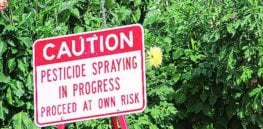
Video: Are pesticides harmful or bad for biodiversity? Challenging 5 widely-held myths
Below, you will find five of the most common myths about pesticides, and the truth about them. MYTH: Pesticides are ...

Wide disagreement among religious groups about vaccine mandates
Since the start of the pandemic, there has been a standoff between personal freedoms and bodily integrity on one side ...

Living with uncertainty: Understanding science as an ongoing method of inquiry rather than an affirmation of inalterable facts
Science can be very certain and precise. It tells us exactly when to expect the next total solar eclipse and ...

Intriguing new clues revealed about the genetics and evolution of homosexuality
In a study of data from hundreds of thousands of people, researchers have now identified genetic patterns that could be ...

Coffee and heart disease: Yet another study funds multiple cups a day reduces death risks
Drinking up to three cups of coffee a day may protect your heart, a new study finds. Among people with ...
