


Science Literacy Project Daily Digest
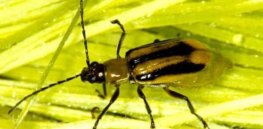
RNA technology gave us a COVID vaccine. It could also help control plant pests without insecticides
With the development of Pfizer’s COVID-19 mRNA vaccine, RNA technology has been dominating the news cycle. … A decade ago, ...

‘Like putting 5 locks on a door’: Wheat with multiple rust resistance genes could protect vital staple crop
[R]esearchers at CSIRO, Australia’s national science agency, led an international effort to develop wheats with a stronger and potentially more ...

How nature evolved blue tigers and other quirks of ‘neutral theory’
As late as the 1950s, hunters reported spotting their blue hairs alongside the traditional orange fur of other South China ...

Immunotherapy offers hope for once nearly-untreatable cancers
Though scientists have explored immunotherapy for more than 100 years, only recently has it been taken seriously, said James Allison, chair ...

Virtual reality sex might soon be a reality. What can we expect?
VR sex simulation is not the same as porn. The term “VR porn” is therefore somewhat misleading. When viewing photos ...

2020’s most important human evolution discoveries
Since many scientific articles are years in the making, a lot of exciting discoveries were still revealed in 2020! … ...

Peru extends GMO crop cultivation ban for 15 years, after months of intense debate
The president of the Congress of the Republic [of Peru], Mirtha Vásquez, signed the enactment of the 15-year extension of ...

IVF 14-day rule: Scientists and ethicists reconsidering how many days an embryo can be studied outside the womb
As early as 1979, regulators responded to [in-vitro fertilization ethical] concerns by establishing the ‘14-day rule’. It soon became an internationally accepted ...

Viewpoint: Glyphosate and cancer—How ideology and bad science turned a safe herbicide into a carcinogen
Glyphosate has long been considered as an herbicide with no unacceptable health risk. In 2015, its classification as "probably carcinogenic" ...

FDA aims to combat GMO misinformation with crop biotech high-school curriculum
Though a new curriculum guide offers high school teachers helpful tools for navigating the complexities of crop biotechnology and a ...

Go vegan to save the planet? No-meat diet won’t stop climate change, environmental scientists say
People in industrialized regions like the United States of America or Europe are generally urged to eat less meat and ...

‘Fossil Men’: Did humans evolve from apes or apes from humans?
In “Fossil Men: [The Quest for the Oldest Skeleton and the Origins of Humankind,” Kermit] Pattison weaves the multiple intrigues ...

Viewpoint: Fears grow that Trump’s anti-science extremism could fuel rise in creationism
Loss and humiliation do not make bad ideas go away. Rather, they can take on wilder and more outrageous forms ...

7,000 and counting – That’s how many diseases are linked to mutations that could be corrected with gene editing
Researchers have already identified DNA errors as the cause of nearly 7,000 diseases. Thankfully, the growing world of genome editing could ...

Genetically modified tomato developed to naturally produce Parkinson’s fighting L-DOPA drug
The John Innes Centre led team modified [a] tomato fruit by introducing a gene responsible for the synthesis of L-DOPA ...

USDA bioengineered food labels are coming in 2021. Will they change consumer behavior?
Four years after the thunder in Congress over labeling foods made with GMO ingredients, the deadline for compliance with the ...

US grew 13 million pounds of genetically modified apples in 2020, but most fruit growers still resist growing biotech crops
[G]rape and nut growers appear to have sustained a particularly rough 2020. But that was probably due at least as ...

We might be able to send GMOs to other planets. But is it a good idea?
First: Could we populate another planet with genetically modified organisms? Second: Should we? … Dirk Schulze-Makuch, Professor of Planetary Habitability and Astrobiology ...

Burger tax? Study says we should raise meat prices to cut greenhouse gas emissions
As the planet continues to warm, researchers continue working to better understand the sources of greenhouse emissions. In this new effort, ...

Viewpoint: Halo Band not ready for primetime – Amazon’s invasive wearable health tracker gets a poor review
You haven’t exercised or slept enough, reports Amazon’s $65 Halo Band. Your body has too much fat, the Halo’s app shows ...

5 ways CRISPR has begun changing the world
[W]hile thousands of life scientists pivoted to trying to understand how the novel coronavirus wreaks havoc on the human body, and others transformed their ...

What the brain looks like when we’re lonely
A new study, headed by a team at McGill University, has now identified neurobiological signatures in the brains of lonely ...

USDA: ‘Fear mongering’ keeps EU scared of growing GMOs, while it relies on US biotech grain imports
Commercial cultivation of GE crops in the EU is limited to one percent of the EU’s total corn area (102 ...

The Serena Williams effect: Why younger siblings are more likely to become elite athletes
While Venus has enjoyed a magnificent career, winning seven Grand Slam singles titles, Serena has won 23 Grand Slams and is widely acclaimed ...

Drought-tolerant GM corn comes with added, unexpected benefit—pest resistance
Water stress arising from drought conditions can trigger outbreaks of bark beetles, wood borers, and sap feeders like spider mites ...

GM trees that suck up more CO2 could help stem growing threat of climate change
In order to fight the growing threat of global climate change, scientists are now suggesting that we genetically modify trees ...

Viewpoint: GMO ‘opposition based on emotion and dogma must be stopped’
Climate change and the COVID-19 pandemic have featured heavily in this presidential campaign and are without question two of the ...
