


Science Literacy Project Daily Digest
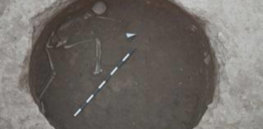
What the ‘lady in the well’ tells us about ancient population movement in the Middle East
The bones of a woman of Central Asian descent found at the bottom of a deep well after a violent ...

What physicists get wrong about free will
It might seem that everything that’s happening at the higher, ‘emergent’ levels should be uniquely determined by the physics operating ...

Why turning to germaphobia won’t protect us from another pandemic
As someone who has spent years doing research in health geography, I understand that this collective turn to cleanliness serves ...

Viewpoint: AI gets ‘B-minus at best’ for dealing with COVID-19. But better days are ahead
Truth be told, AI has not had a particularly successful four months in the battle of the pandemic. I would ...

CRISPR 2.0: New gene-editing tools offer plant breeders greater precision
There is no best, only better. This seems truly the case in the history of genome editing technology. When the ...

COVID-19 prompts healthier eating habits, while interest in ‘natural’ foods remains high
More than four out of five consumers say the coronavirus pandemic has changed their food habits, driving them to cook, ...

Trump administration drops transgender health protections
The Trump administration on Friday [June 12] reversed non-discrimination protections for transgender people in health care, a policy shift that ...
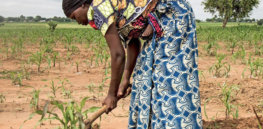
Viewpoint: Activist ‘armchair’ farmers keep life-saving technology out of Africa
Farmers in more developed climes use sophisticated technologies such as robots, temperature and moisture sensors, aerial images, drones and GPS ...

Video: Unnatural is better—How technology keeps us healthier and living longer
American Council on Science and Health microbiologist Alex Berezow takes on one of the most pervasive myths on social media ...

Modern population genetics grew out of a shady eugenicist past
[A]s a faculty member at San Francisco State University (SFSU), a public institution that puts social justice at the center ...

Monkey mind control? Ultrasound pulses influence decision making
A team of scientists was pulsing imperceptible ultrasound waves through his skull into frontal parts of his brain, and tacitly ...

Viewpoint: We need more female animals included in research projects
In 2011, Annaliese Beery and Irving Zucker of the University of California, Berkeley, analyzed biomedical literature and reported that studies ...

Stimulating brain waves prompts immune cells to fight against Alzheimer’s disease
Discoveries that transcend boundaries are among the greatest delights of scientific research, but such leaps are often overlooked because they ...

Why antibiotic-resistant pathogens may get a boost from the COVID-19 pandemic
I want to return to my favorite topic, antibiotics, viewed through the lens of the COVID-19 pandemic. Of course, as ...

Italy and Israel bet on GM microalgae to develop edible COVID vaccine
The rush to develop a vaccine for COVID-19 has extended to Italy and Israel, where scientists are using the tools ...

Human bias against new ideas amplifies safety concerns about GMOs, study confirms
Recency bias states that more recent memories come to mind more quickly. But specific ideas and objects that have “stood ...

Infographic: What CRISPR is curing in 2020
CRISPR-Cas9 is a method for quickly and accurately editing the genome of virtually any living thing. Using custom-built guide RNA ...

Canaanites—one of the original populations in ancient Israel—are still a coherent genetic group thousands of years later
A new international, interdisciplinary study provides intriguing answers to the origins and history of the Canaanite people. In an article ...

‘Bioelectric memory patch’ promises to boost short-term memory. Could it really work?
What if you could boost your brain’s processing capabilities simply by sticking electrodes onto your head and flipping a switch? ...
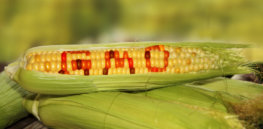
Infographic: Five GMOs account for 99 percent of the global biotech crop area
In 2018, a total of 70 countries adopted biotech crops — 26 countries planted and 44 additional countries imported. Of ...

‘Diagnostic conundrum’: COVID-19 pandemic has given us a lot of clinically depressed people
As a rough average, during pre-pandemic life, 5 to 7 percent of people met the criteria for a diagnosis of ...

Viewpoint: Regenerative agriculture—carbon farming—is the ‘feel-good climate solution’ that doesn’t work as promised
Corporations, politicians, and environmentalists have all embraced carbon farming as the feel-good climate solution of the moment. Several leading Democratic ...

Why the consumer genetics test boom is a ‘double-edged sword’ for physicians
Like many such advances, availability of [direct to consumer genetic] tests is a double-edged sword. On the one hand, it ...

Treasure hunting: Traveling to new locations allows the brain to seek ‘rewards’
We are free to wander but usually when we go somewhere it’s for a reason. In a new study, researchers ...

Gut microbiomes are most malleable in the first 2 years of life. Can infant probiotics improve long-term health?
[Children] acquire gut microbiome species from their mothers and others in the community during early life. This stands in contrast ...
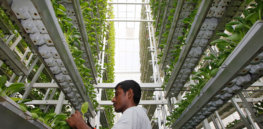
Viewpoint: At $17/pound, vertically farmed vegetables are nowhere near sustainable
On [June 10] the city council of Jersey City, New Jersey [voted] on awarding a three-year, $1 million contract to ...

CRISPR bacon: Gene editing could help supply high-quality pork and eliminate pig castration
It was in June 2019 that the birth of a specific batch of gene-edited piglets was announced to the world ...
