Canaanites—one of the original populations in ancient Israel—are still a coherent genetic group thousands of years later

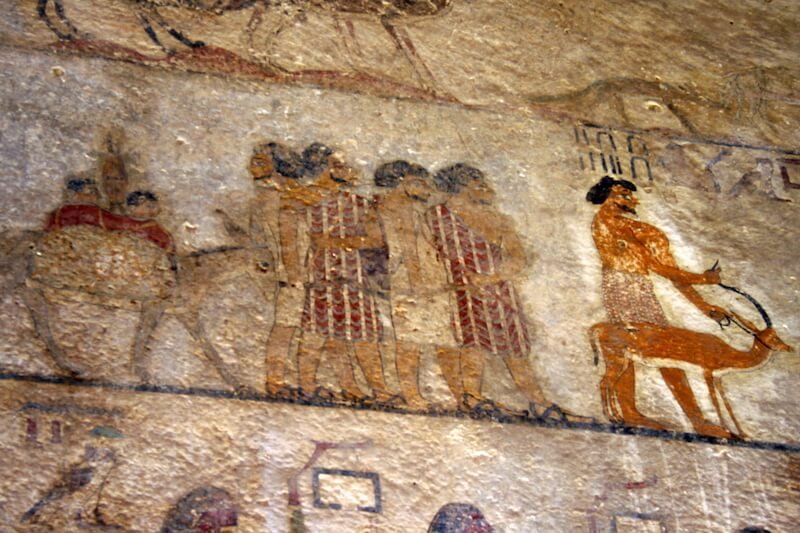
beni hassan asiatiques
Credit: Wikimedia

A new international, interdisciplinary study provides intriguing answers to the origins and history of the Canaanite people. In an article published May 28 in the prestigious peer-reviewed journal Cell, scientists report that over thousands of years, the widely dispersed Canaanite people maintained themselves as a demographically coherent group.

The study was performed through a genome-wide analysis of ancient DNA samples from the remains of 93 individuals at nine Bronze Age Canaanite sites throughout the Levant.

For centuries, scholars have debated over who the Canaanites were and where they originated. Ancient “frenemies” of the conquering Israelites, the Canaanites were recorded throughout the Bible and in historical documents up to 3,500 years old as a group of peoples living throughout the Levant who were ruled by their own city/state kings.

The study also discovered that they shared a genetic relationship with another group of people who slowly and continuously migrated from the far-away Caucausus and/or Zagros Mountain regions. This special genetic mix of Canaanite and mountain peoples can still be seen in some form with modern Arabic-speaking and Jewish populations, wrote the authors.

“Our results in this new study show that the ‘Canaanite’ term that is known from the archaeological and historical literature in fact corresponded to a genetically mostly homogeneous group of people — it was not just a shared set of ideas, but a people of similar ancestry,” [said] Harvard University Ancient Genetics Prof. David Reich.

Read the original post

{{ reviewsTotal }}{{ options.labels.singularReviewCountLabel }}
{{ reviewsTotal }}{{ options.labels.pluralReviewCountLabel }}
{{ options.labels.noReviewsLabel }}
{{ options.labels.newReviewButton }}
{{ userData.canReview.message }}

Related Articles

Infographic: Global regulatory and health research agencies on whether glyphosate causes cancer

Infographic: Global regulatory and health research agencies on whether glyphosate causes cancer

Does glyphosate—the world's most heavily-used herbicide—pose serious harm to humans? Is it carcinogenic? Those issues are of both legal and ...

Most Popular

ChatGPT-Image-Mar-10-2026-01_39_01-PM
Viewpoint—“Miracle molecule” debunked: Why acemannan supplements don’t work
reverse-aging
Rapamycin: Here’s the skinny on the anti-aging pill that increases the lifespan—of mice by 10%
Screenshot-2026-07-01-at-2.49.48-PM
Dr. TikTok and male fertility: Viral claims tout GLP-1 drugs as fertility boosters. What does the science say?
ChatGPT-Image-Jul-17-2026-12_42_10-PM
Viewpoint: RFK, Jr. is setting up a panel to compensate people who claim they were injured by a COVID vaccine–no proof needed 
UK scientists support loosening restrictions limiting embryo research
Are we edging closer to precisely, and safely, editing human embryos?
vitamin k refuse genai
More and more babies are developing uncontrollable bleeding—linked directly to vaccine deniers' rejection of vitamin K shots
ChatGPT-Image-Jun-25-2026-12_23_17-PM
No, Bill Gates did not secretly engineer ticks to promote veganism
a-mature-farmer-working-in-the-field-at-sunrise-harvesting-crops-generated-by-ai-photo
What’s the prospect of developing gene-altered crops that are more nutritious and resist climate disruption
ChatGPT-Image-Jun-25-2026-02_53_56-PM
Embryo gene editing is on the horizon, stirring mixed emotions
Screenshot-2026-07-21-at-6.22.06-PM
The Indian physician’s one-woman battle against health disinformation on Wikipedia
png-upside-food-syn-bio-cultured-meat
Regulating cultured meat around the world
Screenshot 2025-09-17 at 12.41
Misinformation alert: No, glyphosate use in Canadian forests is not spurring more wildfires
glp menu logo outlined

Get news on human & agricultural genetics and biotechnology delivered to your inbox.