


Science Literacy Project Daily Digest

‘Good enough to eat?’ Australian plant scientist battles ‘fake news’ about GMOs with new book
Scientists must speak out about the benefits of new genetic technologies such as genetically modified organisms (GMOs) and gene editing, ...

Regenerating tissues and limbs: What we can learn from the the amazing axolotl salamander’s genome
Saving the salamander that Nature called “biology’s beloved amphibian” takes on a special significance given the animal’s remarkable traits. Axolotls are neotenic, ...

Podcast: There’s more to plant breeding than GMOs. Overlooked biotech tools help develop new crops
When most people hear the term biotechnology they think GMOs. It’s important to know that biotechnology is much more than ...

AAAS fiasco just got messier—After member revolt, data-less news release linking glyphosate to kidney disease pulled, Freedom and Responsibility award will not be presented, for now
Editor's note: After this blog was posted, on February 6, the American Association for the Advancement of Science tweeted that ...
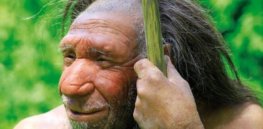
Tracking Neanderthal DNA in modern humans: There’s been little change in 45,000 years
Neanderthals, modern humans’ closest evolutionary relatives, have been extinct for thousands of years. But due to interbreeding between the two ...

Russia threatens to restrict soy imports from Brazil over use of controversial weed killer glyphosate
The Russian government has informed Brazil that it may adopt temporary import restrictions on soybeans if Brazilian producers do not ...

DNA ancestry tests are not ‘crystal balls’—they’re approximations
Identical twins have virtually identical DNA. So you’d think if a set of twins both sent in a DNA sample ...

Inside the cave where Neanderthals and Denisovans may have shared a home
Mysterious ancient hominids known as Denisovans and their evolutionary cousins, Neandertals, frequented a southern Siberian cave starting a surprisingly long ...

Microbes from Yellowstone National Park could spur lab-grown food innovation
Scientists have long been captivated by a group of microscopic organisms in Yellowstone National Park. The microbes thrive at extreme temperatures ...

Global average income has tripled in 50 years, driving rapid increase in meat consumption
You may have heard an increasing number of people vow to reduce their meat eating lately - or cut it ...

Precision medicine for dogs? Silicon Valley startup wants to make it happen
When pet dogs are diagnosed with cancer, they typically get surgery, chemotherapy, or radiation — that is, of course, if ...
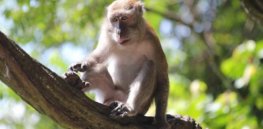
‘Software’ differences between monkey, human brains could explain our susceptibility to mental illness
Neuroscientists have for the first time discovered differences between the ‘software’ of humans and monkey brains, using a technique that ...

How bacteria preserve the flavor of your morning coffee
When it comes to processing coffee beans, longer fermentation times can result in better taste, contrary to conventional wisdom. Lactic ...

Viewpoint: Biologist Craig Mello knew about the CRISPR babies. Why his silence was ‘not acceptable’
The Associated Press reports that Nobel laureate and biologist Craig Mello was aware of a pregnancy in China involving gene-edited ...

AAAS fumble? Prestigious scientists’ organization endorses ‘data-less’ study suggesting links between glyphosate and kidney disease in Sri Lanka
I humbly ask this question. What am I missing? I just read the press release from the AAAS about the 2019 Scientific ...

Non-GMO vegetable seeds? Capitalizing on consumer fears to sell overpriced seeds
Niki Jabbour....recently shook a hornet’s nest. The talented gardener, book author, and radio host said on Facebook that she’d been ...

Improving CRISPR gene editing of human cells with an ‘off switch’
For all its gene-editing prowess, mechanistically CRISPR is a bit like a power tool with a broken “off” switch. Hear ...

US farmer groups urge UK to ‘break’ with EU’s biotech crop rules
America’s farmers and ranchers are eager for a U.S. free trade agreement with the U.K., but only if the British ...
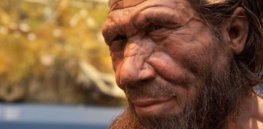
Were humans superior to Neanderthals? Or just luckier?
Prof Clive Finlayson, director of the Gibraltar Museum, explains why some old assumptions about the intellectual capabilities of our evolutionary ...

How long can bacteria live? 500-year experiment could provide answers
In the year 2514, some future scientist will arrive at the University of Edinburgh (assuming the university still exists), open ...

Some of us may have ‘divine healing’ poop for treatment of gut disorders
Scientists often seem to be on a quest for sacred chalices or sterling ammo. But a group of microbiologists has ...

Consumer-focused biotech crops are here—but will the public embrace them?
It may sound like yet another gluten-free food start-up....but Crispr is a new molecular system that scientists can use to manipulate DNA ...

‘Russian blues’: How language shapes the way our brains perceive the world
Does the language you speak influence how you think? This is the question behind the famous linguistic relativity hypothesis, that the grammar ...
Viewpoint: New York Times’ mixed record on science literacy—botched reporting on GMOs and chemicals while challenging anti-vaxxers
The New York Times has done something that it very rarely does: It wrote an editorial in support of biotechnology. The piece, ...

Vitamin-fortified golden rice could debut in Bangladesh within 3 months
Golden rice, a new variety of rice enriched with Vitamin A will be available soon, said Agriculture Minister Dr Abdur Razzak ...

Rodent-targeting gene drive could be delivered through CRISPR
Scientists are getting closer to creating a genetic pest-control measure against rodents. Female mice engineered to carry a genetic cut-and-paste machine ...

CRISPR used to fight virus hiding inside banana genome
Genome editing has been used to destroy a virus that lurks inside many of the bananas grown in Africa. Other ...
