


Science Literacy Project Daily Digest
Europe may relax its ban on neonicotinoid pesticides, alleged to harm bees, leaked document suggests
According to a leaked document, the European Commission is considering ditching bee-safety standards that led to a ban of three ...

Improving personalized medicine may demand more diversity in clinical trials
Hispanic Americans have higher levels of diabetes and less access to health care services, yet they live on average about ...

23andMe harnesses ‘massive’ genetic database for medical research
23andMe is well known for its DNA kits that promise to shed light on a person's ancestral history and potential ...

Women are more skeptical of GMOs than men—but not because of their ‘maternal instincts’
Studies have found that women are more skeptical of genetically modified (GM) foods than men....Conventional wisdom has been that maternal ...

This farmer says more food producers should stand up for agriculture—here’s 5 reasons why
....An advocate for agriculture, sometimes referred to as an AGvocate, can be anyone who works to tell the inclusive story ...

Why we don’t have to worry about ‘designer babies’: Altering intelligence is too hard
One of the main worries that the public has about CRISPR is that it could be used to create “designer babies” with increased levels ...

Peering into the brain: New technology allows unprecedented access to brain cells
By mixing and matching powerful advances in microscopy and cell biology, researchers have imaged intricate details of individual nerve cells ...
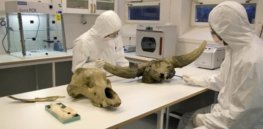
Ancient DNA answering previously ‘unresolvable’ questions about extinct species
The idea that [the answer to ancient questions] might be preserved in [the DNA of] old specimens has been around ...
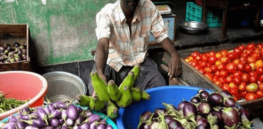
Opposition to GMO crops is a first-world privilege, plant scientist says
Growing up in India, Devang Mehta thought of GMOs, or genetically modified organisms, as an exciting new technology. “India is ...

What you eat as an infant shapes your gut microbiome for years
As soon as we are born, the collection of bacteria that colonize and collaborate with our digestive system starts to ...
A look at the neglected ‘1%’ of biotech crops that slashed chemical use and boosted yields
Last year on SAIFood we discussed the benefits of the four major genetically modified (GM) crops, canola, corn, cotton and ...

Video: Scientists ‘resurrect’ the scent of extinct flower by piecing together its DNA
Using the tools of paleogenomics, scientists at Gingko Bioworks, a Boston-based synthetic biology company, have resurrected the smell of an extinct ...

‘Perfect’ replicas of human blood vessels grown in lab
An international team of scientists claim to have pulled off a first: Three-dimensional replicas of human blood vessels that are ...

French president Macron backtracks on proposed glyphosate ban in wake of scientist, farmer protests
French president Emmanuel Macron says that the phasing out of glyphosate-based weed killers in France by 2021, as previously announced, ...
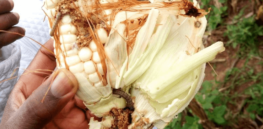
Plants have a sense of smell—can we harness it to fight pests, improve crop quality?
Plants don't need noses to smell. The ability is in their genes. Researchers at the University of Tokyo have discovered ...

Could your genes ‘nudge’ you towards risky behavior?
A massive new study that included data from more than a million people suggests that genetics may nudge some individuals ...

As glyphosate debate rages, French politician urges EU to take ‘science-based’ approach to pesticide regulation
French MEP Angélique Delahaye believes that policymakers must tell citizens what is currently possible and what is not when it ...

Alzhiemer’s could be triggered by ‘genomic mosaicism’
Certain inherited genetic mutations lead to Alzheimer’s disease (AD), but they are relatively rare. A recent study from my laboratory, however, shows ...

Three’s company? BrainNet successfully connects trio’s brains and thoughts
Neuroscientists have successfully hooked up a three-way brain connection to allow three people to share their thoughts – and in ...

Digging through myths and rumors around DNA privacy
Every once in a while, untruths spread through the genetic genealogy world that have the potential to do great damage: damage ...

CRISPR-edited chickens are coming: Can they stop a bird flu epidemic?
Humans don’t usually get the flu directly from animals, but human outbreaks of bird and swine flu can and do ...

Can ‘heart-healthy,’ gene-edited soybeans build consumer trust in new biotech crops?
This fall, soybeans grown by 78 farmers in Minnesota, South Dakota, and Iowa churned out of combine augers into awaiting ...

How the brain maps out ideas and memories
As the philosopher Immanuel Kant put it, the concept of space serves as the organizing principle by which we perceive ...

Infographic: How do urban environments drive genetic change?
Air pollution may favor the adaptation of organisms to become more stress-resistant than their rural counterparts. There is some evidence ...

Scientists developing biofortified ‘Amazon Peanut’ with boosted levels of disease-treating proteins, fatty acids
A team of Colombian scientists is working on the development of transgenic sacha inchi, a plant in the Amazon rich ...

High-yield, protein-enriched rice could help combat nutrient deficiency in developing world
More than 750 million people don't get enough nutrients from their food. More than two-thirds of those people live in ...
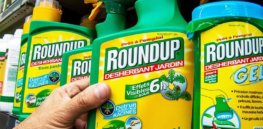
Even as public opposition to glyphosate grows, some French winemakers denounce ban of Monsanto’s Roundup Pro 360
On January 15, 2019, the Administrative Court of Lyon [France] banned [Monsanto's] “Roundup Pro 360,” a herbicide containing glyphosate. The ...
