


Science Literacy Project Daily Digest

Can this DNA test find the right depression medication for you?
Using DNA testing to determine how well a given depression medication will work with a patient's genetic makeup is becoming ...

CRISPR could help combat bovine tuberculosis—disease that costs farmers $3 billion annually
Recombinetics announced [October 16] the launch of TARGET-TB, a tripartite collaborative research project with University College Dublin in the Republic ...

Is there a link between climate change and human evolution?
[W]hile all the talk nowadays focuses on how to change the course of the climate’s evolution, a study out [October 11] ...

Precision plant breeding could boost sustainable rice production 25 percent
Corteva Agriscience, Agriculture Division of DowDuPont, and the International Rice Research Institute (IRRI) [recently] announced a multi-year framework agreement on ...

Quest to find molecule that sparks multiple sclerosis yields promising discovery
Researchers have long suspected that a self-antigen—a normal molecule in the body that the immune system mistakenly treats as a ...

Transcendental Meditation: The strange religious practice behind America’s anti-GMO movement
Celebs from Katy Perry to Ivanka say Transcendental Meditation [TM] helps them focus. The movement’s chief promises more: quasi-magical powers ...

Edible cotton? USDA approves biotech seeds that can be spread like peanut butter
Americans may soon be eating cotton for the first time — not just wearing it — as a new edible ...

How dirt could be the key to penicillin’s fight against antibiotic resistance
The next time you stroll outside after the rain, thank the soil bacteria below for the sweet, earthy smell that ...

More than a brain relay station: Thalamus could be key to higher level thinking
Scientists have known for decades that the thalamus faithfully transmits information about the visual world from the retina to the ...

Breeding disease-resistant sugarcane now a possibility with unlocking of sugarcane genome
For centuries, sugarcane has supplied human societies with alcohol, biofuel, building and weaving materials, and the world's most relied-upon source ...

Cracking the code for facial recognition
Brain-imaging studies have revealed that several blueberry-size regions in the temporal lobe—the area under the temple—specialize in responding to faces ...

Sustainability failure: Anti-GMO France’s 10-year effort to slash pesticide use boosted spraying by 12%
In 2008, the French government announced a dramatic shift in agricultural policy, calling for pesticide use to be slashed in ...

Video: Filipino farmer shares insider tips for spreading GMO acceptance in developing world
To mark the occasion of World Food Day, farmers from around the world will convene in Iowa to share thoughts ...

Do super high IQ children end up successful?
The original motive behind [IQ] tests was to get a diagnostic to select children at the lower ends of the ...

‘Hugely influential’ papers on cardiac stem cells declared ‘fraudulent’ by Harvard
An internal investigation by Harvard Medical School has determined that 31 scientific publications from the laboratory of a high-profile cardiologist ...

Viewpoint: 7-year food fraud scheme exposes flawed oversight of organic farming
Three farmers in Nebraska just plead guilty to a food fraud scheme in which they were selling conventionally grown corn and soybeans ...

Understanding what happens when routine touching becomes agony
It shouldn’t hurt to put on socks, wash hands, or walk about, but for some people with damaged nerves, certain ...

Tragic tradeoff: How depression evaded evolution
Depression is an evolutionary conundrum. On the one hand, it’s the leading cause of disability worldwide; on the other, the ...

Why people with autism have shorter life expectancies
Two recent studies will undoubtedly shock individuals and families affected by autism spectrum disorder (ASD). These studies show a much earlier age ...

How brain scans of sleeping mice could help identify various types of autism in humans
Autism features vary considerably from one person to the next. One of the biggest challenges in autism research is to ...

‘Low-emission’ cows that produce less methane gas take center stage amid growing climate change fears
From low-emission cows to robotic soil management, the farming industry will have to explore new approaches in the wake of ...

Therapy dogs spread joy—and possibly superbugs—to kids in hospitals
Therapy dogs can bring more than joy and comfort to hospitalized kids. They can also bring stubborn germs. Doctors at ...

Viewpoint: Europe has traded crop biotechnology for ‘faith-based’ agroecology
We are living in a new Dark Age in Europe where innovation and technology are being rejected at an alarming ...

Viewpoint: USMCA North American trade deal sets precedent for sensible worldwide biotech crop regulations
In the crop science industry, China has a reputation for taking a long, long time to approve new genetically modified ...

Natural GMOs? Some crops incorporate ‘foreign DNA’ all by themselves
People opposed to or afraid of genetically modified organisms (GMOs) complain that GMOs are unsafe and unnatural. What do those ...
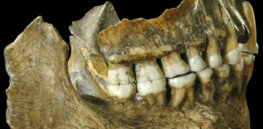
450,000-year-old teeth help piece together human family tree
Crime-drama fans know that forensic scientists can ID the remains of long-missing persons by examining their teeth. To solve even ...
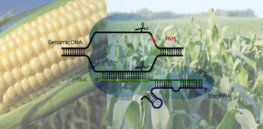
Viewpoint: If organic farmers want to promote sustainable farming they should reconsider hostility toward CRISPR-gene editing
A University of California, Berkeley professor stands at the front of the room, delivering her invited talk about the potential ...
