


Science Literacy Project Daily Digest

Bringing a common language to Alzheimer’s research
The research into the underlying causes and treatment [of Alzheimer's] have been intensifying but have been a bit undisciplined; it ...

SexyPlant: Can GMO crops that produce insect sex pheromones replace pesticides?
“Sexy plants” are on the way to replacing many harmful pesticides, scientists say, by producing the sex pheromones of insects ...

Brazilian government fines native communities for growing GMO crops
The savannah scrubland where Chief João Ponce once hunted deer and wild boar in Brazil has given way to neat ...

Three genes that changed the course of human brain evolution
Three nearly identical genes could help explain how 0.5 liters of gray matter in early human ancestors became the 1.4-liter ...

Gene editing could provide humane alternative to painful cattle dehorning
Physical dehorning of dairy cattle is a standard practice to protect both human dairy workers and other animals from injury ...

Synthego’s pre-edited genetic material makes CRISPR research faster and easier
Synthego, a provider of gene editing services for genomics research and experimentation, has launched a new suite of products that ...

The social consequences of the GMO debate
The GMO debate has been raging for two decades, but this debate isn’t actually about GMOs at all. Rather, “GMOs” ...

GMO crops in Africa: How South African farmers paved the way
“I feel I wasted my time working for over 20 years as an electrical engineer in Johannesburg,” said Khambi Frans ...

Viewpoint: Divide between ‘natural’ and ‘artificial’ chemicals is meaningless
Since pesticides and herbicides are routinely in the news, lately because of the "Glyphosate Wars," (2) I thought it might be interesting to ...

Why dreams are so hard to remember and what you can do about it
In waking life, [quickly] forgetting recent experiences would surely land you in a doctor's office. With dreams, however, forgetting is ...

Studies warn that CRISPR gene edits could trigger cancer
Editing cells’ genomes with CRISPR-Cas9 might increase the risk that the altered cells, intended to treat disease, will trigger cancer, two studies ...

Why is the Impossible Burger under attack by anti-GMO groups?
The food start-up’s success is undeniable — and a noticeable affront to Big Meat — but Impossible Foods’ hasty rise has also ...

CRISPRcon talks designer babies and scientific colonialism
While lacking the costuming of Comic-Con or revelry of SantaCon, [CRISPRCon’s] second annual geek-out dealt with a concept weightier than ...

Are we closer to finding life on Mars?
Organic matter has been found on Mars in soil samples taken from 3 billion-year-old mudstone in the Gale crater by ...

EU food safety chief: Reelection—not reality—motivated Europe’s anti-glyphosate politicians
Some politicians spoke “loudly” against glyphosate, the world’s most commonly used weedkiller, before their elections but came back to reality ...

Natural insecticide from tobacco plants could fend off crop pests without killing them
Although it's associated with nasty cigarettes, the tobacco plant is also a potential source of vaccines, biofuel and antibiotics. Now, a chemical from the ...

Expanded genetic testing of newborns could help us get the most out of new gene therapies
The company behind [spinal muscular atrophy drug] AveXis, is seeing the most dramatic results in children who are treated in ...

R.I.P. Monsanto. Our hates will go on.
Welp, this is the end of Monsanto. Not the end of the seed company, mind you, but the end of ...

Small genealogy website GEDmatch ‘never expected’ its criminal-catching use
Ever since investigators revealed that a genealogy website led police to arrest a man as California’s notorious Golden State Killer, interest ...
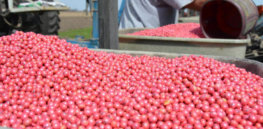
Canada to decide on neonicotinoid restrictions this summer
The fate of two neonicotinoid seed treatments, applied to almost all of the canola and corn seeds in Canada and ...

Could we ‘rewire our brains’ to stop sugar cravings?
Imagine if we could rewire our brains so that tastes we usually crave became unpleasant—or even nullify responses to taste ...

US FDA: Gene-edited crops can have many advantages for consumers
Scientific advances in biotechnology, such as genome editing and synthetic biology, hold enormous potential to improve human and animal health, ...

Do you have second ‘brain’ in your colon?
You're reading these words because you have a brain in your head. But did you know you also have a ...

Infamous Seralini GMO rat tumor study debunked by European scientists
Three European studies have disproved Gilles-Éric Séralini’s widely circulated claims that genetically modified maize (corn) induces tumors in rats. Séralini, ...

Are age-related diseases the result of evolutionary tradeoffs favoring the young?
While granting human species some advantages over our primate cousins, recent genomic adaptations appear to have come at a cost ...

Organic farming advocate Klaas Martens comes out in favor of gene-edited crops
Klaas Martens, a prominent voice in the organic movement and a third-generation grain and livestock farmer, says he would be ...

How did our brains get so big?
By studying [brain organoids, researcher Frank] Jacobs could look for genes that are switched on more strongly in the growing ...
