


Science Literacy Project Daily Digest
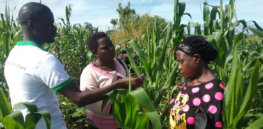
Ugandan farmers, scientists hope to bring solution to armyworm invasion blocked by anti-GMO activists
Ugandan scientists are confident that their latest field trials of genetically modified drought-tolerant and insect-resistant maize are yielding promising results, ...

Humanzee: Creating lab-produced human-chimpanzee hybrids would be ‘profoundly ethical’
It is a bit of a stretch, but by no means impossible or even unlikely that a hybrid or a ...

Syngenta agrees to pay $1.5 billion over GMO corn fiasco in ‘largest agricultural suit settlement in US history”
A $1.5 billion settlement was reached in a class-action lawsuit covering tens of thousands of farmers, grain-handling facilities and ethanol ...

Clinically questionable consumer DNA tests challenging for genetic counselors to interpret
Home genetic tests like AncestryDNA and 23andMe are more popular than ever, with sales topping $99 million in 2017. But ...

European Union court rules activists can challenge EU approval of GMOs
Reviving a challenge to Monsanto’s marketing of food that contains genetically modified organisms, Europe’s highest court ruled [Maarch 14] that ...

Origins and history of life embedded in genomes of modern microbes
Biodiversity has always been predominantly microbial and the scarcity of fossils from bacteria, archaea and microbial eukaryotes has prevented a ...

National Geographic confesses to history of ‘racist’ coverage in special issue
National Geographic strives to deepen our understanding of the world and our role in it. It’s difficult to understand 21st-century America ...

‘Regenerative agriculture’: With organic label losing value, this is vying to replace it
“Regenerative agriculture” is a bit of a mouthful compared to “organic,” but there’s a good reason why consumers should familiarize ...

7,300-year-old ancestor explains why Nigerians, Congolese and Indians most likely to get sickle cell anaemia
A one-time gene mutation in a West African human millennia ago gave them immunity to malaria and doomed some of ...

Viewpoint: GlaxoSmithKline abandonment of rare disease gene-therapy drug program because it’s not a money generator hurts children
When GlaxoSmithKline, long a global leader in the effort to pioneer gene replacement therapies, announced it would halt its drug ...

Viewpoint: Indian opponents of GMO mustard promote false hopes about unsustainable organic farming
Geneticist and the former vice-chancellor of Delhi University, Deepak Pental ... and his team have developed the transgenic mustard hybrid, DMH-11, ...

Viewpoint: California judge blocks spraying of citrus-killing Asian psyllid, courting disaster
“Judge Orders California Agriculture Officials to Cease Pesticide Use" ... The judge’s decision is so scary because he just indefinitely ...

Counting on Trump: Approval of biotech animals may rely on circumventing FDA
The lobbying effort to get the FDA out of the way of biotech animals is under way. ... [Recombinetics] is ...

Saving critically ill babies through lightning-fast genome sequencing
Usually it takes weeks for scientists to sequence an entire genome. But [neurologist Jennifer] Friedman and her colleagues at Rady [Children’s ...

Anti-GMO demonization of conventional agriculture has consequences
The negative rhetoric surrounding GMOs, big ag and non-organic food production is due for a reckoning. At some point, many ...
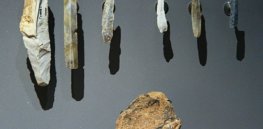
Stone tool evolution study illuminates early human development
For at least 2.6 million years, humans and our ancestors have been making stone tools by chipping off flakes of ...

Bayer’s takeover of Monsanto conditionally approved in China
Bayer’s on [March 13] secured conditional approval from China’s commerce ministry for its planned acquisition of the world No. 1 seed ...
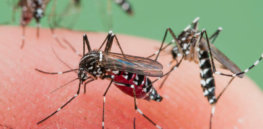
CRISPR-edited mosquitoes could dramatically reduce more than 200 million annual cases of malaria
Swatting at mosquitoes is a great start, but if we really want to cut down on the hundreds of millions ...
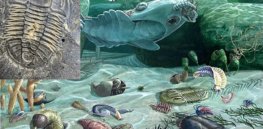
Is cancer the evolutionary ‘price’ complex animals pay for living in an oxygen rich environment?
Like many biologists, [Emma] Hammarlund wondered why it took so long for complex animals to emerge — and why, when ...

40 years of data show Bt corn significantly reduces pests, spraying and crop damage, including in nearby non-GMO fields
University of Maryland researchers have pulled together forty years of data to quantify the effects of Bt field corn, a ...

South African scientist: GMO crops can improve crop nutrients, boost Africa’s agricultural productivity
[Jennifer Thomson from South Africa’s University of Cape Town] has been a strong advocate of promoting modern biotechnology in Africa for ...

CRISPR can fix gene that causes intellectual impairment in men–fragile X syndrome
The fragile X syndrome is the most common form of intellectual impairment in men, affecting 1 out of 3,600 boys. Now, scientists ...

Human testing on beta thalassemia patients: CRISPR readied for next milestone as early as this year
[R]esearchers demonstrated how a gene editing technique, known as Crispr-Cas9, could be used to edit living human cells, raising the ...
Bad weather, habitat destruction and pesticides are main threats to monarch butterflies
The number of monarch butterflies that overwintered in forests in Mexico fell for a second straight year, experts say. Monday's ...

Are brains of transgender people wired differently?
In recent years, US society has seen a sea change in the perception of transgender people, with celebrities such as ...

‘Simplifying science’ for the public key to Africa’s embrace of GMOs, Ghanaian scientist says
A former Deputy Agric Minister has urged scientists to simplify the issue of Genetically Modified Organism (GMO) technology for ordinary ...

How wheat’s wild cousins could help increase its genetic diversity
Durum wheat is the tenth most important food crop in the world. ... Yet yields have reached a plateau in ...
