


Science Literacy Project Daily Digest

Crop yields limited by genes more than nutrition, water and sunlight
You might think that plants grow according to how much nutrition, water and sunlight they are exposed to, but new ...

Consumer opposition stalls GM feed crops that could revolutionize Australia’s dairy industry
The [Australian] dairy industry’s greatest innovations in a generation — genetically modified high-energy ryegrass and virus-resistant clover — have still ...

Less toxic cigarettes? ‘Genetic road map’ of tobacco could lead to reduced carcinogen levels
A new genetic road map of tobacco has been used to successfully identify and clone two mutated genes associated with ...

Infographic: Understanding ‘hazard vs risk’ illustrates lack of science behind IARC’s glyphosate cancer designation
Lately in the news of agriculture there has been a lot of controversy over the popular herbicide glyphosate being labeled ...

Addictions: Are overeating and drug use hardwired in the brain’s ‘reward circuit’?
Neuroscientists have found that food and recreational drugs have a common target in the “reward circuit” of the brain, and ...

Modern Frankenstein: Are we on the pathway to human head transplants?
The mysterious work of Dr. Sergio Canavero is the stuff of grade-B horror movies. He claims he’s successfully attached a living ...

Desaparecidos: Gene bank helps identify Argentina’s stolen and missing children
During the 1976-1983 dictatorship, Argentina's military rulers systematically stole babies born to political prisoners, most of whom were then killed ...

India’s ‘great debate’: DNA unraveling story of settling of continent by ancient English-speaking ‘Aryans’
[Editor's note: Michel Danino is a professor at IIT Gandhinagar, where he assists the growth of its Archaeological Sciences Centre, and ...

Evolution and war: The ‘deep roots’ theory of human violence
War has long been viewed as a way for societies to acquire wealth and power, even though it often doesn't ...

NYU ethicists: ‘Biologically’ modified mosquitoes should be deployed to fight Zika
[Arthur Caplan and Kelly Folkers are ethicists at New York University.] Zika is here to stay as a highly dangerous warm-weather pest ...

Usain Bolt’s asymmetrical gait: Does running unevenly make him faster?
Usain Bolt is the world's fastest man. But does that also mean that compared to all other competitive runners on ...
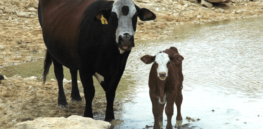
‘Cow of the future’: Genetically engineered ‘heat resistant’ cattle could adapt to climate change
Scientists are developing a breed of genetically-modified 'cows of the future' that will be more heat resistant and have superior ...
What might autism researchers learn from schizophrenia?
The general features [of autism] are nearly identical to those of another heritable condition: schizophrenia. The pattern is so distinctive ...

‘Game changer’ herbicide that could supplement glyphosate developed from anti-malaria chemical
Researchers from the University of Western Australia (UWA) have used chemicals destined to develop new treatments for malaria as a ...

Letter denouncing Food Evolution as ‘propaganda’ misses opportunity for constructive GMO discussion
[Terrance Bradshaw is the director of the University of Vermont's Apple and Grape Program and Horticulture Research and Education Center ...

CRISPR’s high costs may limit development of gene therapy drugs
The ruckus over the CRISPR gene-editing system hides a dark reality: its high cost may make it unaffordable and questions ...

Innovative ‘cell guillotine’ could revolutionize wound healing
For the last 100 years, slicing a single cell into two equal parts has proven to be a process that's tedious, ...

Say that again? Drug treatment could help older brains distinguish sounds
Have you noticed that learning languages or musical instruments becomes harder as you get older? It may be because your ...

Fighting depression: Drugs stimulating growth of new brain cells may be key
Depression is something of a black box. Its underlying causes aren't completely understood, nor why particular medications work for some ...

Drug weapons: Computer designed proteins prepare to battle the next pandemic
Researchers are using computer modeling to design new antiviral proteins that could slow down, or stop, global outbreaks of deadly ...

Tomorrow’s greenhouse: Artificial intelligence-controlled ‘food computers’ grow better-tasting crops
Inside a shipping container-sized box at MIT Media Lab, crops of basil are growing in micro-climates designed by artificial intelligence ...

LA Times: Food Evolution GMO movie persuasive not polemical, ‘potentially revolutionary’
Calm, careful, potentially revolutionary, "Food Evolution" is an iconoclastic documentary on a hot-button topic. Persuasive rather than polemical, it's the ...

Viewpoint: US Right to Know uses ‘big tobacco strategy’ to attack, discredit, scare academics
[Editor's note: Stuart Smyth is a professor in the University of
Saskatchewan’s agricultural and resource economics department and holds the ...

Bladder control: Is there a genetic treatment for urinary incontinence?
Treatment options for urinary incontinence may be revealed through a genome-wide association study searching for genes that may contribute to ...

Genetics of Harry Potter: What wizardry can tell us about our DNA
[In the world of "Harry Potter,"] magic appears to follow some of the same rules as other traits that are ...

Chinese government, Dow Chemical work together to convince public GMO foods safe
With a population of 1.4 billion and limited arable land, China is trying hard to convince citizens to accept genetically ...

Hollywood Reporter on Food Evolution: ‘Polished and provocative’, challenges ‘enviro-activist orthodoxy’
THE BOTTOM LINE: A polished and provocative call for activists to be as scientifically minded as they believe they are ...
