


Science Literacy Project Daily Digest

Losing too many brain cells? Even adults can make more, study says
Many people think that their adult brain is not capable of generating new cells...[However,] the reality is much more complex ...
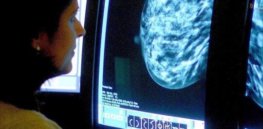
1 in 5 women with breast cancer could be helped by drugs targeting BRCA genes
Up to a fifth of women with breast cancer may benefit from drugs that are currently reserved for less common ...

EPA/Monsanto collusion alleged in lawsuit challenging safety of Roundup herbicide
[Editor's note: Read the GLP's coverage of glyphosate's cancer risk here and here. Read the American Council on Science and Health's ...

Criminal intent: Brain scans could show whether someone meant to do bad
What if lawyers could prove that a person knowingly committed a crime by looking at scans of his or her ...

Challenging Danny Hakim’s New York Times claim that Monsanto conspired to cover up glyphosate dangers
[Editor's note: Alex Berezow is a microbiologist and a senior fellow of biomedical science at the American Council on Science ...

Fact or fiction: Testosterone supplements offer youthful boost for aging men
Lots of men are taking testosterone supplements, some of them for good reasons and some for not-so-good reasons. There are ...

3 women blinded after receiving stem cell therapy for macular degeneration
Three women suffered severe, permanent eye damage after stem cells were injected into their eyes, in an unproven treatment at ...

To boost crop yields, stress tolerance one biotech startup turns to epigenetics
The news that’s arrived is that TechAccel, the Kansas City-based technology and venture development company, announced it has completed an ...
To boost crop yields and stress tolerance, one biotech startup turns to epigenetics
The news that’s arrived is that TechAccel, the Kansas City-based technology and venture development company, announced it has completed an ...

Environmental Working Group’s Dirty Dozen pesticide-in-foods list confuses risk and hazard
It's that time of the year when the Environmental Working Group produces its "Dirty Dozen List" - foods they believe ...

Video: Microfossil discovery dating back 3.77 billion years could be oldest evidence of life
[A] new study led by University College London PhD student Matthew Dodd describes evidence of what the researchers believe to ...

Facing climate change, plant breeders use genetics, robotics to develop crops ‘that can adapt to it all’
Variable weather is creating extreme challenges for crop breeding in California. How do you develop crops that will thrive under ...

Chinese scientists repair viable human embryos with CRISPR for first time
A team in China has corrected genetic mutations in at least some of the cells in three normal human embryos ...

Corn genetically engineered to neutralize toxic mold would be boon for health of poor women in Africa
It’s a silent killer lurking in common foods. A carcinogenic toxin made by [mold] kills thousands around the world and ...

Republican bill could force workers to involuntarily disclose sensitive DNA data to employers
It’s hard to imagine a more sensitive type of personal information than your own genetic blueprints...[T]he four-base code can reveal ...

Toxin, glyphosate, carcinogen: Story behind 3 most misused words in conventional vs. organic farming debate
[Editor's note: Marthélize Tredoux is a former scientist and co-owner and editor at Incogvino, a website that covers wine. By day, ...

Life after death? Brain activity sometimes mimics ‘deep sleep’
When the heart stops, the body is declared dead, but this isn't always absolute...New research has now added another piece to the ...

‘Environmental DNA’ tests could aid in management of commercial, endangered fish
Environmental DNA, or eDNA, is at the center of a brand new kind of fish and wildlife biology, and it ...

No turning back: Why discussions on gene editing must reach the American public
[F]or the first time, scientists in China announced they had successfully edited the genes of fertilized human embryos, and fully ...

Building synthetic life: Yeast experiments pave way for new drugs, treatments
The team that built the first synthetic yeast chromosome [in 2014] has now added five more chromosomes, totaling roughly a ...

Seeing what others don’t: Do genius and madness walk hand-in-hand?
[Given the various so-called mad geniuses in history, many people assume] that creativity and psychopathology are intimately related...But some recent psychologists ...
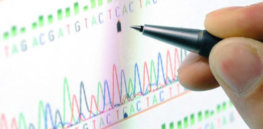
Casting a wider net: Expanded carrier screening recommended for cystic fibrosis, other genetic diseases
All prospective parents should have carrier screening for a range of genetic disorders, according to new recommendations by the American ...

When loud noises interrupt conversations, your brain fills in the blanks
Noise is everywhere, but that’s OK. Your brain can still keep track of a conversation in the face of revving ...

Canadian parliament approves genetic privacy bill, riles opponents
A vote in Canada’s Parliament to approve a genetic privacy bill is creating a self-inflicted political headache for Prime Minister ...
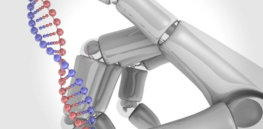
Artificial intelligence sorting of genetic mutations is helping patients get best drugs for their cancer
Cancer patients are often treated with chemotherapy and various types of drugs, but the results of these treatments aren't uniform ...

As China overtakes US in government funding for agricultural research, biotech firms fill the gap
The world’s largest farm exporter, the U.S., is also a global leader in agricultural innovation. Consider GMO crops grown on ...

Plants may experience consciousness — but in a different way than humans
Like us, plants possess receptors, microtubules and sophisticated intercellular systems that likely facilitate a degree of spatio-temporal consciousness. Instead of ...
