


evolution
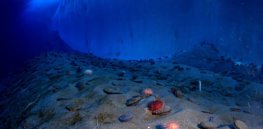
Discovery of microbes under ocean floor suggests life could thrive in ‘extreme environments’ like Mars
When scientists find microbial life thriving in some of the most extreme environments on Earth, it gives them hope that ...
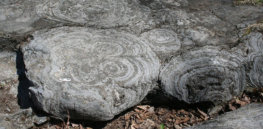
Searching for signs of Earth’s earliest life more than ‘a needle-in-the-haystack’ problem
The search for signs of Earth’s earliest forms of life isn’t quite like looking for dinosaur bones protruding out from ...
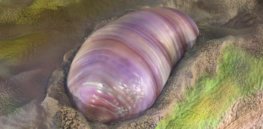
Origins of symmetry: This ancient worm-like creature may be a key to our own evolution
A worm-like creature that burrowed on the seafloor more than 500 million years ago may be key to the evolution ...
Viewpoint: GMOs are ‘unnatural’? Evolution explodes a popular crop biotech myth
The most controversial element of biotechnology is a trick we learned by experimenting on some of the simplest life forms in ...
Global plan to halt extinction criticized for failing to address species humans don’t like
A global plan to halt the loss of nature is "weak" in one key area, say scientists. The new 10-year ...
Battling antibiotic resistance by stopping evolution
One of the ways that bacteria evolve to become "antibiotic resistant" is by picking up free-floating genetic material from their environments. They ...
Extraterrestrial protein found inside meteorite? If true, discovery bolsters pursuit of alien life
A team of researchers claim to have found a protein inside a meteorite. It would be the first protein ever ...
Human-chimp hybrid fossil discovery rewrites human evolutionary history! Uhm, maybe not.
Does the anatomy of this ancient ape upend assumptions about how human ancestors learned to walk? ...
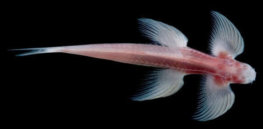
Something’s fishy: We got arms, legs and other skeletal features from our aquatic ancestors
In his 20 years as an ichthyologist, [John Sparks has] seen a lot of fish—intact and not. He’s traveled to ...
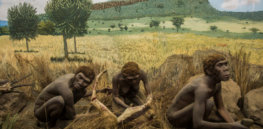
Early humans may have mated with Neanderthals and Denisovans a lot more than we thought
Before we became the only remaining humans on the planet, Homo sapiens mated with Neanderthals and the closely related Denisovans. New research is now revealing ...
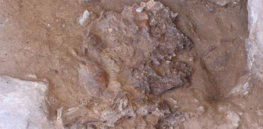
Iraqi excavation rekindles debate over whether Neanderthals buried their dead
The excavation of an adult Neandertal’s partial upper-body skeleton in Iraqi Kurdistan has revived a decades-long debate over whether Neandertals intentionally buried ...
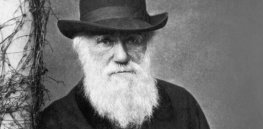
Exploring the uneasy relationship between Charles Darwin and his skeptical publisher
Charles Darwin’s ideas about evolution shook up Britain’s Victorian establishment upon the release of On the Origin of Species, the 1859 ...
Why it’s unlikely that humans gained the ability to speak through a single gene mutation
One of the most controversial hypotheses for the origin of the human language faculty is the evolutionary conjecture that language ...
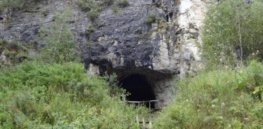
Video: Look inside Siberia’s Denisova cave, where researchers discovered bones of our mysterious relatives
The Denisovans are named after Denisova Cave in Siberia. Until 2019, it was the only place where archaeologists found bones ...
Podcast: ‘How to argue with a racist’—geneticist Adam Rutherford challenges what he calls ‘pseudoscience’ in genetics and politics
Adam Rutherford explains how to argue with a racist, hunting for the ghosts in the human genome, and recreating the ...
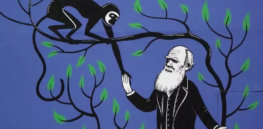
Viewpoint: Challenging those who claim evolution is ‘just a theory’
Such widespread rejection of the theory of evolution is fueled in part by the notion that evolution is “just a ...

New ‘DNA clock’ finds that if our genes had their way, humans would have a ‘natural’ lifespan of 38 years
A genetic “clock” lets scientists estimate how long extinct creatures lived ...

Humans are ‘biologically built’ to seek out friends
We humans are biologically built to seek friends, and we can see suggestions of our evolutionary past in the social ...
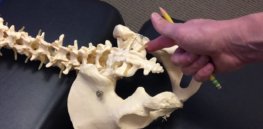
Why do humans have tailbones?
Though it’s currently useless, the human coccyx—commonly referred to as the tailbone—remains nestled at the bottom of the spine, a ...

3 modern adaptations that prove humans are still evolving
Genetic mutations lead to new traits — and with the world population now above 7 billion and rising, the chances ...
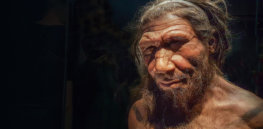
Modern Africans have more Neanderthal ancestry than previously thought, study says
Modern Africans have an average of 17 megabases of Neanderthal DNA in their genomes, according to an analysis published [January ...
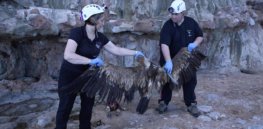
‘They weren’t just surviving’: Gibraltar caves give unprecedented peek into daily lives of last Neanderthals
Neanderthals were a resilient group. They existed for about 200,000 years longer than we modern humans (Homo sapiens) have been ...
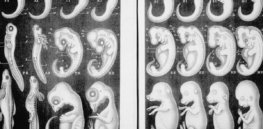
Podcast: One of the most infamous fakes in biology? How Ernst Haeckel’s disputed embryo images sows confusion about evolution
Kat Arney takes a closer look at some of the most controversial images in science - Ernst Haeckel's illustrations of ...
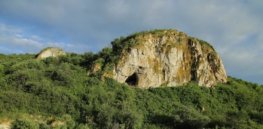
‘Intrepid explorers’: Neanderthals hunted their way across thousands of miles in Europe
Neandertals were epic wanderers. These ancient hominids took a 3,000- to 4,000-kilometer hike from Eastern Europe to the Altai Mountains ...
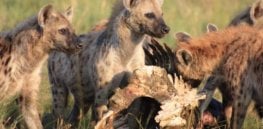
Was Darwin wrong about ‘survival of the fittest’? Collaboration may be just as natural as competition
To put it simply, we have let Darwinism set the horizon of possibility for human behavior. Competition has become a ...
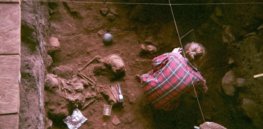
DNA from 4 ancient children shed light on diversity of humankind’s African origins
Four ancient youngsters, one pair from around 8,000 years ago and another from about 3,000 years ago, have opened a ...
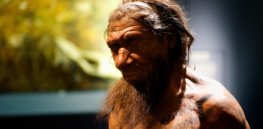
Interbreeding with Neanderthals, Denisovans gave us an evolutionary boost, study says
When Homo sapiens left Africa and encountered the Homo neanderthalensis in Europe, the two ancient hominins did the obvious thing and had sex with ...
