


evolution
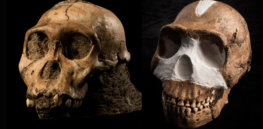
9 significant archaeological discoveries of the past decade, including a Neanderthal-Denisovan hybrid
Here’s a look back at some of the most significant archaeological and anthropological discoveries of the past decade that fundamentally ...
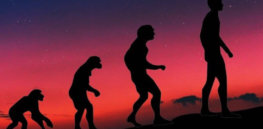
Enduring misconception: Why are we still drawing evolution as a straight line?
Evolution has no final endpoint in mind ...
Humans originated in Botswana? New research challenged for using ‘weak and inconclusive genetic analysis’
A new paper claiming that modern humans originated in northern Botswana some 200,000 years ago is being criticized by experts, ...
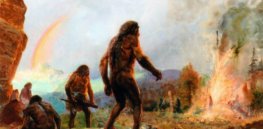
Humans ‘are not so special after all’: Neanderthals also knew how to start fires, evidence suggests
At some point, our ancestors harnessed the power of the flame to keep warm, cook food, produce new materials, shoo ...

If we aren’t careful, we could miss the chance to learn cancer-fighting secrets from threatened whales and elephants
The loss of vulnerable mammals means scientists could miss out on useful quirks in their genetics ...
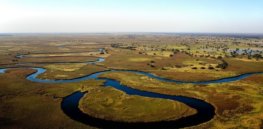
‘Puzzle of a million pieces’: New study traces humanity’s birthplace to northern Botswana
[A] study, appearing [October 28] in the journal Nature, uses genetic, archaeological, linguistic and climatic evidence to argue that the ancestral homeland ...
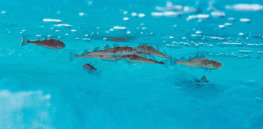
‘De novo genes’: How natural selection creates new genes from nothing
In the depths of winter, water temperatures in the ice-covered Arctic Ocean can sink below zero. That’s cold enough to ...

Inherited Neanderthal, Denisovan DNA may help with our metabolism, immunity and diet
Neanderthals and Denisovans went extinct some 35,000 to 40,000 years ago, but not before these closely related hominins interbred with ...
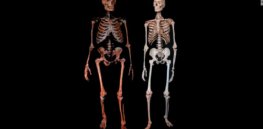
A peek into the sex lives of Neanderthals—they may have mated with ‘close kin’
A group of 13 Neanderthal remains detail a story of inbreeding, cannibalism ...
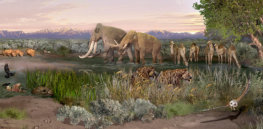
Studying human evolution faces major challenge: Our ancestors lived in ‘ecosystems unlike any found today’
To understand the environmental pressures that shaped human evolution, scientists must first piece together the details of the ancient plant and animal ...

Developing world should curb agricultural antibiotic use to combat drug-resistant bacteria, study warns
The growing appetite for animal protein in developing countries has resulted in a smorgasbord of antibiotic consumption for livestock that ...

Where’d pineapple come from? Study explores the evolution of an ever-popular tropical fruit
Researchers have now gained new insights on how human agriculture helped shape the evolution of pineapple. Led by University of ...
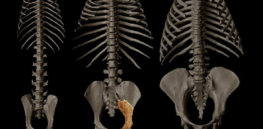
Fossilized ape pelvis suggests human ancestors walked upright much earlier than previously thought
Scientists have long thought that humans evolved from an ape that moved about on all fours like a chimpanzee, and ...
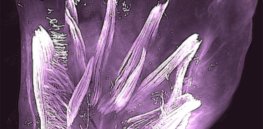
Evolution in motion: Before birth, human fetuses develop—and then lose—lizard-like body parts
The evolutionary journey of any species is littered with detours and dead-ends. Humans, for instance, have vestigial body parts that ...

Infographic: Our skulls have been shrinking for 250 years—’our faces have begun to deform’
Science suggests that crooked teeth, overbites, narrow jaws, and crimped nasal airways are a modern phenomenon. Skeletal remains show that just 300 years ago, humans ...
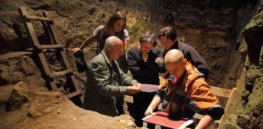
From hominids to animals: Who lived in Siberia’s famous Denisova Cave?
For thousands of years, Siberia’s Denisova Cave was home to various bands of Neanderthals, Denisovans, and modern humans. But as ...
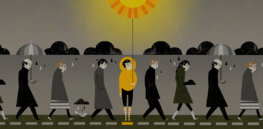
Evolution doesn’t want you to be happy or satisfied. We’re supposed to ‘survive and reproduce.’
While the pursuit of happiness seems like a worthwhile goal, evolution thinks otherwise ...
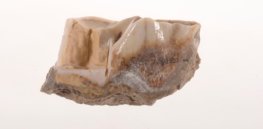
New DNA analysis technique may tell us how ‘hundreds of species’ evolved
Researchers say they identified an almost complete set of proteins – a proteome – in the dental enamel of the ...
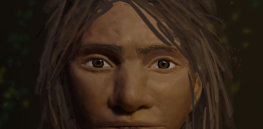
We haven’t found a Denisovan skull yet. But thanks to genetic analysis, we can predict what their faces looked like
A pinky finger bone, some teeth, and a lower jaw. That’s all the physical evidence we have of the mysterious ...

Infographic: How an asteroid killed the dinosaurs
The Cenozoic is the name geologists give to the era spanning the last 66 million years, and it started with the mass ...

Making the case for a sixth major mass extinction–the end-Guadalupian event
Life on Earth has diversified into countless forms over the course of billions of years, but it hasn’t always been ...

Evolution, the human diet and the meat vs. plant conundrum
Evidence suggests our hominin ancestors turned to meat when climate change reduced resource-rich vegetation. The signatures of these changes may ...

Evolution takes time: ‘Relatively recent’ gene variant helps some humans cope with high-sugar diets
It’s well known among palaeontologists and nutrition experts that the human diet began to change after our distant ancestors transitioned ...

How early farmers helped barnyard grass become one of the ‘world’s worst’ weeds
Vavilovian mimicry allowed barnyard grass to become the scourge of rice cultivation ...
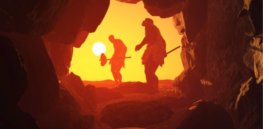
Tackling Stone Age stereotypes and misconceptions including this: They made tools out of more than just stone
Although most depictions of Stone Age hunters are male, women and children played a huge part in the creation and ...
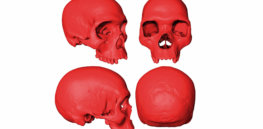
Scientists reconstruct yet-to-be-found skull of humans’ last common ancestor entirely through computer imaging
[R]esearchers like Dr. [Aurélien] Mounier are using computers and mathematical techniques to reconstruct the appearance of fossils they have yet ...
‘Beneficial archaic DNA’ still present and impacting humans today
Most Neanderthal variants exist in only around 2 percent of modern people of non-African descent. But some archaic DNA is ...
