


Stuart Smyth
Environmental activist irony: Anti-chemical campaigners end up promoting higher food prices with few farming or health benefits
ENGOs target chemicals judged safe by independent global regulatory bodies, such as glyphosate, but have no interest in restricting some ...

Viewpoint: Food shortage crisis — There are two ways to address the food shortage crisis: Farm more land or increase yield. Let’s compare their sustainability impacts
As the planet’s population continues its relentless march towards 10 billion, more food is going to need to be produced ...

From the Environmental Working Group to the Pesticide Action Network, food activists claim we face killer risks from chemicals. Here’s why scientists don’t agree
E coli in ready-to-eat salads? Salmonella in seafood? Spoiled ground beef? Listeria in vegetables? Pesticide traces in… everything? Each year ...

Consumer paradox: As media turn less negative on genetically modified crops, Canadian consumers remain ambivalent about innovative food products
Canadians have high trust in Canada’s food safety system, but not new food products Gauging consumer attitudes to genetically modified ...
Viewpoint: Here is why Canada is deregulating gene edited foods — and why consumers will benefit
The importance of, and reliance upon, evidence-based regulations was reaffirmed [recently] in Canada! It was very welcomed news when Health ...
How crop gene editing increases nutrition and sustainability
The Sustainable Development Goals (SDGs) were launched in 2015, with the top three goals being poverty eradication, improved food security ...

Meeting UN sustainability goals: Why gene editing is key
Innovations in agriculture productivity between 2005 and 2015, greatly contributed to reductions in the number of people that were food ...

’Neophobia’: Consumers like what gene editing has to offer, but are still afraid of new technologies. Survey suggests why we need more biotech education
This article uses a consumer survey to gather perceptions regarding food safety, gene editing and willingness to consume for three ...
Viewpoint: What drives agricultural sustainability? Not what many ‘environmental organizations’ promote
Anyone who has flown over the Canadian prairies in any of the previous summers will notice the tremendous number of ...

Viewpoint: Why gene editing is so much like ‘nature’ — and therefore should not be tightly regulated
At what point do regulatory experts possess sufficient knowledge on innovative technologies and their potential impacts, both beneficial and adverse, ...

Glyphosate herbicide helps reduce carbon emissions in agriculture, academic study finds
In the early 1990s, tillage was the leading form of weed control, with minimum/zero-tillage management practices incapable of long-term continuation ...
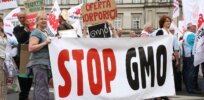
Going GMO-free? Why rejecting biotechnology leads to environmental and financial losses
Challenges associated with supplying society with food have evolved from additional innovation and continual innovation will be required to meet ...

Global food security has been lagging since 2015. Here’s how renewed public-private partnerships could turn around the decline
Global food security is at a tipping point. After decades of both absolute and relative improvement in food security worldwide, ...
Wide gap between Canadians’ beliefs about biotech crop safety and the science
Consumer opinions, perspectives and views on food and its production do not necessarily reflect what is occurring. For instance, we ...

Viewpoint: How distributing misinformation about farming, food and agricultural biotechnology became a big business
Biotechnology began to be applied to crop agriculture in the early 1980s, with the first commercialized products coming to market ...
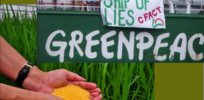
Viewpoint: Golden Rice approval fallout — ‘Greenpeace has transitioned from an organization concerned about the environment to one that fights against improved food security and reduced childhood blindness’
In late July 2021, the Philippines became the first country on the planet to approve Golden Rice for production and human ...

Viewpoint: ‘The debate on glyphosate in Canada is populist, chaotic, political and simply unsettling’
Canadians had until July 20 to comment on the federal government’s proposal to increase the amount of glyphosate herbicide residue ...

Viewpoint: For decades, environmental NGOs have ‘disseminated propaganda deliberately targeted at misinforming the public’ — and there are real life consequences
For over 20 years now, activist environmental non-governmental organizations (eNGOs) like Greenpeace, Sierra Club, Friends of the Earth, the Third ...

Viewpoint: It’s time to end the innovation-blocking, organic lobby-promoted, biotechnology-regulating Cartagena Protocol
The Cartagena Protocol on Biosafety (CPB) is an international agreement developed by governments and environmental organizations opposed to the commercialization ...
Viewpoint: Why we need to remove ‘politically-motivated regulatory barriers’ hindering genetically modified crop innovation
Genetically modified (GM) organisms and crops have been a feature of food production for over 30 years. Despite extensive science-based ...

Market for CRISPR-edited crops will be limited by hazy global regulatory environment and societal ambivalence
New breeding techniques pioneered by genome editing have gained substantial traction within the last decade, revolutionizing the plant breeding field ...

Many shoppers prefer organic food—unless GM products are cheaper, Canadian survey finds
Agricultural biotechnology produced genetically modified (GM) crops, not only provide economic benefits to farmers, but are beneficial to the environmental, ...

Viewpoint: Nobel Prize for CRISPR refutes anti-GMO activist rhetoric about crop gene editing
The year is coming to an end, and 2020 has popped a balloon filled with myths, untruths and lies deliberately ...
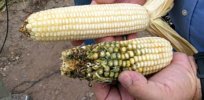
Can GM corn eliminate insecticide use? For some farmers, the answer is yes, study shows
Maize production is one of the most important activities for the Honduran economy, both in terms of area cultivated and ...

Viewpoint: Europe’s ‘nonsensical regulatory system’ blocks GMO seeds but circumvents biotech ban to exempt gene-edited COVID vaccines
As consumers, we all want to be reassured that the products we purchase are safe for us to use and ...

Viewpoint: Rush to develop COVID vaccine highlights failure of Europe’s GM crop regulations
In a recent article of mine published in the journal, Global Food Security, I highlight the EU’s reluctance to move ...

Spillover effect: Could GMO disinformation shake public trust in other scientific innovations?
In 2016, the World Economic Forum listed online digital misinformation as one of the leading threats to modern societies. Campaigns ...

Webinar: GLP’s Jon Entine, science communicators address agricultural biotechnology misinformation
The Council for Agricultural Science and Technology (CAST) released a new paper, The Importance of Communicating Empirically Based Science for Society. In ...
