Japan reconsiders chimeric experiments

ChimericMouseWithPups e
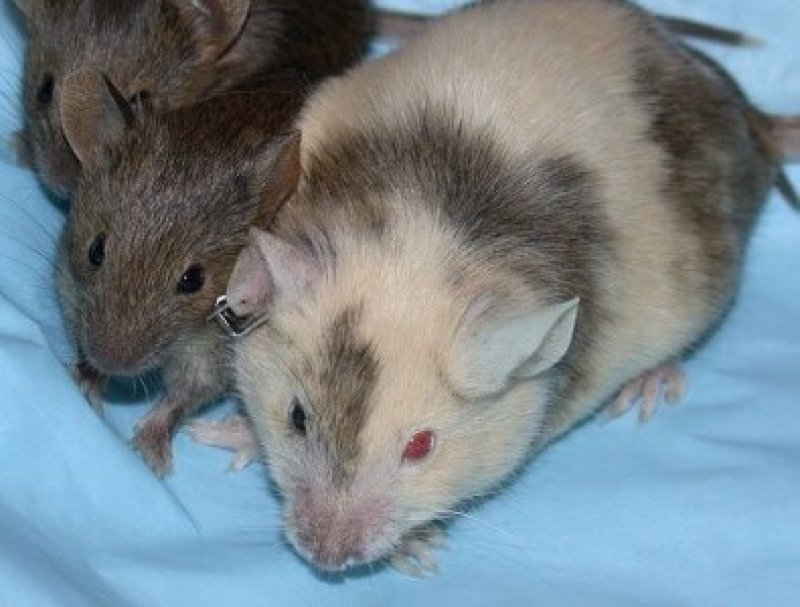
A chimeric mouse with its pups, which carry the agouti coat color gene (CREDIT: NIMH's Transgenic Core Facility, via Wikimedia Commons).

The following is an editorial summary.

A biological chimera is a single organism with two genetically distinct populations of cells. It could be, for instance, a pig which develops a genetically human pancreas. This is as close as genetics gets to the sort of abominations and amalgamations predicted by fear-mongers, and as such it is an area of extreme contention.

According to the American Association for the Advancement of Science’s ScienceInsider:

Current Japanese national guidelines governing stem cell research allow mixing human and animal material in vitro but forbid in vivo experiments[…] At a meeting on 18 June, the Expert Panel on Bioethics of the Council for Science and Technology Policy, the nation’s highest science advisory body, took a step [toward loosening these restrictions] by recommending that the guidelines be changed.

This comes at the request of stem cell biologist Hiromitsu Nakauchi at the University of Tokyo, who has had success in growing rat pancreases in mice and now wants to pursue the production of a viable human pancreas grown inside a pig. Nakauchi told ScienceInsider “that to the best of his knowledge, he is the first to try this approach to generating human organs.”

Read the full story here: Japan to Relax Ban on Chimeric Embryo Experiments

Additional Resources:

{{ reviewsTotal }}{{ options.labels.singularReviewCountLabel }}
{{ reviewsTotal }}{{ options.labels.pluralReviewCountLabel }}
{{ options.labels.newReviewButton }}
{{ userData.canReview.message }}

Related Articles

Infographic: Global regulatory and health research agencies on whether glyphosate causes cancer

Infographic: Global regulatory and health research agencies on whether glyphosate causes cancer

Does glyphosate—the world's most heavily-used herbicide—pose serious harm to humans? Is it carcinogenic? Those issues are of both legal and ...

Most Popular

Screenshot 2026-05-06 at 2.56
Singularity crisis ahead? Can super babies save us from rogue AI geniuses?
Screenshot-2026-05-01-at-1.29.41-PM
Viewpoint: What happens when whole grains meet modern food manufacturing? Labels don’t tell the whole story.
S
As vaccine rejectionism spreads, measles may be taking a more dangerous turn
Screenshot-2026-03-13-at-12.14.04-PM
The FDA wants to make many popular prescription drugs OTC—a great idea. Here’s why it’s unlikely to happen
Screenshot-2026-04-20-at-2.26.27-PM
Viewpoint — Food-fear world: The latest activist scientists campaign: Cancer-causing additives
Screenshot-2026-05-01-at-11.56.24-AM
‘Science moves forward when people are willing to think differently’: Memories of DNA maverick Craig Venter
Screenshot-2026-05-06-at-2.07.43-PM
Manufacturing a conspiracy: The timeline of how  the White House embraced the fringe claim that scientists are being mysteriously murdered
Screenshot-2026-04-03-at-11.15.51-AM
Paraben panic: How a flawed study, media hype, and chemophobia convinced the public of the danger of one of the safest classes of preservatives
Screenshot-2026-04-30-at-2.19.37-PM
5 myths about summer dehydration that could damage your health — or even kill you
images
The never-ending GMO debate: Pros and cons
Screenshot-2026-04-12-135256
Bixonimania: The fake disease scam that AI swallowed whole
glp menu logo outlined

Get news on human & agricultural genetics and biotechnology delivered to your inbox.