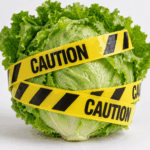
What is the source of people’s gut reactions against the very idea of genetic modification? Especially genetic modification that crosses species barriers? In a recent New Yorker, Maria Konnikova returned to an explanation that has been around at least since the early efforts at genetic engineering in the 1970s: The idea that fear and distrust of GMOs is based on ancient intuitive (but sometimes illogical) distinctions between the natural (good) and the unnatural (bad.)
There is much to be said about how cultures have drawn lines between the natural and unnatural, but that’s a topic for another day. Right now I want to focus on a present-day manifestation of that impulse: the controversies over whether foods with GM ingredients should be labeled to make that clear.
As Konnikova points out, there are data showing that how a food is labeled–organic, for instance–influences people’s readiness to eat it. The halo effect. Or, in the case of food based on GMOs, the reverse halo effect. Which is why there has been so much resistance to labeling.
But Konnikova also points out that familiarity breeds the opposite of contempt. She takes the Enlightenment view that time is on the side of what she calls “increased rationality.” I’m not convinced that an onward march of rationality is inevitable, desirable as that would be. But I do agree that familiarity will be a powerful dampener of Unreasoning Fear of GMOs. A key there is demography. Children growing up in a world full of GMOs will no longer find them unnatural.
Of course, producers of GM foods don’t want to wait a generation or more for sales to pick up. Understandably. But what if that process could be hastened? What if the whole familiarity thing could be nudged along a bit?
So I’ve been thinking about ways of making consumers understand and grow more comfortable with the fact that they are already eating lots of GM foods with no ill effects. I’m wondering if it’s counterproductive to keep battling labeling.
I understand perfectly well why food producers have a horror of the GM label. They’re thinking in the short term. Dips in sales will surely follow attaching the dreaded GM tag. I suspect that most of those dips will be temporary as it becomes increasingly apparent that mass-produced GM foods are harmless. But it’s easy to see why food producers don’t want to take the risk.
Still, it really makes sense to focus instead on longer-term gains that will follow from familiarity. These are inevitable. They will just take a while to sink in. So maybe food producers should learn to live with labels for the sake of hurrying future consumer acceptance along. Labeling is a way to get rid of the reverse halo effect. I think labeling might even, at least in some cases, confer a halo effect.
So what about this: Experiment voluntarily. It might at least be worthwhile to find out how big a risk labeling really is. Take a deep breath, label a well-loved GM food, give people time to get used to it, and see what happens.
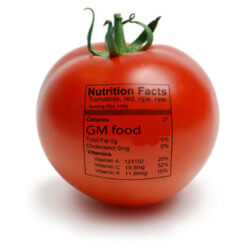



In my heart of hearts I don’t really expect to persuade the anti-label folks. And yes, I suppose it’s a somewhat facetious suggestion. But not entirely facetious. Not at all. Why not experiment?
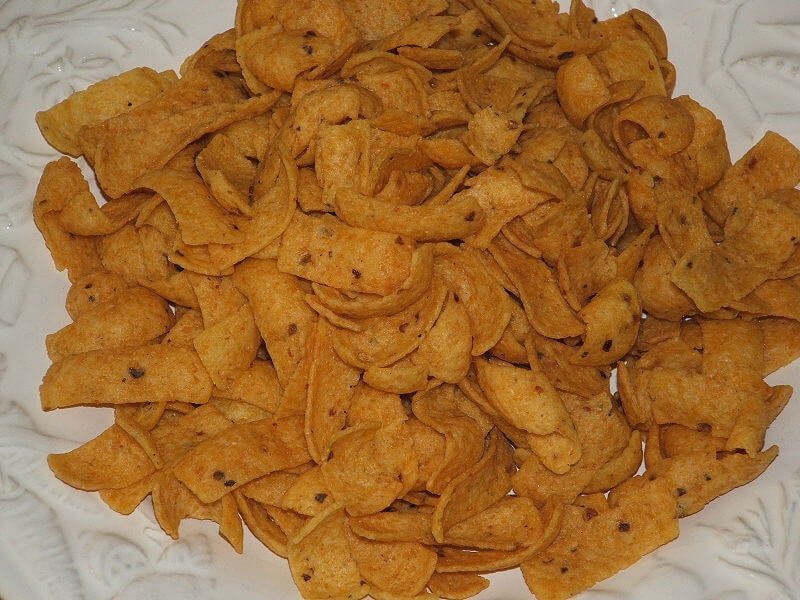
Here’s my plan: Start this experiment with an immensely popular snack food whose central ingredient is a GMO. The experimental subject should be a beloved snack that has few other ingredients to complicate the picture. In short, why not start with corn chips?
And don’t be shy. Make a virtue of necessity. We’re turning a lemon into lemonade here. Slap a great big proud label on the chips. Make the label convey something like this message, maybe in red letters: GM [BRAND NAME HERE] CORN CHIPS—MADE WITH DELICIOUS NUTRITIOUS GENETICALLY MODIFIED CORN!!!
Yes, you will say, this is a gift marketing opportunity to any brand of chips not made with GM corn. But this assumes that hopeful boutique chip makers can find non-GM corn to turn into chips, which won’t be easy. And if they can find it, then they must induce consumers to pay more for their chips. Maybe a lot more, because when you can find it, non-GM corn is costly.
People might be put off by the GM label on regular chips initially, but I bet that phase wouldn’t last long. Millions of corn chip devotees are not going to deprive themselves, and they’re not going to want to pay a lot more either. Before long, I foresee, they will sink happily back into their couches with their family-size bags of crunchy, salty, tasty, less expensive GM-labeled corn chips. Yum.
Proudly labeled GM corn chips could even pave the way for other GM foods. Once the GM label is forthright and ubiquitous on an omnipresent product like corn chips, when the GM label is shouting loudly from that vast aisle of chips at the supermarket, other GM foods will gradually win acceptance too.
GM-labeled corn chips could be the opening shot in a campaign to help consumers along toward Konnikova’s optimistic model of increased rationality about GM foods.
Hey, it’s worth a try.