Using gene therapy, patients with rare sight disorders get vision partly restored

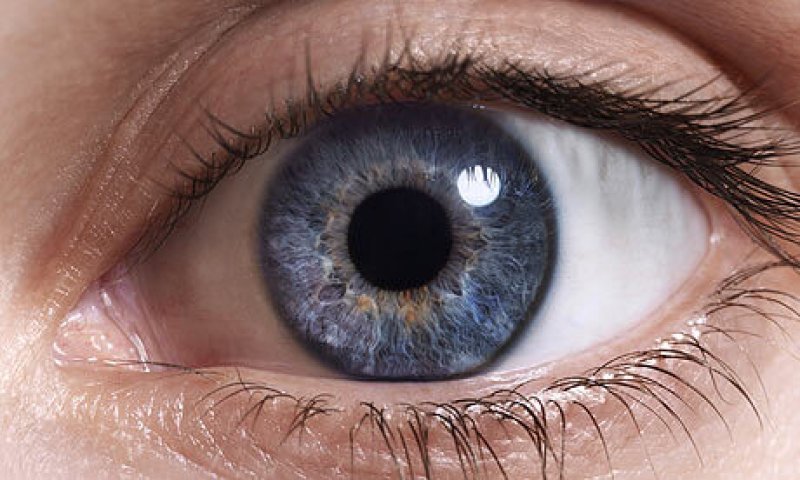
Human eye
Image via Guardian.

Two men with progressive blindness have regained some of their vision after taking part in the first clinical trial of a gene therapy for the condition.

The men were among six patients in an Oxford trial to have experimental treatment for a rare, inherited, disorder called choroideremia, which steadily destroys eyesight and leaves people blind in middle age.

After therapy to correct a faulty gene, the men could read two to four more lines on an optician’s sight chart, a dramatic improvement that has held since the doctors treated them. One man was treated more than two years ago. The other four patients, who had less advanced disease and good eyesight before the trial, had better night vision after the therapy. Poor sight in dim light is one of the first signs of the condition.

The therapy uses a genetically modified virus to smuggle healthy copies of the CHM gene into light-sensitive cells in the retina and supporting tissue called retinal pigment epithelium. The injected viruses infect the eye cells, which then use the new CHM gene to correct the choroideremia. The therapy only works on cells that have not been destroyed by the disease. It cannot replace cells that have died off.

“It is still too early to know if the treatment we have initiated is a permanent cure, but so far the vision that we’ve seen improved has been maintained,” said Robert MacLaren, a consultant surgeon at the Oxford Eye Hospital, who led the trial.

Read the full, original article: Patients with rare sight disorder get vision partly restored via gene therapy

Additional Resources:

{{ reviewsTotal }}{{ options.labels.singularReviewCountLabel }}
{{ reviewsTotal }}{{ options.labels.pluralReviewCountLabel }}
{{ options.labels.newReviewButton }}
{{ userData.canReview.message }}

Related Articles

Infographic: Global regulatory and health research agencies on whether glyphosate causes cancer

Infographic: Global regulatory and health research agencies on whether glyphosate causes cancer

Does glyphosate—the world's most heavily-used herbicide—pose serious harm to humans? Is it carcinogenic? Those issues are of both legal and ...

Most Popular

Screenshot 2025-07-30 at 10.48
Can gene editing eliminate Down syndrome? Scientists have done it in lab-grown cells
ChatGPT Image May 26, 2026, 08_42_17 AM (1)
Viewpoint: Greenpeace and poison: How environmental advocacy groups rely on compliant (and often ignorant) journalists to spread disinformation and spark litigation
Screenshot-2026-05-28-at-1.36.28-PM
Viewpoint: Can mRNA research survive the Trump administration?
ChatGPT-Image-May-26-2026-07_51_21-AM-2
Viewpoint: There are more than 1,000 chemicals in a cup of coffee—including many substances that can cause cancer. Why isn’t it banned?
ChatGPT Image May 26, 2026, 08_21_36 AM
Limiting gender affirming interventions: Trump administration targets Texas even though it already bans youth access
Screenshot 2025-11-18 at 3.45
Viewpoint—GMOs and sustainability: Why buying organic foods is the least environmentally-sensitive food choice—without offering any health benefits
Picture1
Sounds we can’t hear — the hidden planetary signals behind science, fear, and misinformation
ChatGPT-Image-Jun-2-2026-11_39_58-AM
Viewpoint: Who is RFK, Jr.’s newly-appointed CDC senior counselor, Sara Brenner — Vaccine skeptic and self-proclaimed “MAHA mom”
Screenshot-2026-06-02-at-11.59.11-AM
Magnifica Humanitas: Pope’s encyclical broadside against AI naivete and overreach
Screenshot-2026-06-03-at-1.24.46-PM
Challenging anti-GMO disinformation: Why genetically-tweaked crops offer bushels of benefits
tick-DNA
GLP podcast: Spread meat allergy with gene-edited ticks? Bioethicists pose vile ‘thought experiment’
Screenshot-2026-04-14-at-11.11.06-AM
‘Turbo cancer’ or mRNA cancer cure? Strategies to counter misinformation
ChatGPT-Image-Jun-2-2026-03_04_17-PM
Viewpoint: Why the hyper-promoted doping ‘enhanced games’ pseudo Olympics flopped
ChatGPT Image May 28, 2026, 08_16_38 PM
Viewpoint: Why the EPA mismeasures cancer risk of chemicals and what should be done to fix it
glp menu logo outlined

Get news on human & agricultural genetics and biotechnology delivered to your inbox.